

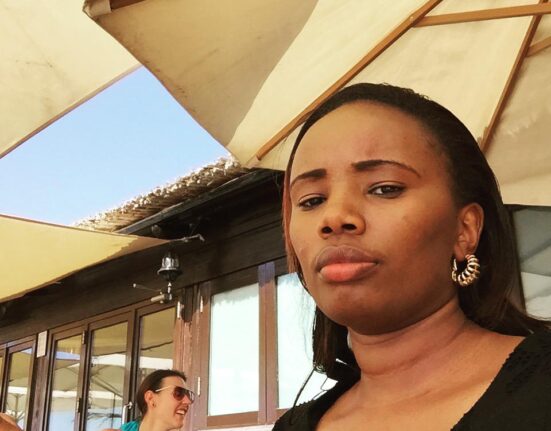
An international investigative organisation raised concerns over financial transactions linked to a Kenyan national involved in South Sudan’s oil business and specifically called on Kenyan authorities to scrutinise her accounts for possible dubious or illegal payments.
Years before Ann Kathure Rutere became the subject of fresh allegations by Kenyan workers in Juba, her name had already appeared in a major international investigation into South Sudan’s oil industry, opaque financial dealings and alleged corruption.
The investigation was conducted by The Sentry, an investigative and policy organisation that follows money linked to conflict, corruption and kleptocracy.
Its 2023 report, Crude Dealings: How Oil-Backed Loans Raise Red Flags for Illegal Activity in South Sudan, examined a controversial trade-finance arrangement involving South Sudan-based Trinity Energy Limited, African Export-Import Bank and the government of South Sudan.
The three-year investigation uncovered what The Sentry described as red flags for bribery, tax evasion and trade-based money laundering. Investigators said they reviewed bank statements, emails, internal memoranda, ministerial correspondence and the trade-finance agreement itself, as well as interviewing a former Trinity Energy employee.
But one recommendation in the report stands out for Kenya. Under its recommendations for Kenya and Uganda, The Sentry called for investigations into illicit money flows identified in the report.
It then made a specific recommendation concerning Rutere:
“Kenya should investigate the finances of Kenyan national Ann Kathure Rutere to ascertain whether any dubious or illegal payments or deposits have been made into her accounts.”
The recommendation did not amount to a finding that Rutere had committed a crime. Rather, The Sentry was calling for Kenyan authorities to establish whether the financial activity identified through its investigation warranted further action.
That distinction is critical, but so is the fact that Rutere was singled out by name.
Why was Rutere in the report?
At the centre of The Sentry investigation was Trinity Energy, a South Sudanese fuel company that entered into a trade-finance facility with Afreximbank in April 2018.
The facility involved a series of loans of up to $30 million to finance purchases of diesel and gasoline for the South Sudanese market.
In return, the South Sudanese government committed to award crude-oil cargoes to Trinity Energy.
The arrangement gave Trinity Energy access to a substantial share of South Sudan’s crude-oil trade despite the company having no previous experience trading crude.
According to The Sentry, Trinity Energy received more than 40 percent of the crude cargoes contracted by the South Sudanese government between June 2018 and May 2019.
The importance of the deal becomes clearer when placed against the importance of oil to South Sudan’s economy. The Sentry reported that crude-oil earnings accounted for 81 percent of government revenue during the second half of 2018.
Glencore Singapore, a subsidiary of global commodities trader Glencore, was designated the original offtaker of the crude. The Sentry reported that Glencore shipped approximately $376 million worth of South Sudanese crude in 2019 through deals involving Trinity Energy and Afreximbank.
It was within this high-value network that Rutere’s business interests came under scrutiny.
The money and the red flags
The Sentry reported that Trinity Energy spent millions of dollars on what company documents described as “facilitation” and “business acquisition” costs connected to the Afreximbank deal.
Among the payments identified was 18.7 million South Sudanese pounds, then approximately $125,000, paid to the government committee responsible for approving the deal.
The investigation also reported that Trinity Energy changed millions of dollars on the black market and used fake overseas invoices to disguise hundreds of thousands of dollars in black-market currency exchanges.
The Sentry said these activities raised red flags for bribery, tax evasion and trade-based money laundering.
The report also identified transactions involving company accounts in Kenya and Uganda that it said raised concerns about illicit financial flows.
That is where the Kenyan connection became particularly significant.
Why Kenya?
The Sentry said authorities in Kenya and Uganda should investigate transactions identified in the report in which money sent to company accounts in the two countries raised red flags for trade-based money laundering.
For Kenya, the report went further and specifically named Rutere and called for an examination of her finances to determine whether dubious or illegal payments or deposits had been made into her accounts.
The recommendation placed Kenya within a broader regional money trail surrounding South Sudan’s oil industry.
According to The Sentry, corruption-related money flows from South Sudan have often moved through or found a home in Kenya and Uganda. The organisation therefore urged both countries to investigate potentially illicit flows and, where appropriate, pursue criminal proceedings to repatriate assets.
The issue was therefore not simply whether money had moved across borders. It was whether legitimate-looking commercial transactions could have been used to move or disguise illicit funds.
Rutere’s position
The Sentry’s report also contains Rutere’s response, an important part of the story where she rejected the suggestion that Trinity Energy had engaged in bribery. She told the investigators that the company conducted its business transparently and denied involvement in bribery.
She also disputed aspects of the investigators’ account of her role in the Afreximbank transaction, saying she was not involved in negotiating the deal and was not involved in Trinity Energy’s crude-export operations.
At the same time, she acknowledged signing off on the Afreximbank deal.
Her response means that the report should not be presented as a finding that Rutere committed fraud, bribery or money laundering.
The Sentry’s recommendation was precisely that the relevant authorities should investigate and establish whether any illegal or dubious payments had entered her accounts.
What happened after the recommendation?
That is perhaps the biggest unanswered question. The Sentry published its report in 2023 and specifically called on Kenya to investigate Rutere’s finances.
But whether such an investigation was subsequently undertaken, what it established, and whether any Kenyan agency took action remains a matter that requires clarification from the relevant authorities.
The recommendation involved more than a routine financial audit. The Sentry said Kenya and Uganda should investigate and prosecute illicit money flows identified in the report and, where appropriate, launch criminal proceedings to repatriate assets.
That makes the status of the Kenyan response an important public-interest question.
Was Rutere’s financial trail investigated?
Were the transactions flagged by The Sentry examined by Kenyan authorities?
Did investigators find any suspicious deposits or payments?
Were any assets traced or recovered?
And if no investigation took place, why not?
Why the report matters again
The questions surrounding Rutere have acquired fresh relevance following allegations by Kenyan workers in Juba who say they were recruited for employment and have been left without the salaries they expected.
Those allegations are separate from The Sentry’s investigation and have not been independently established. Rutere should have an opportunity to respond to them.
But they have brought her name back into public attention in connection with business activities in South Sudan.
That makes the 2023 report important context as the Sentry was not investigating employment recruitment, but rather, was investigating a complex network surrounding South Sudan’s oil sector, trade finance and cross-border financial transactions.
Rutere’s name emerged from that investigation, and the organisation ultimately made an unusually specific recommendation to Kenya: investigate her finances and establish whether dubious or illegal payments or deposits had been made into her accounts.
That recommendation does not prove wrongdoing. It does, however, establish that an international investigative organisation considered the financial trail sufficiently concerning to warrant scrutiny by Kenyan authorities.
Four years later, the question is straightforward: Did Kenya ever follow the money? And if it did, what did it find?
Leave feedback about this