
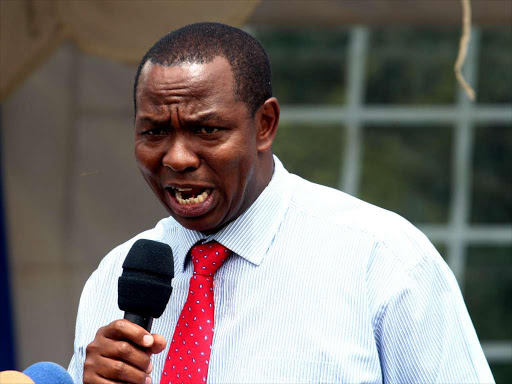
KRA Chairman Ndiritu Muriithi is facing growing questions over a customs valuation policy that traders say is putting unbearable pressure on small importers and threatening businesses that operate on already thin margins.
The anger is easy to understand. A trader can spend about KSh700,000 buying goods in Guangzhou, including items such as hoods, plates and other small stock, only to find that KRA calculates taxes using a much higher minimum customs value.
Traders say the minimum value for general consolidated cargo was raised from KSh2.5 million to KSh3.2 million from August 20, creating a sharp increase in the tax burden for low-value importers.
For Muriithi, this is no longer simply a technical customs matter.
He is the chairman of the board overseeing the Kenya Revenue Authority, and the people affected want to know whether the policy is fair, practical and sustainable.
The figures being discussed by traders are alarming. Using a KSh3.2 million customs value, the 25 per cent import duty alone would amount to KSh800,000.
Other taxes and levies then increase the total cost. Traders argue that, in some cases, the final tax bill can run into millions of shillings even when the actual purchase price of the goods is far lower.
That is where the policy becomes particularly painful for small businesses.
A large company may have the financial strength to absorb unexpected costs, but a small importer operating with borrowed money has very little room.
A sudden increase in the cost of clearing goods can wipe out the expected profit before the merchandise even reaches the market.
Many of these traders supply businesses in places such as Gikomba and Nyamakima and support thousands of other small enterprises.
When their goods become too expensive to clear, the effects do not stop at the port. They spread to wholesalers, retailers, transporters and casual workers.
Traders have also questioned the practical alternative of deconsolidating cargo and having individual goods assessed.
They argue that delays at the port can create additional storage and handling costs, leaving them trapped between accepting a high valuation or watching their cargo accumulate expenses while they wait.
Muriithi has previously been associated with calls for a more professional and service-oriented KRA. That makes the current controversy even more important.
The public deserves to understand how a policy that dramatically increases the minimum valuation of cargo is supposed to support small businesses while helping the government collect more revenue.
There is nothing wrong with KRA pursuing revenue. Kenya needs taxes to finance public services and government operations. The problem begins when revenue collection becomes so aggressive that legitimate businesses are pushed towards closure.
Muriithi therefore has a responsibility to provide clear answers. What evidence informed the increase? How was its impact on small importers assessed?
Were traders adequately consulted? And what safeguards exist for businesses whose actual purchase prices are significantly below the new benchmark?
These are reasonable questions, not an attack on taxation.
The wider concern is that Kenya cannot grow its tax base by making it harder for small businesses to survive. If traders close their shops, reduce imports or move into informal channels simply because the cost of doing business has become impossible, KRA could eventually lose the very revenue it is trying to increase.
For Muriithi, this is a test of oversight and leadership. A board chairman cannot personally run every customs operation, but he can demand explanations, examine the consequences of major policies and insist that the authority remains fair, professional and accountable.
The protests by traders should therefore not simply be dismissed as resistance to paying taxes. They should be treated as a warning that something may be seriously wrong with how the policy is affecting ordinary businesses.
Muriithi has an opportunity to address the concerns directly, publish the reasoning behind the valuation changes and demonstrate that KRA is not simply chasing collection targets at the expense of struggling entrepreneurs.
For thousands of traders, this is not an argument on paper. It is their stock, their loans, their businesses and their livelihoods. The chairman should therefore answer the difficult questions now, before more small businesses are forced to conclude that Kenya’s tax system has become too expensive for them to survive.





Leave feedback about this