
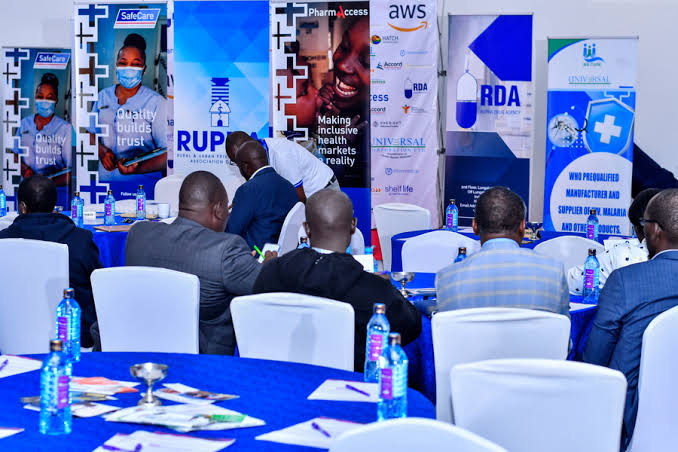
The Rural and Urban Private Hospitals Association of Kenya has raised serious concerns over what it describes as an unbearable healthcare funding crisis.
In a press briefing held at Lunga Lunga Square in Nairobi, the association announced a 14-day go-slow notice directed at the Social Health Authority, the Ministry of Health, and Health Cabinet Secretary Aden Duale.
The hospitals are demanding the immediate settlement of Ksh33 billion in unpaid NHIF arrears and greater transparency in the way healthcare claims are handled.
In a message shared on X, RUPHA made it clear that the delay in payments has left hospitals in financial distress, with patients now bearing the risk of losing access to critical services.
The association pointed out that of the Ksh96.2 billion in claims submitted by hospitals as of August 2025, only Ksh53 billion has been reimbursed.
This leaves Ksh43 billion pending, a situation that has stretched both public and private hospitals to breaking point.
According to the breakdown provided, Ksh15.2 billion of the NHIF debt is owed to 83 hospitals, including 23 major public institutions.
Kenyatta National Hospital alone is owed Ksh1.58 billion, while Moi Teaching and Referral Hospital is owed Ksh1.24 billion.
RUPHA said these two hospitals alone account for about 10 percent of the debt. The remaining Ksh17.8 billion is owed to 2,600 smaller health facilities, which the association described as the backbone of community healthcare across the country.
They insisted that further delays in settling these amounts would leave many of these small facilities unable to function.
The association further accused the government of politicising the matter, highlighting that Ksh10.6 billion worth of SHA claims had been rejected as part of what it described as a political gimmick.
They warned that this approach punishes legitimate hospitals while enabling ghost hospitals to benefit unfairly.
One shocking example was Sipili Maternity and Nursing Home in Nyandarua County, a facility that was shut down in 2022 following reports of patient abuse.
Despite being closed, the hospital allegedly received Ksh13.7 million in SHA disbursements and was even listed as “fully compliant” by a Parliamentary Health Committee.
RUPHA has issued several demands as part of its resolution. These include the settlement of all NHIF arrears within 14 days, payment of at least half of the Ksh43 billion owed under SHA, and public disclosure of claims data, including the names of 24 hospitals currently under investigation by the DCI.
They also want a clear dispute resolution mechanism set up to address arbitrary suspensions and downgrades of facilities, which they argue breach constitutional provisions.
The association’s chairperson Brian Lishenga accused CS Aden Duale of interfering with the operations of SHA, saying he had sidelined CEO Mercy Mwangangi and reduced the authority into what he called a ghost institution.
He argued that leadership at SHA has been compromised by micromanagement and political interference, leaving hospitals without a reliable institution to engage with.
With hospitals already stretched and warning that healthcare access could collapse, RUPHA’s ultimatum marks a turning point in Kenya’s health sector.
The coming days will determine whether the government and SHA can take urgent action to address the crisis or risk plunging patients and hospitals into deeper turmoil.