
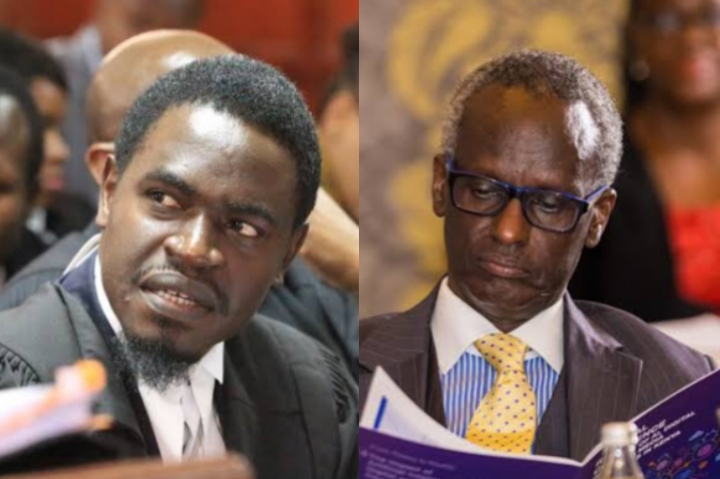
City lawyer and former Law Society of Kenya (LSK) President Nelson Havi has once again stirred controversy after making strong accusations against Supreme Court Judge Isaac Lenaola.
Havi, who has been a vocal critic of the Judiciary’s conduct in recent months, openly accused Justice Lenaola of being corrupt and unfit to serve in any court in Kenya.
His remarks have sparked debate in legal and political circles, raising fresh questions about the credibility of the country’s top courtIn his statement, Havi did not hold back his words.
He described Justice Lenaola as “a dangerous criminal and a pervert who should not be anywhere near a Court.”
His remarks appeared deeply personal, signaling a long-standing frustration with how certain members of the Judiciary conduct themselves.
Havi said that he has received multiple complaints about Justice Lenaola’s alleged behavior from individuals who claim to have interacted with him closely.
He further alleged that some of these claims, if made public, would shock the country and stain the image of the Judiciary even further.
According to Havi, there are serious moral and professional concerns surrounding Justice Lenaola’s past and conduct.
“There are many other indiscretions of him that I have received notice of which if published will make those who have interacted with him vomit, and thoroughly wash their hands in disgust,” he said.
His comments painted a grim picture of the Judiciary, implying that misconduct and corruption may be more widespread than what the public sees.
Havi’s attack on Lenaola comes at a time when the Judiciary has been facing growing criticism from Kenyans who believe that justice has become a privilege for the rich and powerful.
Recent corruption allegations involving judges and magistrates have only deepened public mistrust.
The Judiciary, often seen as the last hope for fairness, has been accused of protecting individuals with political or financial influence while ordinary Kenyans continue to struggle for justice.
The outspoken lawyer has previously taken aim at other senior judicial figures, including Chief Justice Martha Koome, whom he has accused of failing to restore public confidence in the courts.
Havi has often argued that the Judiciary has lost its moral authority because of corruption, favoritism, and lack of accountability among its top members. His call for reforms has resonated with many Kenyans who share his frustration about the declining integrity of public institutions.
While Havi’s remarks have drawn both support and condemnation, they highlight an ongoing tension between lawyers, judges, and the broader justice system in Kenya.
His comments have reignited discussions about how the Judiciary handles internal accountability and the need to protect its independence while addressing credible claims of misconduct.
The accusations against Justice Lenaola have not been officially addressed by the Supreme Court or the Judicial Service Commission.
However, Havi’s words have added pressure on judicial authorities to act decisively in restoring public faith.