
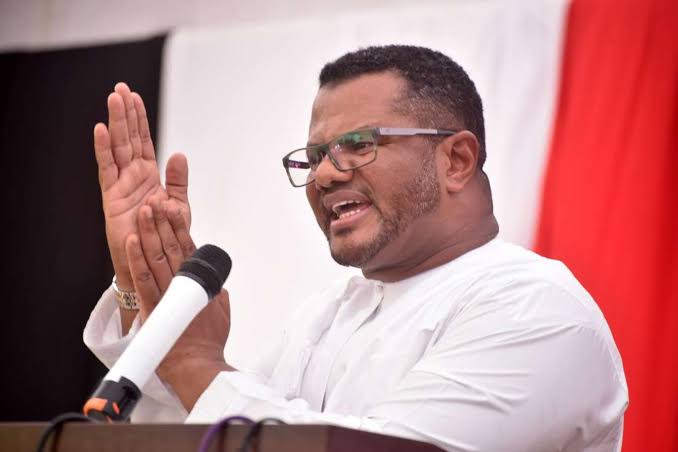
Hassan Omar’s political journey raises a difficult question about what happens when a reformer gets too close to the power he once challenged.
For a man whose early public life was built around activism, human rights and standing up for ordinary people, some of his recent political positions have created a sharp contrast with the Hassan Omar many Kenyans once knew.His story was not built in the corridors of power.
Omar emerged as a student leader at Moi University and became the first chairman of KENASU after his election in Nakuru. He later became a human rights commissioner, serving during the difficult period that followed the 2007 elections when thousands of Kenyans were dealing with violence, displacement and loss.
That background gave him credibility. He understood the importance of institutions and the need to protect the rights of citizens. He was part of a generation that believed Kenya could become a better democracy if leaders were willing to challenge injustice and defend ordinary people.
Cyprian Nyamwamu’s reflection on Omar therefore carries weight because it comes from someone who says he stood with him during some of his most difficult moments. Nyamwamu recalls helping Omar secure lawyers after he was expelled from university, working with him in the student movement and later supporting his appointment to the Kenya National Commission on Human Rights.
It is that history that makes Omar’s current political posture difficult to understand.
His remarks suggesting that even dead people could vote in the 2027 elections, including claims about fingers being taken from mortuaries, should not simply be dismissed as ordinary campaign talk.
Elections are too important to the country for such statements to become part of political entertainment.
Kenya has spent decades trying to build confidence in its electoral system.
The country has witnessed disputed elections, political violence and deep divisions over the credibility of voting processes.
Leaders who understand that history should be encouraging confidence in democratic institutions rather than making statements that could further undermine public trust.
Omar knows the importance of this better than many politicians.
The bigger issue is therefore not one statement. It is the direction of his politics.There is nothing wrong with changing political alliances.
Politicians have the right to support different parties, presidents or coalitions. But political realignment should not require a person to abandon the principles that made them respected in the first place.
Kenya has seen many politicians begin their careers as fierce critics of those in power, only to later become close allies of the establishment.
Some gain positions and influence for a while, but political seasons eventually change. When that happens, what remains is their record.
That is where Hassan Omar needs to be careful.He does not need to prove his loyalty to power by becoming more aggressive than those around him.
He does not need to attack former colleagues simply to demonstrate that he has moved to a different political camp.
And he certainly does not need to make statements that can damage the reputation he spent years building.
This is not about denying Omar the right to change his politics. It is about asking whether the change has come at too high a price.
The man who once fought for human rights should remember that political power is temporary, but principles can outlive political careers.
Omar still has time to reflect on the road he is taking. He can choose to rebuild the connection between his present politics and the values that defined his early public life.
If he fails to do so, his greatest political loss may not be an election or a position. It may be the respect of the people who once believed he stood for something bigger than power.


Leave feedback about this