
Kenya has many young people with big dreams, but the economy often feels stuck in the same old ways.
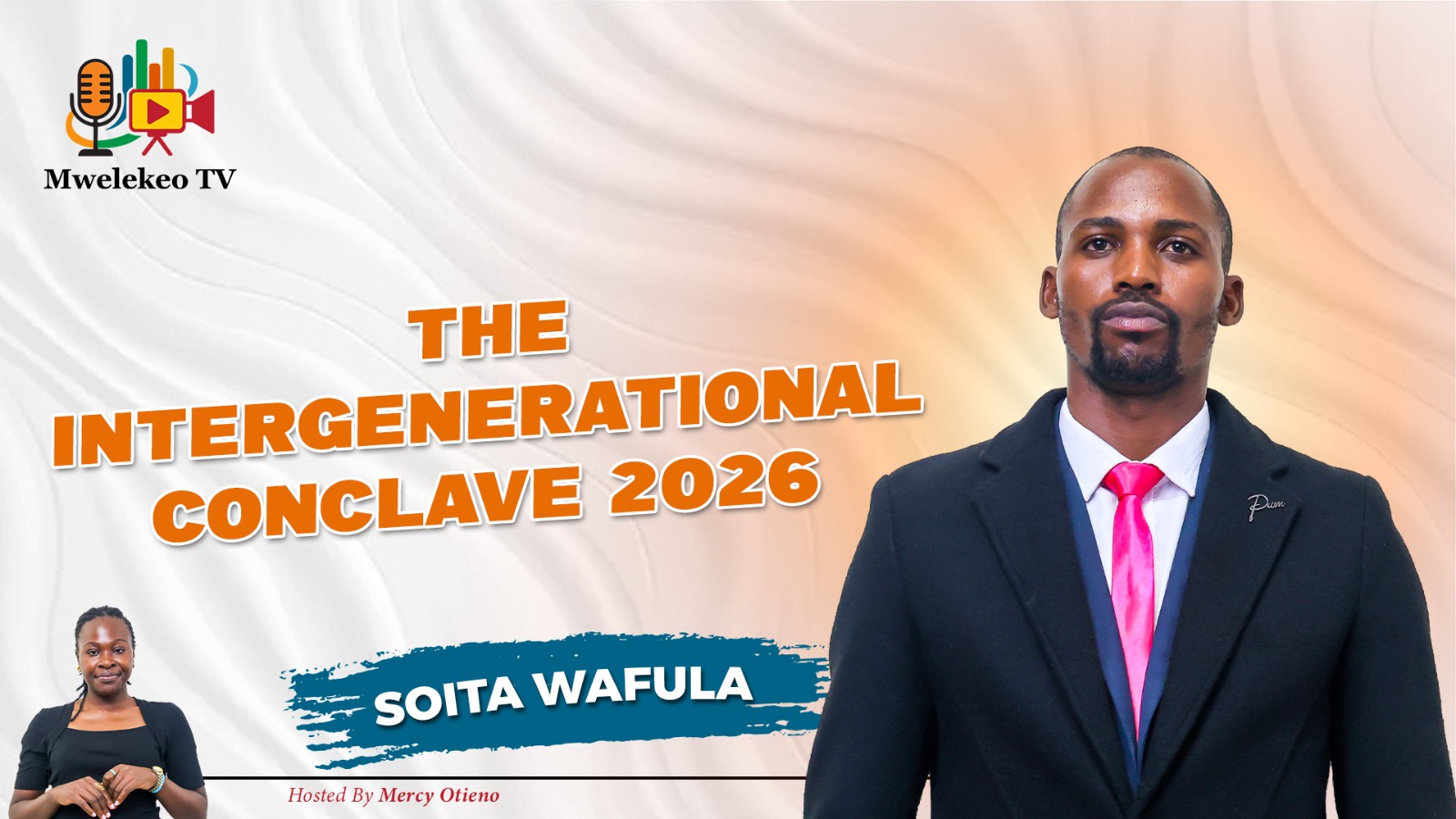
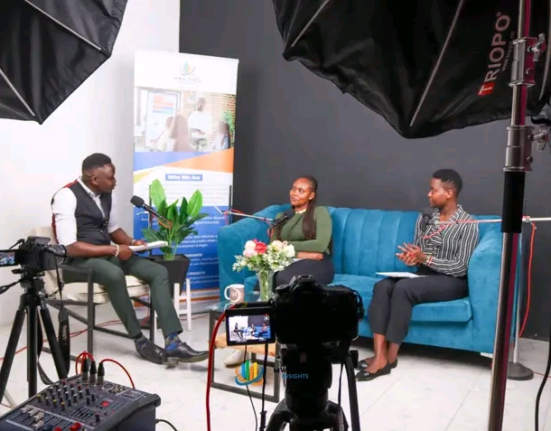
In a recent conversation on Mwelekeo TV, a young leader Soita Wafula shared his thoughts on how the country can change that. He spoke about the Ten Miles Ahead Vision 2035, a plan aimed at helping Kenya grow into a stronger and smarter economy by the year 2035.
His ideas focused on practical steps that can empower young people and reshape how the country thinks about growth.
Soita comes from Shamoni village in Kakamega County, and his story reflects the journey of many young Kenyans.
Growing up, he witnessed difficult moments such as the 2007–2008 Kenyan post-election violence, which affected many families and communities.
His own education path was not smooth either. He repeated some grades while in Nairobi due to a weak early foundation.
Despite these challenges, he remained active in school leadership and even ran for school captain in 2018.
Although he did not win, the experience shaped his thinking about systems and the need for change.
Over time, Soita became involved in arts, culture, and small business development. He worked closely with students and young people, training more than 200 learners at the University of Nairobi through his Ten Miles Ahead idea. His focus was on practical skills that could help young people earn a living, such as academic writing and creative work.
These experiences gave him a deeper understanding of the gap between education and real-life opportunities.
Like many entrepreneurs, he also faced setbacks. One of his business projects lost over a million shillings, forcing him to reflect on both his personal journey and the wider challenges facing the country.
From this, he developed a clearer vision of what Kenya needs. At the center of his thinking is the idea of building a “knowledge civilization.”
This means moving away from relying only on traditional systems and instead building an economy driven by ideas, innovation, and continuous learning.
A key concept he explained is the Civilizational Flywheel. It is a simple cycle where good education leads to new ideas and innovation.
These ideas then turn into the production of goods and services, which connect to wider global markets. When this cycle works well, it creates steady growth and more opportunities for people.
He believes that if Kenya strengthens this cycle, it can position itself as one of Africa’s leading innovation hubs.
One of the most ambitious parts of the vision is the creation of one million innovation communities across the country.
These would be local groups where young people, after finishing school, join value chains in areas such as technology, engineering, creative industries, and modern farming. Instead of waiting for formal employment, which is often limited, young people would begin creating their own opportunities.
This idea responds to the reality that millions of Kenyan youth are either unemployed or working in areas that do not match their skills.
Soita also pointed out that the current education system places too much focus on exams and not enough on real-world skills. He suggested that Kenya can learn from countries like China, which have adapted their education systems to include critical thinking, character development, and technology.
The aim is to help young people discover their purpose and become self-reliant. He also referred to the philosophy of Ubuntu, which emphasizes that individual success is connected to the well-being of the community.
He mentioned plans for an Intergenerational Conclave in 2026, where people from different age groups can come together to discuss education, policy, and national development.
He stressed that building a nation is not only the role of leaders but also of citizens, including teachers, parents, and entrepreneurs.
The discussion acknowledged the challenges Kenya faces, including limited resources in schools and a disconnect between education and the job market.
However, Soita remained hopeful that by investing in human capital, the country can grow its digital and creative economy. He believes that by 2035, Kenya can achieve a more innovative and connected economy.




Leave feedback about this