
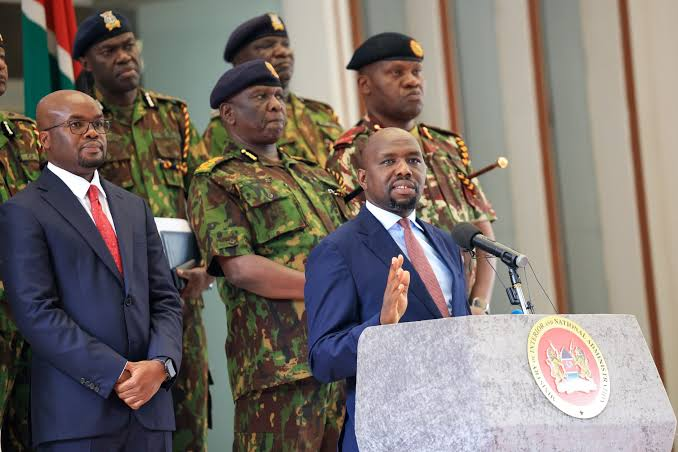
Kipchumba Murkomen, now serving as Kenya’s Interior Cabinet Secretary, has come under fire for issuing “shoot to kill” orders against anyone approaching or threatening police stations.
His decision, made after the violent June 25 protests, has drawn strong criticism from the public, politicians, and legal experts who see it as a reckless move that could trigger more violence and violate basic human rights.
These orders are being viewed by many as a dangerous overreaction. While the protests led to the deaths of at least 15 people and injuries to hundreds of officers, Murkomen’s response has not focused on de-escalation or arrests but rather encouraged fatal force.
This shows a worrying trend in how the government is choosing to deal with rising public dissent through intimidation and bloodshed instead of dialogue and justice.
The police are now being put in a position where they may kill citizens based on a vague interpretation of a “threat” to police stations, raising fears of abuse and excessive force.
Saboti MP Caleb Amisi has openly called out Murkomen, saying no Cabinet Secretary has the right to order the killing of fellow Kenyans. Instead of strengthening institutions or addressing root causes of unrest, Murkomen has resorted to playing judge, jury, and executioner.
His justification, which includes blaming the judiciary for releasing repeat offenders, only shows his desire to shift blame instead of working on proper reforms. This does not solve the issue of insecurity; it only deepens mistrust between the state and citizens.
Lawyer Willis Otieno has warned police officers against following such illegal commands. He reminded them that when things go wrong, it is not Murkomen who will stand trial, but the officers who obeyed these unlawful orders.
Otieno’s warning is a reminder that even in moments of national tension, the law must be respected, and those in power should not manipulate chaos to trample on the constitution.
Murkomen’s orders have already led to tension on the ground. During his recent visit to assess damage after the protests, he was booed by members of the public a clear sign of growing disapproval.
The anger is not just about the protests or destruction but about how the government, under Murkomen’s leadership at the Interior Ministry, is choosing brute force over reason.
By pushing the “shoot to kill” approach, Murkomen has placed Kenya in a dangerous spot. Rather than preventing further unrest, such orders could inflame more violence and resentment, especially among young people who already feel abandoned by the system.
Kenya needs leadership that listens, not one that responds with guns. Murkomen is showing that he is more interested in defending buildings than saving lives.
That’s not leadership that’s failure.The current state of Kenya demands calm, not commands that threaten life. Police must be trained to arrest, investigate, and present suspects to court, not shoot first and ask questions later.
The law is meant to protect everyone, even those accused of wrongdoing. Murkomen’s directive flies in the face of that principle, and the government should be held to account before things spiral even further out of control.






Leave feedback about this