
The conversation on Political Ringside, Kenya’s best political talk show, goes straight to a serious question facing Kenya today, whether young people are truly being given space to shape politics or whether they are only being used by powerful figures.
In the episode, the focus is clear from the start, youth make up the majority of the country, yet many feel locked out of real decision-making.
The discussion does not waste time on praise or drama but looks closely at how politics works behind the scenes and how young voices are often handled.
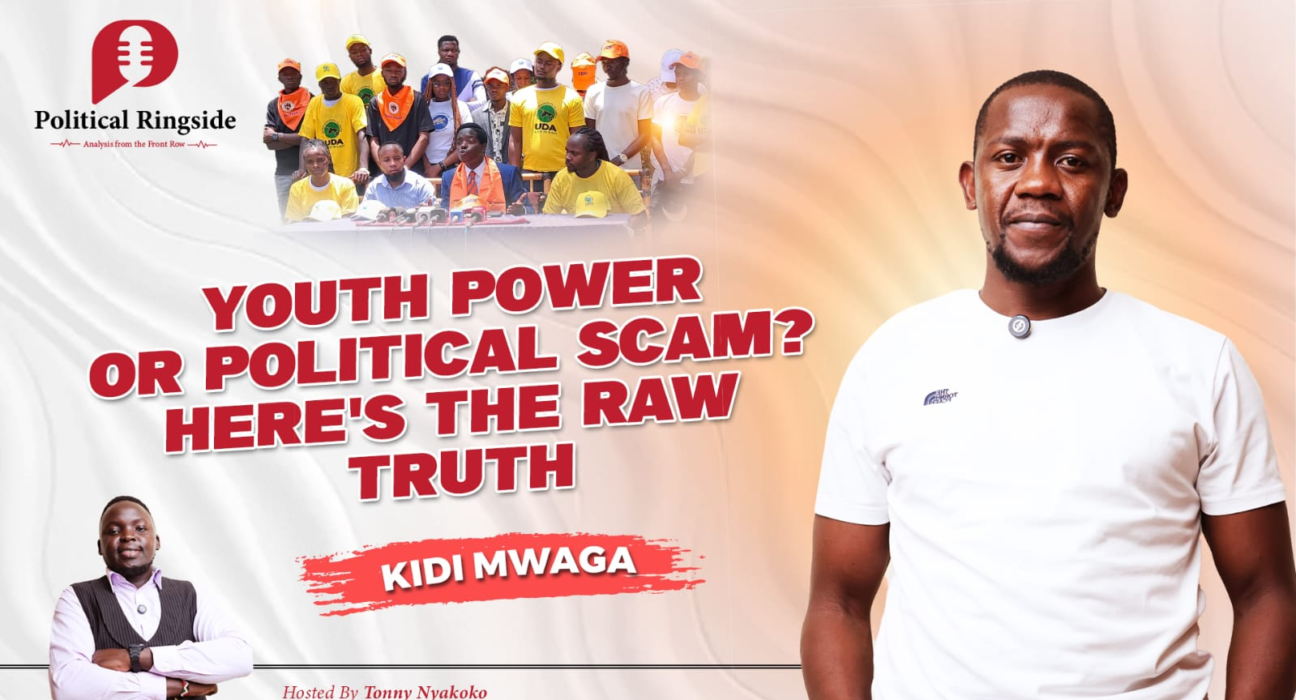
Tony, the host, speaks with Kidi Mwaga, a lawyer and well-known youth advocate. Mwaga is deeply involved in policy work and youth movements. He serves as the secretary for policy and legislative affairs at the Kenya Africa National Union and plays a key role in groups like the Parties Youth Forum and the Manifesto Yetu coalition.
His experience places him close to both activism and formal politics, which gives his views weight. He understands how political promises are made and how they are often broken when elections are over.
A major issue raised in the discussion is how youth inclusion is often reduced to words rather than action.
Mwaga explains that young people are regularly used as campaign symbols. Politicians talk about empowering youth, but when power is shared, it is usually limited.
Some young leaders are given small titles or roles that look impressive but do not allow them to influence policy. This process, which Mwaga calls co-option, can weaken youth movements. Instead of pushing for change from outside, some activists are absorbed into the system and slowly lose their independence.
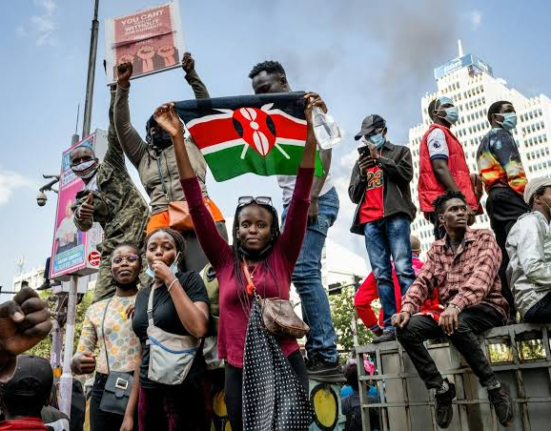
The conversation also reflects on the Gen Z protests of 2025, which marked a turning point for youth activism in Kenya. Social media played a big role in organizing and spreading messages.
According to Mwaga, digital platforms helped young people find each other and speak loudly. However, he warns that online action alone is not enough. Without structure, clear goals, and long-term planning, the energy of protests can fade without results.
This is a serious concern given the daily struggles young Kenyans face, such as unemployment, high taxes, corruption, and few opportunities.
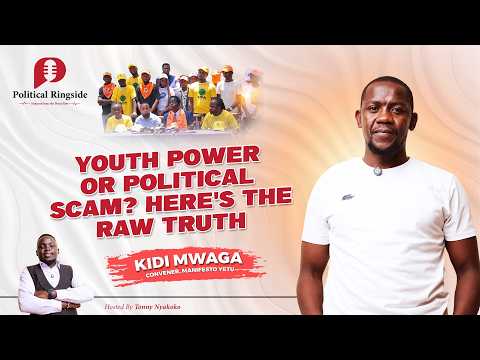
Mwaga reminds listeners that young people hold real power in numbers. About three quarters of the population is young, and they make up more than half of registered voters. If they stay informed and united, they could shape the 2027 elections in a major way.
This is why initiatives like Manifesto Yetu matter. The idea is for youth to define their own demands instead of waiting for politicians to decide for them. It is also about holding leaders accountable once promises are made.
There is also discussion about engaging with the current government. Mwaga does not reject cooperation outright.
He points to some positive programs, such as business grants supported by the World Bank.
At the same time, he is honest about weaknesses, especially how the government has spoken to young people after the 2024 protests. He rates this communication as average, showing there is still a gap between leaders and the youth.
Throughout the talk, Mwaga stresses learning, mentorship, and patience. He argues that young leaders need knowledge to avoid being misled.
He also rejects the idea that youth activism is violent or reckless.
Instead, he supports peaceful action and long-term reform, using examples of global civil rights struggles.
The episode captures the tension between hope and reality and asks whether Kenya is ready to move from talk to true youth-led change.