
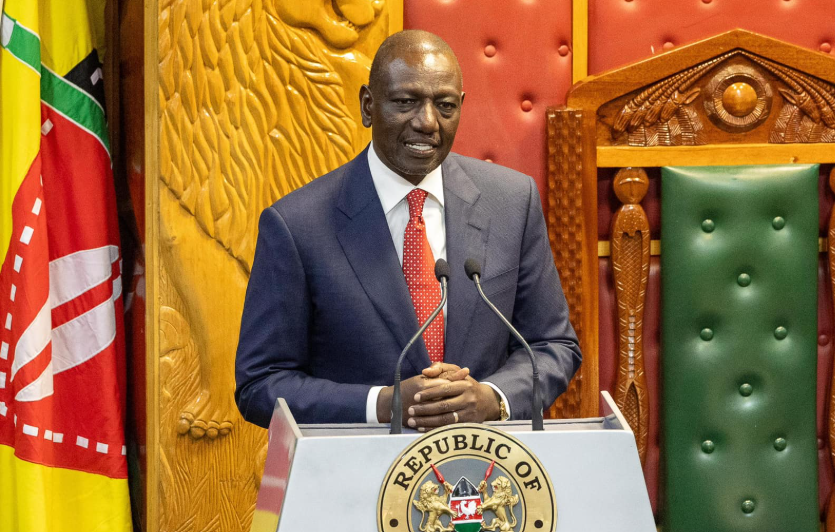
NTV Kenya has drawn fresh attention to a misleading claim made by President William Ruto during his third State of the Nation Address.
The President addressed Parliament and the country with a message that was meant to highlight Kenya’s development journey, but the national broadcaster has now pointed out that one of his key statements does not match historical data.
The issue came up after NTV conducted a fact check on the President’s remarks.
During his speech, Ruto claimed that there was no material difference in development indicators between Kenya and the Asian Tigers at the time of independence.
The comparison was meant to show that Kenya started from a similar point as countries like Singapore, Taiwan and Malaysia, which have since grown into global economic powerhouses.

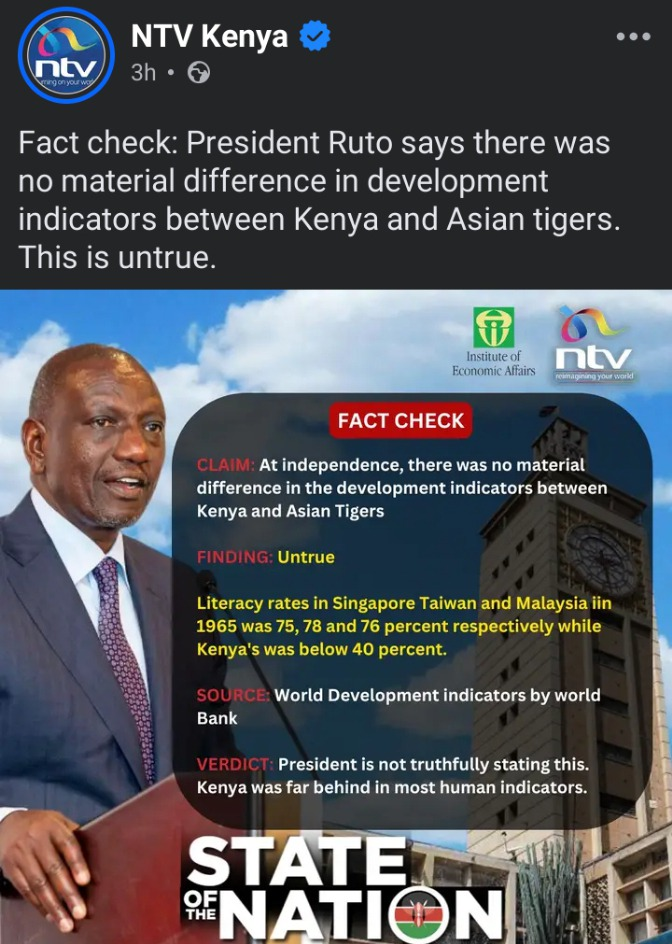
However, the fact check by the media house shows that this claim is inaccurate and does not reflect the reality of that period.
NTV’s verification shows that the human development indicators between Kenya and the Asian Tigers were not similar at independence.
Literacy levels alone paint a different picture. According to the fact check, Singapore had a literacy rate of 75 percent at the time, Taiwan stood at 78 percent, and Malaysia was at 76 percent.
Kenya, on the other hand, had literacy levels below 40 percent.
These statistics show a clear gap between Kenya and the Asian Tigers, contradicting the President’s point that the countries were at the same starting point.
To make the matter clear to the public, NTV shared its findings openly, stating, “Fact Check: President Ruto says there was no material difference in development indicators between Kenya and Asian Tigers.
This is untrue. Literacy rates in Singapore Taiwan and Malaysia in 1965 was 75, 78 and 76 percent respectively while Kenya’s was below 40 percent.” The media house shared this update to counter the misleading statement and provide Kenyans with accurate information.
The correction by NTV adds to the growing expectation that claims made during national addresses should be factual and verifiable. By pointing out this discrepancy, the broadcaster has pushed for a more honest national conversation about Kenya’s past and present development path, reminding leaders of the importance of accuracy when addressing the public.