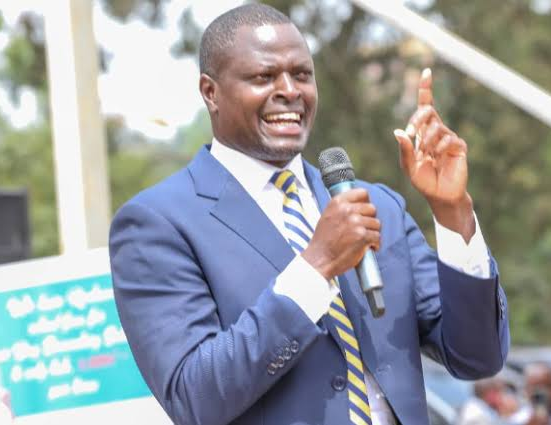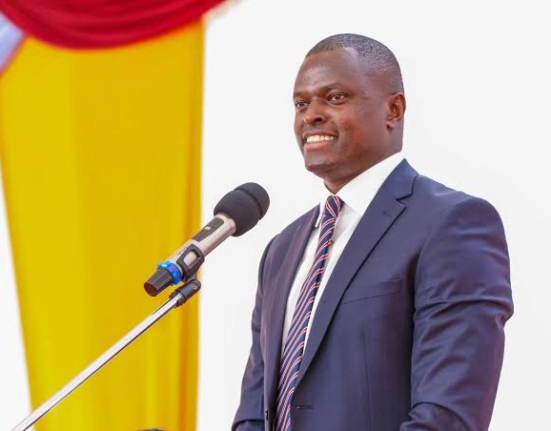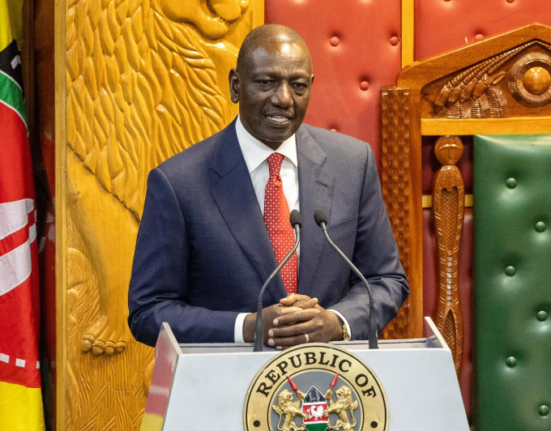

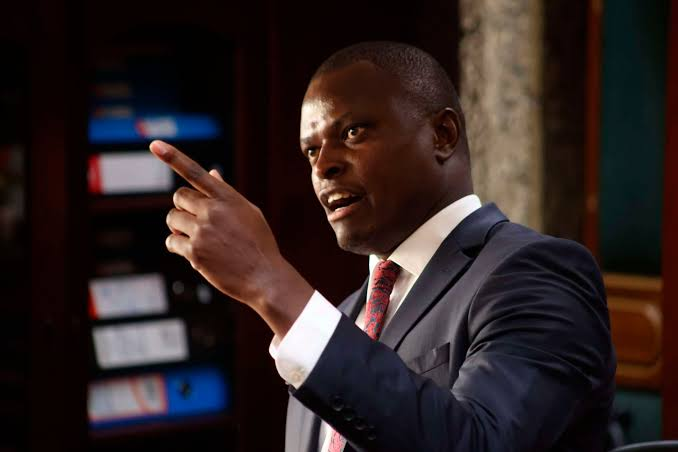
Kenyans have been trying to understand the real state of the country’s economy, and the comments made by Kiharu Member of Parliament Ndindi Nyoro have added a new layer to that discussion.
He raised serious concerns about the figures President William Ruto has been using in his recent speeches, saying that the numbers do not match the official data available from key institutions.
Nyoro said the country needs honesty, not political comfort, and he reminded leaders that citizens deserve facts that reflect what is happening in their daily lives.
He told Parliament that national issues should be handled the same way an investor examines a company’s financial statements, where only data verified by regulators such as the Central Bank of Kenya and the Capital Markets Authority can be trusted.
Nyoro did not hold back when addressing the accuracy of the information shared in the State of the Nation address.
He said some of the figures were wrong and cast doubt on whether the Kenya National Bureau of Statistics was responsible for the errors or if those presenting the speech used unreliable data.
He began by focusing on the exchange rate. According to him, the shilling is weaker than what the President suggested, and a look at past trends tells that story clearly.
He reminded Parliament that the shilling was at 118 to the dollar during elections, rose to 120 at the time of the swearing-in, and went all the way to 159 in 2023.
He emphasized that the shilling has depreciated by 8.5 per cent since August 2022, even though the US dollar itself has depreciated globally by 10 per cent. His question was simple: which data should Kenyans believe?
Nyoro also rejected claims that the Nairobi Securities Exchange is at an all-time high. He pointed out that the NSE 20 Share Index reached its peak in 2017, and the All Share Index did the same that year.
He insisted that stock exchange performance must be judged through indices rather than market capitalisation alone, which can give a misleading picture.
He warned that ignoring the real data only paints a false sense of progress while investors continue to struggle.
He went deeper into the state of the construction sector, which is crucial for job creation. Nyoro said the Kenya National Bureau of Statistics showed that the sector contracted by 2 per cent in 2024, and cement consumption dropped by 7.9 per cent. He noted that despite ongoing housing projects, construction activity has slowed down significantly, proving that the sector is far from healthy.
Nyoro then compared the country’s economic growth under former President Uhuru Kenyatta and the current administration.
He said Kenya’s GDP grew by 36 per cent during the last three years of Uhuru’s term, rising from Ksh19 billion to Ksh26 billion.
In contrast, he argued that the current administration has only managed around 14 per cent growth. He framed this comparison as a scorecard, saying the previous administration scored 72 per cent while the current one stands at 29 per cent.
He also highlighted that Kenya is falling behind its East African neighbours. Uganda grew by 6 per cent, Tanzania by 6.1 per cent, and Rwanda by over 8 per cent in 2024, while Kenya recorded only 4.7 per cent.
To him, the numbers speak for themselves, and as he put it, “Facts are like lions; you release them, and they defend themselves.”
The MP went on to criticize the government’s borrowing habits, saying Kenya is borrowing 3.5 billion shillings every day through different channels, including securitisation. He called these “monumental issues” that should not be ignored. He also raised concern about reduced funding for students in day secondary schools, where capitation has been cut from 22,000 shillings to 12,000 shillings.
He warned that this will force parents to pay an extra 9,300 shillings, something many households cannot manage.