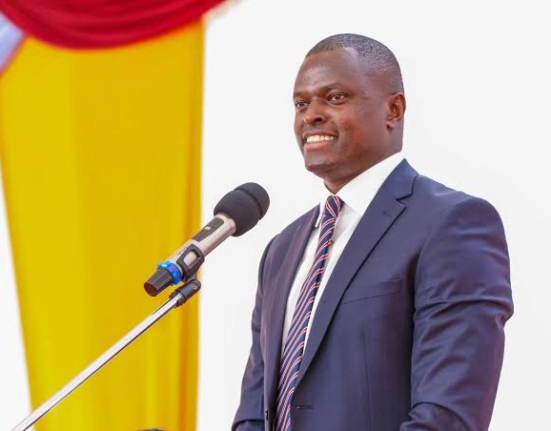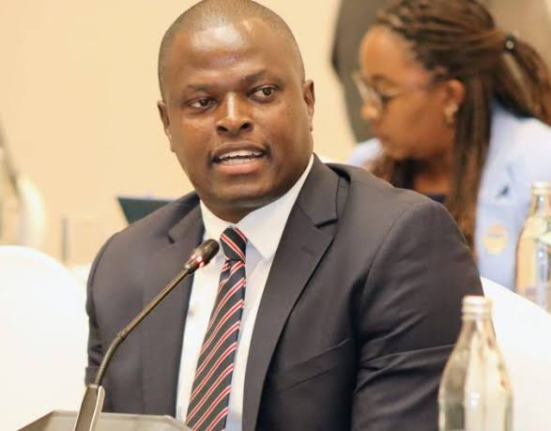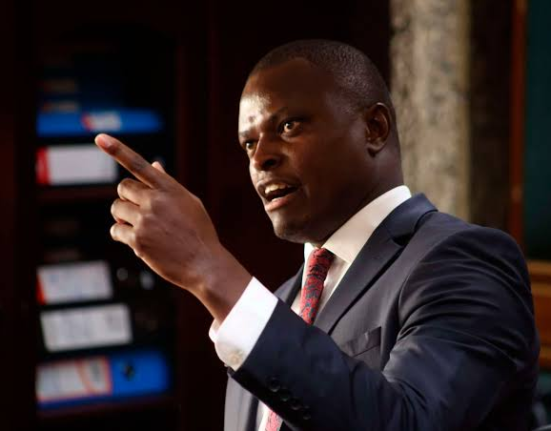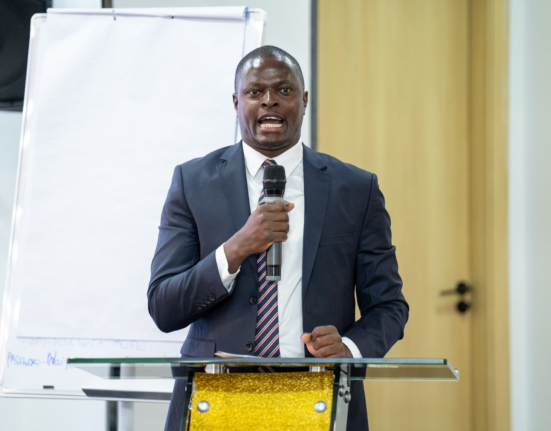

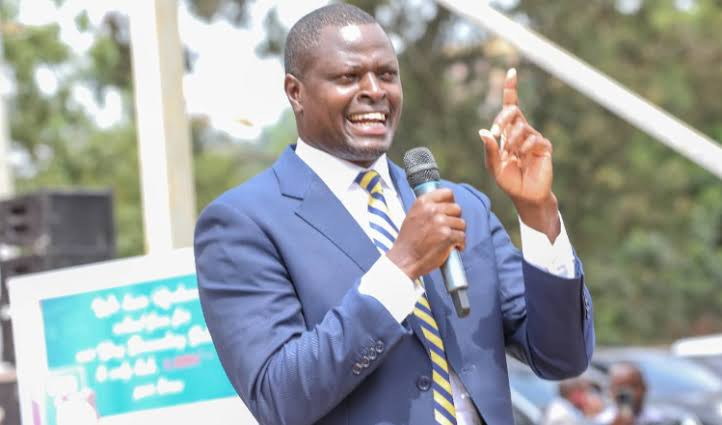
LNdindi Nyoro has raised strong concerns about the financial path the government is taking, particularly the heavy use of securitisation to raise funds.
He warned that the strategy is nothing more than borrowing under a different name and could end up placing an even heavier financial burden on future generations.
His remarks came during a business expo held in Nyeri County, where he questioned the wisdom of securitising fuel levies and road maintenance funds in order to borrow as much as Ksh.100 billion every month.
Nyoro explained that while such measures may appear to provide short-term relief, they do not solve the underlying problem of fiscal mismanagement.
Instead, he said they create a dangerous cycle of borrowing that only digs the country deeper into debt.
He backed his claims with figures from the Central Bank and Treasury, pointing out that Kenya’s public debt now stands at more than Ksh.12.1 trillion. Within just three years, he said, the government has borrowed over Ksh.3.5 trillion, a trend that shows no signs of slowing down.
To paint a clearer picture of the magnitude of the crisis, Nyoro broke down the figures further, stating that the country is now borrowing Ksh.3.4 billion every day, which translates to about Ksh.140 million per hour or Ksh.2.4 million every minute.
He added that this relentless borrowing continues day and night without pause.
On top of this, Kenya has already borrowed Ksh.175 billion through the securitisation of the Fuel Levy and an additional Ksh.45 billion through the Talanta Bond.
According to him, these financial moves are quietly increasing the burden without proper scrutiny from Parliament.
Nyoro also drew a comparison with past administrations, noting that in the last three years alone, Kenya has borrowed three times what former President Mwai Kibaki borrowed throughout his entire ten-year tenure.
This, he argued, highlights just how unsustainable the current path has become. He cautioned that the government should avoid using securitisation as a tool to present a rosy picture while in reality the economy is being weakened.
For him, transparency and discipline in financial management should take precedence over quick fixes that risk trapping the country in endless debt cycles.
Supporters of securitisation argue that it provides a solution to stalled infrastructure projects such as road construction and solar electrification. By unlocking funds tied to future revenues, they believe the government can keep development on track without officially inflating the national debt figures.
However, critics like Nyoro insist that the practice still mortgages the country’s future income and undermines fiscal accountability. It creates hidden debts that are no less dangerous than direct borrowing.
The growing reliance on securitisation reflects the difficult balancing act Kenya faces between financing development and maintaining debt sustainability.
Nyoro’s warning adds to the ongoing debate about whether such financial tools are truly beneficial or whether they are simply pushing the country further into a trap that will weigh heavily on generations to come.