


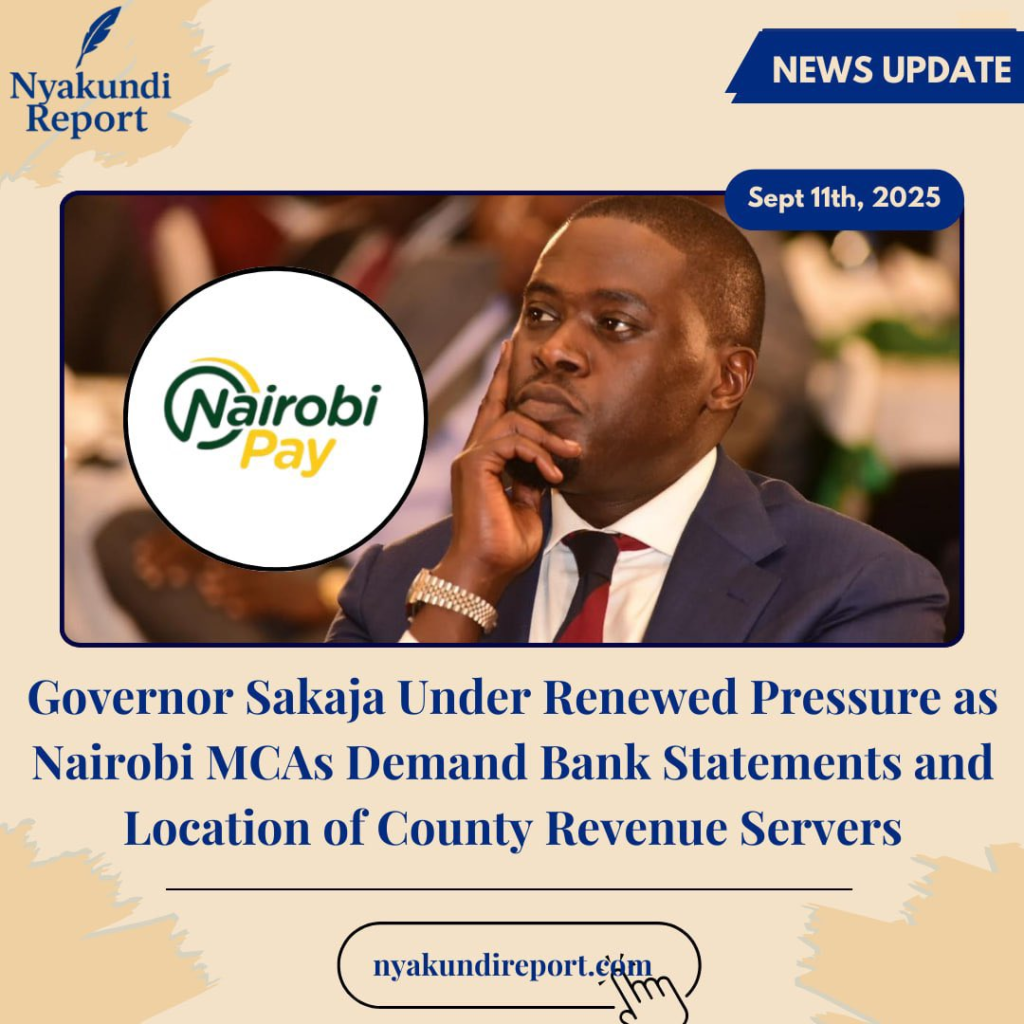
Ward representatives in Nairobi County are demanding full transparency on the operations of the county’s revenue collection system, Nairobi Pay.
They want Governor Johnson Sakaja to disclose the exact location of the system’s servers and provide certified bank statements to verify how much money is collected daily.
The MCAs argue that critical information about millions of shillings flowing through the system has been withheld, raising serious questions about financial management under Sakaja’s leadership.
During a tense ICT Committee session chaired by Hospital Ward MCA Mark Ruyi, MCAs including Kayole Central’s Jeremiah Themendu and Mathare North’s Oscar Lore dismissed the county’s reported revenue figures as unreliable.
Delays in staff salaries were highlighted as one of the key signs that Nairobi Pay might not be functioning properly. The committee also noted that auditors have been denied access to the system for the past two years, blocking independent verification of the funds.
Investigations into potential revenue losses have stalled, deepening concerns about how the county handles its money.These demands come shortly after the county announced record collections of Ksh 13.7 billion against a target of Ksh 20 billion for the year.
Instead of showing progress, the figures have triggered more questions over their accuracy. Nairobi’s financial management has faced scrutiny for months, with oversight failures documented in multiple reports.
In August, the Auditor General highlighted irregularities totaling around Sh20 billion, including questionable procurement practices and payments without proper documentation under Sakaja’s administration. These findings have fueled calls for stronger accountability and for changes within the county’s financial management team, including the possible dismissal of the Chief Finance Officer amid rising corruption allegations.
The standoff has real consequences for county workers, many of whom have gone months without full salaries despite claims of strong revenue inflows. Nairobi Pay, meant to streamline collections from parking fees, licenses, and other services, has faced skepticism from MCAs who argue that without access to server locations and past bank statements, there is no way to verify if the system is working or if funds are being misappropriated.

The ICT session exposed deep divisions between the assembly and the executive, with verbal assurances rejected in favor of documented proof.The county also faces an impeachment motion against Sakaja, backed by over 20 charges including financial mismanagement and abuse of office.
MCAs have raised concerns over irregular payments to law firms, questionable procurement, and stalled investigations that could reveal missing funds. Posts on social media suggest that daily collections could reach Ksh 20 million, heightening the need for verification.
With staff morale low, potential strikes looming, and the assembly pressing for concrete action, the spotlight is on Sakaja to release the server details and bank statements.
Resolving these issues could restore trust in Nairobi’s revenue system and ensure that funds reach public services like roads, health, and waste management.