
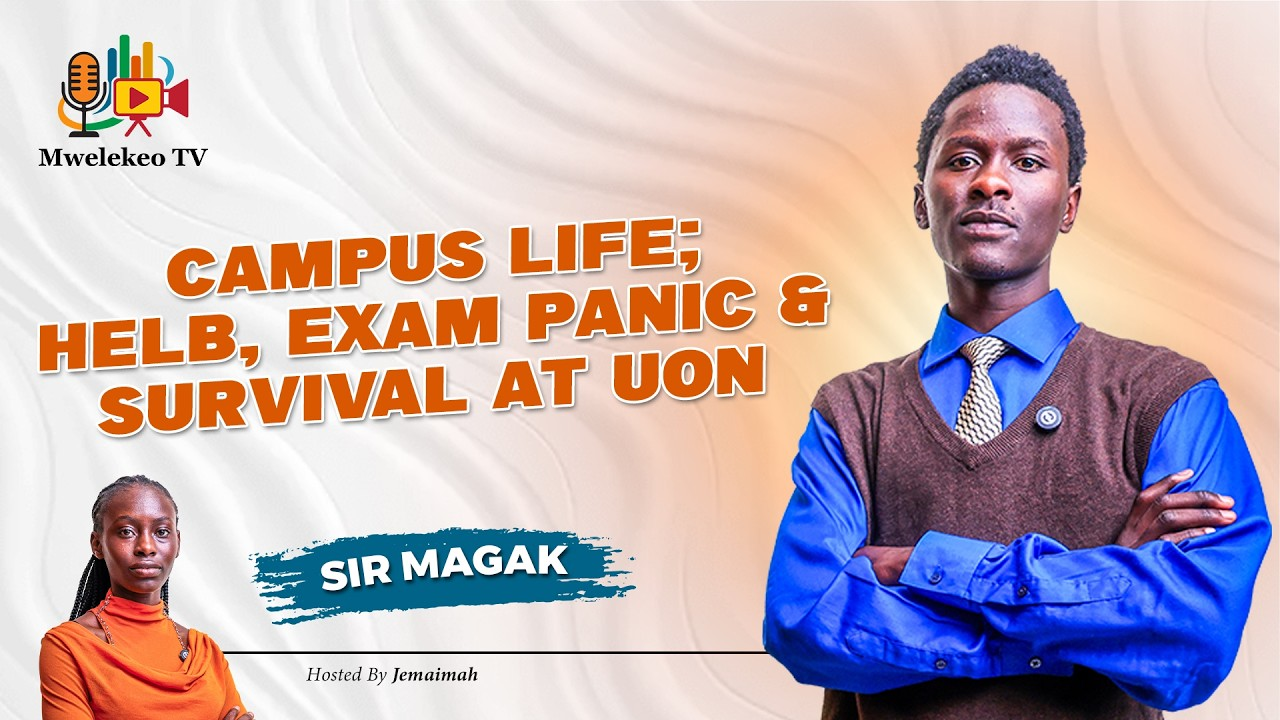
Mwelekeo TV recently hosted a campus conversation that highlighted the real experiences of university students, bringing honest discussion about academics, finances, and personal ambition to its audience.
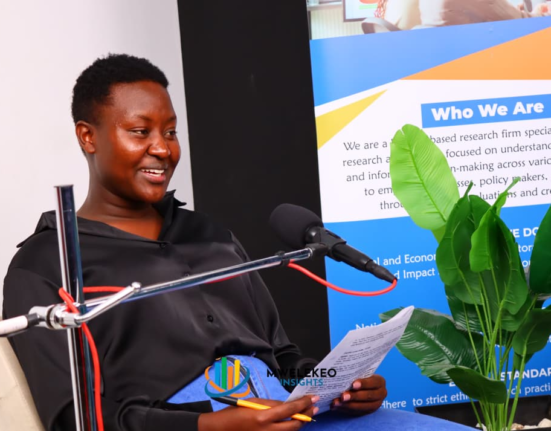
In one of its campus segment episodes, host Jamaima Ihabi sat down with Magak, a journalism and mass communication student from the University of Nairobi, where they talked openly about the everyday realities many students face while pursuing higher education in Kenya.
The episode, titled Campus Life HELB Exam Panic and Crazy Survival at UoN, focused on topics that resonate with thousands of young people across the country.
Through the conversation, viewers were given a glimpse into the pressures and hopes that define student life.
From managing academic work to coping with limited finances, the discussion reflected the balancing act that many students experience throughout their university journey.Magak explained that his decision to study journalism was driven mainly by passion.
He described the course as more than just a path to a degree.
For him, journalism is about understanding society and telling meaningful stories that can shape conversations in the country.
His interest in national issues has also pushed him to follow politics closely.
During the conversation, Magak shared that he may consider joining politics in the future.
He said he finds inspiration in leaders who moved from academic life into public service, mentioning the deputy President of Kenya Kithure Kindiki as one example.
According to Magak, such journeys show that leadership can begin from spaces like classrooms and universities.
The discussion also explored academic life at the University of Nairobi. Magak explained that exams can be manageable when students remain disciplined and plan their time well.
He said the university library and online academic materials play an important role in helping students prepare effectively.
Magak also spoke positively about some lecturers who have influenced students through their teaching approach.
One lecturer he mentioned was Dr Paul, who teaches information sourcing and philosophy.
According to Magak, his classes help students connect theoretical knowledge with the realities of the media industry.
However, the conversation did not avoid the financial challenges that many students face. Magak described what students commonly call the “broke comrade life,” where careful budgeting becomes necessary to survive each semester.
Food, transport, and basic daily needs often stretch student finances beyond their limits.
Support from the Higher Education Loans Board, widely known as HELB, remains important for many learners. Magak noted that most students receive between KSh 20,000 and KSh 30,000 per semester, which often falls short of the real cost of living.
In his view, students would need closer to KSh 40,000 or even KSh 60,000 to comfortably manage a full semester.
Transport costs are one of the biggest challenges, especially for students who live outside campus. Daily commuting quickly consumes a large portion of the money students receive.
Because of these financial pressures, some students sometimes think about borrowing money from digital loan applications when funds run out.
Despite these struggles, Magak believes campus life can still be enjoyable. Interestingly, he said his idea of fun does not revolve around nightlife or expensive entertainment.
Instead, he prefers spending time relaxing and focusing on personal interests that do not require much money.
He also encouraged students who have the chance to stay in university hostels to take that opportunity seriously.
Living within campus, he said, can reduce both financial strain and the stress of daily travel.
Through conversations like this, Mwelekeo TV continues to provide a space where students can speak honestly about their experiences.
The platform focuses on real stories from young people, allowing viewers to understand the determination, resilience, and ambition that shape the lives of many Kenyan university students today.
Even as challenges remain, such discussions remind audiences that behind every student is a journey filled with hope for a better future.




Leave feedback about this