
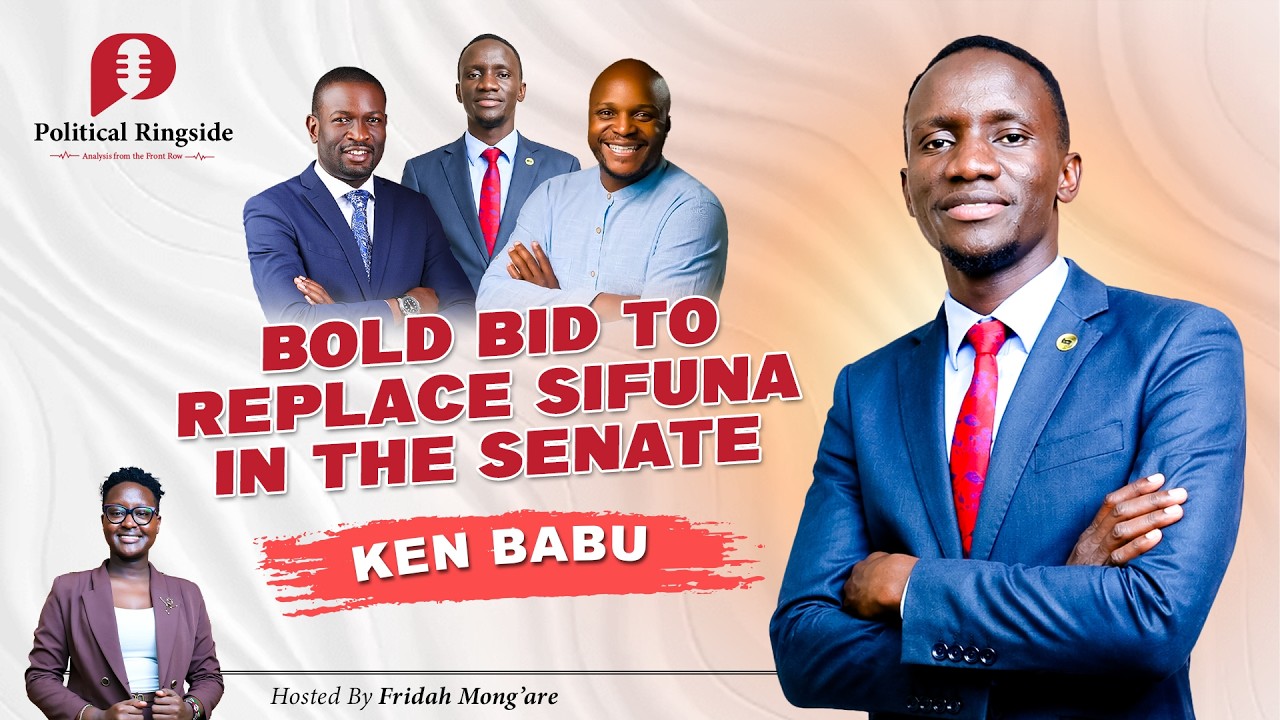
Fresh debate around youth leadership and the future of Nairobi took centre stage after Political Ringside hosted an in-depth conversation with Nairobi Senate hopeful Ken Babu in an interview with Fridah Mong’are.
The discussion added to the growing attention around young leaders seeking elective office and offered viewers a closer look at the ideas driving his campaign.
During the interview, Ken Babu presented himself as part of a new generation that wants to move beyond political rhetoric and focus on practical solutions.
He spoke at length about why he believes Nairobi needs leadership that connects more directly with ordinary residents, especially young people struggling to find opportunities.
A major theme in the discussion was unemployment, which he described as one of the city’s deepest challenges. He argued that the issue goes beyond missing jobs and touches on insecurity, poverty and frustration among young people.
In his view, creating economic opportunities should be treated as a priority because it affects nearly every other social problem the city faces.
He said his Senate bid is rooted in those concerns and in a belief that younger leaders should no longer remain on the sidelines.
According to him, many young people have ideas and energy to contribute, but often feel shut out of decision-making spaces.
His message was that leadership should not be postponed to some distant future, but embraced now.
The interview also explored his view of the Senate and why he considers it a critical office. He said the role goes beyond politics and involves protecting county interests, strengthening oversight and ensuring public resources are properly managed.
For him, the office can be used to defend the interests of Nairobi residents while pushing for reforms that improve service delivery.
Even as he outlined his ambitions, Ken Babu avoided turning his campaign into a personal contest against current Senator Edwin Sifuna.
Instead, he acknowledged Sifuna’s work in oversight and said leadership can be built through continuity as well as fresh ideas. That approach gave the interview a more issue-based tone rather than one centred on political rivalry.
Housing, healthcare and education also featured prominently in the discussion. He argued that restoring confidence in Nairobi’s leadership requires improvements in services that affect everyday life.
He linked this to dignity, saying residents want a city that works for them and a leadership that remains open and accountable.
The wider national political climate was also part of the conversation. On the rising cost of living, he said many Kenyans are expressing genuine frustrations over economic hardship. He argued those concerns should be listened to rather than dismissed, adding that public debate around governance and accountability has become more urgent.
He also shared support for youth-led civic action, including the June 25 protests, which he said reflected a generation demanding to be heard.
In his view, such moments show growing political awareness among young people and a push for greater accountability from those in office.
Throughout the interview, he maintained that while political parties play a role in elections, the real power rests with voters. He said public trust must be earned through ideas, consistency and service, not slogans alone.
The conversation also reinforced Political Ringside’s place in Kenya’s political discourse. The platform has built a reputation for hosting conversations that go beyond headlines, often allowing guests to explain positions in greater detail while facing direct questions.
As with many of its recent interviews, research-driven insights from Mwelekeo Insights helped frame some of the issues discussed, adding context to debates around youth participation, governance and voter expectations.





Leave feedback about this