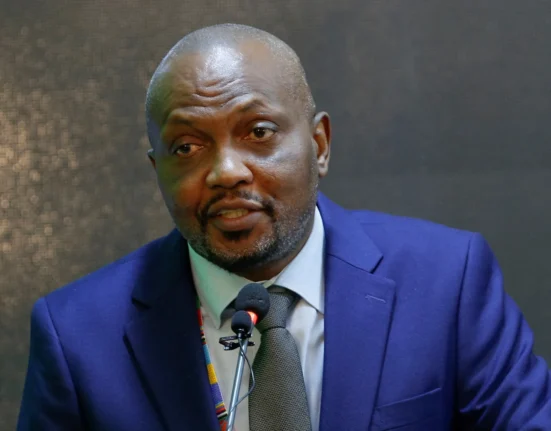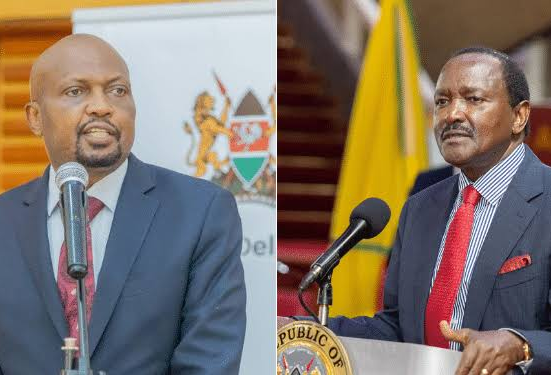

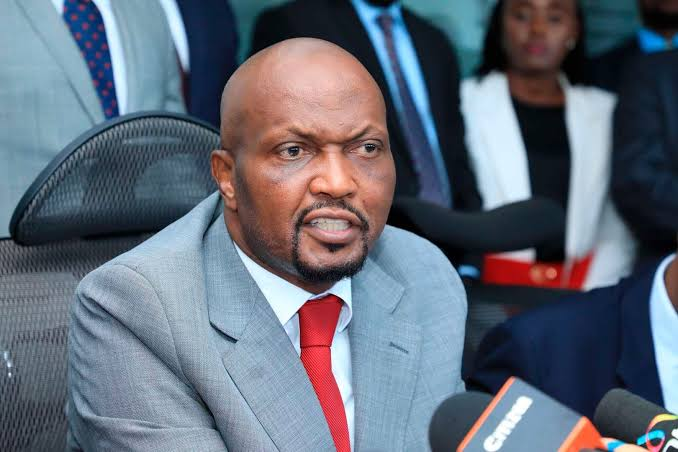
Former Presidential Economic Advisor Moses Kuria has voiced concerns over President William Ruto’s newly unveiled Multi-Agency Team on War Against Corruption, arguing that its placement under the Executive Office of the President raises questions of independence and fairness.
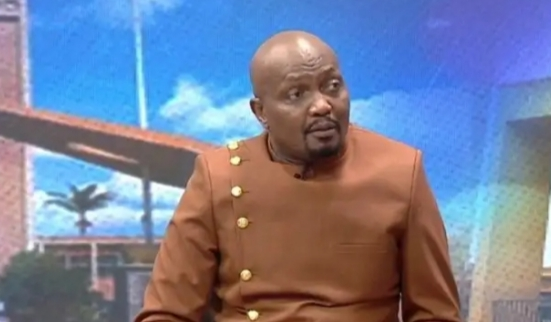
Kuria, who also served as Trade Cabinet Secretary, shared his views during Citizen TV’s ‘The Explainer’ show on Tuesday night, where he welcomed the effort to fight graft but questioned the framework chosen by the government.
Kuria said he expected a broader and more inclusive model, warning that the team’s leadership under the Executive risks creating a structure without external checks and balances.
“Any effort that goes to fight this staunch of corruption is welcome, and there is no real wasted effort, so you cannot say that this is not the right way to do and there is no one thing which can be done that can replace all the other mechanisms. I think it is good, but I only have two concerns,” he said.
He explained that the first concern was about the composition of the team.
“One, I would have expected the President to name, not a whole-of-government approach, but a whole-of-society approach. The mere leadership of the team being under the Executive Office of the President would point to some very worrying situation because it is actually a team that can sit together and agree or connive on what to do, there are no external checks and balances and we have seen weaponisation,” he stated.
Kuria added that the agencies already involved in the fight against graft, including the Ethics and Anti-Corruption Commission and the Office of the Director of Public Prosecution, have the constitutional mandate to act independently.
He argued that placing them under the Executive introduces what he described as a “prefect.” In his words, “Without the Executive, they have the mandate, but now they have been taken under the management of the Executive Office of the President.
These are people already with the mandate to fight corruption; there is nothing new; the only new thing is that there is a ‘prefect’ (the Executive), which begs the question of impartiality and independence of the team.”
He went on to say that a genuine whole-of-society approach would have made the process more credible, especially if it included representation beyond government institutions.
Kuria also questioned the timing of the team’s formation, linking it to events around KCB Karen.
“The other doubt is the timing because it coming 24 hours after what happened at KCB Karen is suspicious. Parliament and Judiciary are also not represented in that team, and it would have made sense to have that yesterday, then the public proclamation today,” he said.
Kuria compared the current approach to what was seen under former President Uhuru Kenyatta, suggesting that the country might be returning to an unsystematic way of handling corruption.
He emphasized the need for a sustainable, long-term institutional process that would not appear politically motivated.
He further warned that the proclamation may not withstand legal scrutiny, saying, “I expect someone to go to court. I don’t think it was well thought out through.”His comments came just days after President Ruto accused Members of Parliament of demanding bribes from Cabinet Secretaries and Governors, remarks that have fueled growing tension between the Executive and the Legislature.