

A new study by Mwelekeo Insights shows that most Kenyan men now support the idea that bride price should not just be a tradition but a reward for a wife’s good behaviour during marriage.
According to the findings, 89% of men said they would support a system where the bride price is given gradually throughout the marriage, based on how the wife behaves, rather than as a one-time payment before the wedding.


This marks a big shift in thinking, as many men now believe that marriage should be more about mutual respect than just following old customs.
The survey, which focused on Kenyan men aged between 18 and 45, also found that views on bride price are changing based on age, education, location, and exposure to modern ideas.
While older and rural men mostly defend the tradition, seeing it as a sign of respect and family unity, younger and urban men are beginning to question its importance.
Many of these younger men said bride price feels outdated, too expensive, and at times, unfair to both men and women. In fact, 47% of those surveyed opposed the tradition in its current form, showing that society is nearly evenly divided.
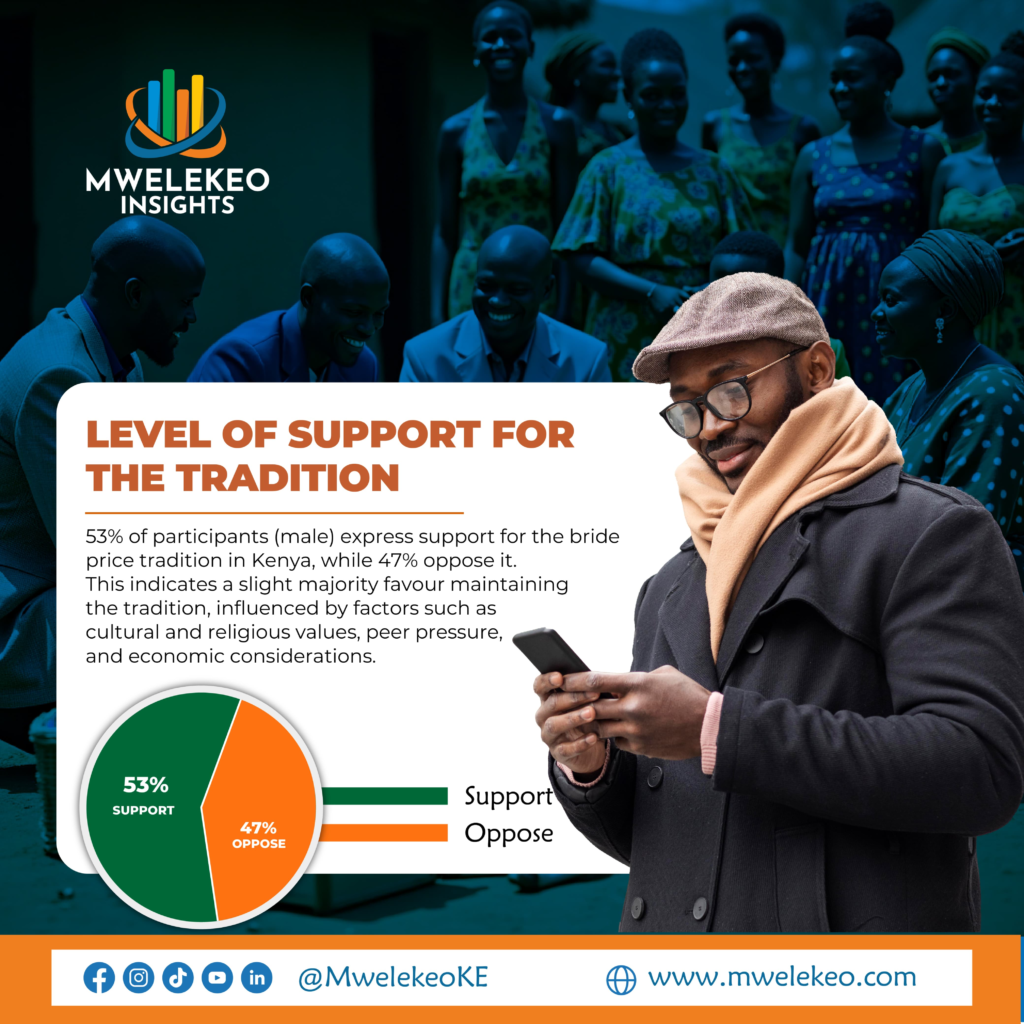
One of the biggest reasons for this growing opposition is the high cost of bride price today. Men reported feeling pressure from families and communities to pay large sums of money, livestock, or gifts to prove they are ready to marry. 54% said this financial burden made them delay or even avoid marriage altogether.

Among unmarried men, 58% agreed that bride price affects their decision to marry, mainly because they cannot afford the demands.
This pressure was especially hard on younger men who are still trying to finish school or build careers.

Religion and culture also play a role in shaping how men view bride price.
About 66% of men said they support the tradition because it fits with their religious and cultural values.
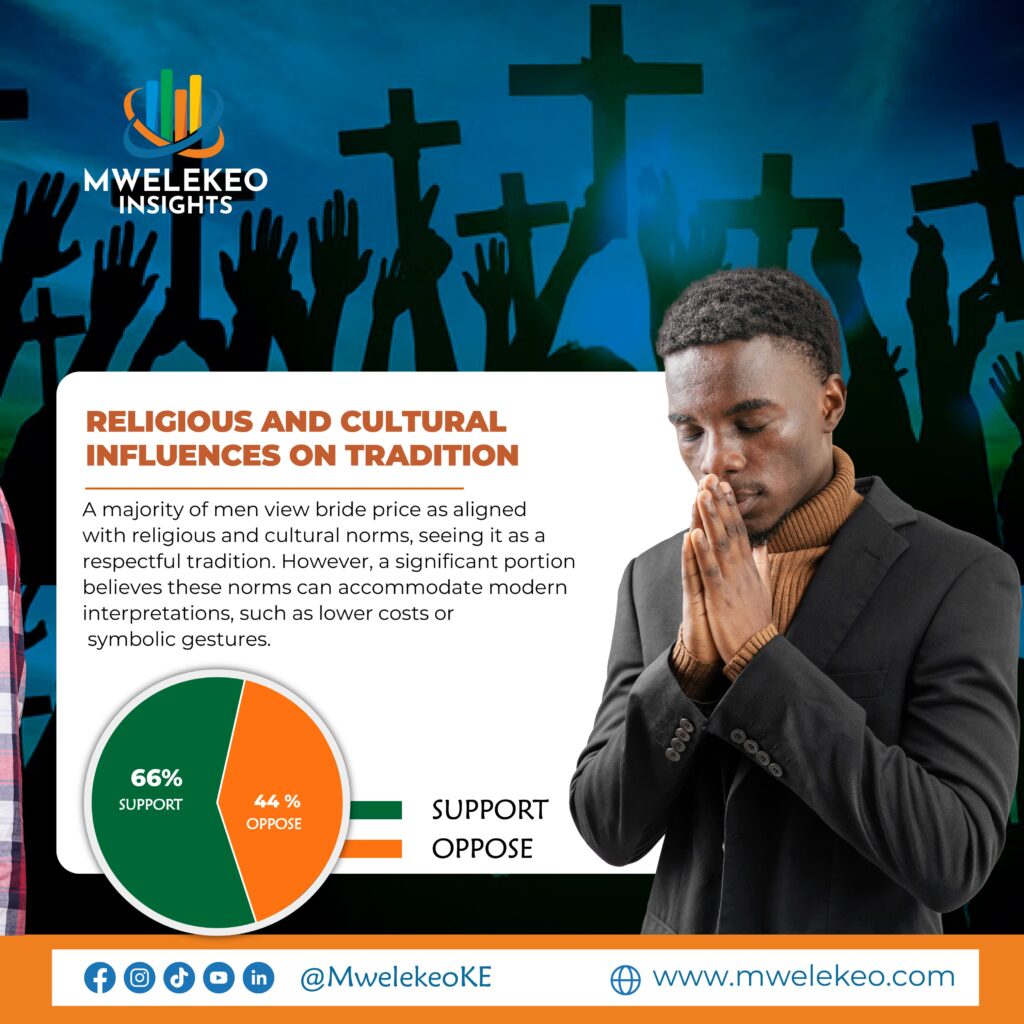
However, many also said they are open to modern changes, such as reducing the cost or making it more symbolic. A growing number of men are calling for a middle ground that respects tradition but fits modern life.
The question of women’s autonomy also came up in the study. 65% of men said bride price does not affect a woman’s freedom or make her seem like property, but 28% believed it does.

These concerns were mostly raised by educated and urban men, who said the tradition sometimes makes marriage feel more like a business deal.
They also pointed out that in today’s world, where both men and women work and support the home, old gender roles need to be reviewed.
Another part of the survey asked men if they would support other options.

Around 65% supported the idea of cost-sharing between the couple, while 83% liked the idea of spreading payments over time instead of doing it all at once.
Still, when asked if women should pay bride price instead of men, 71% strongly opposed the idea, showing that many still believe men should take the lead in this area.

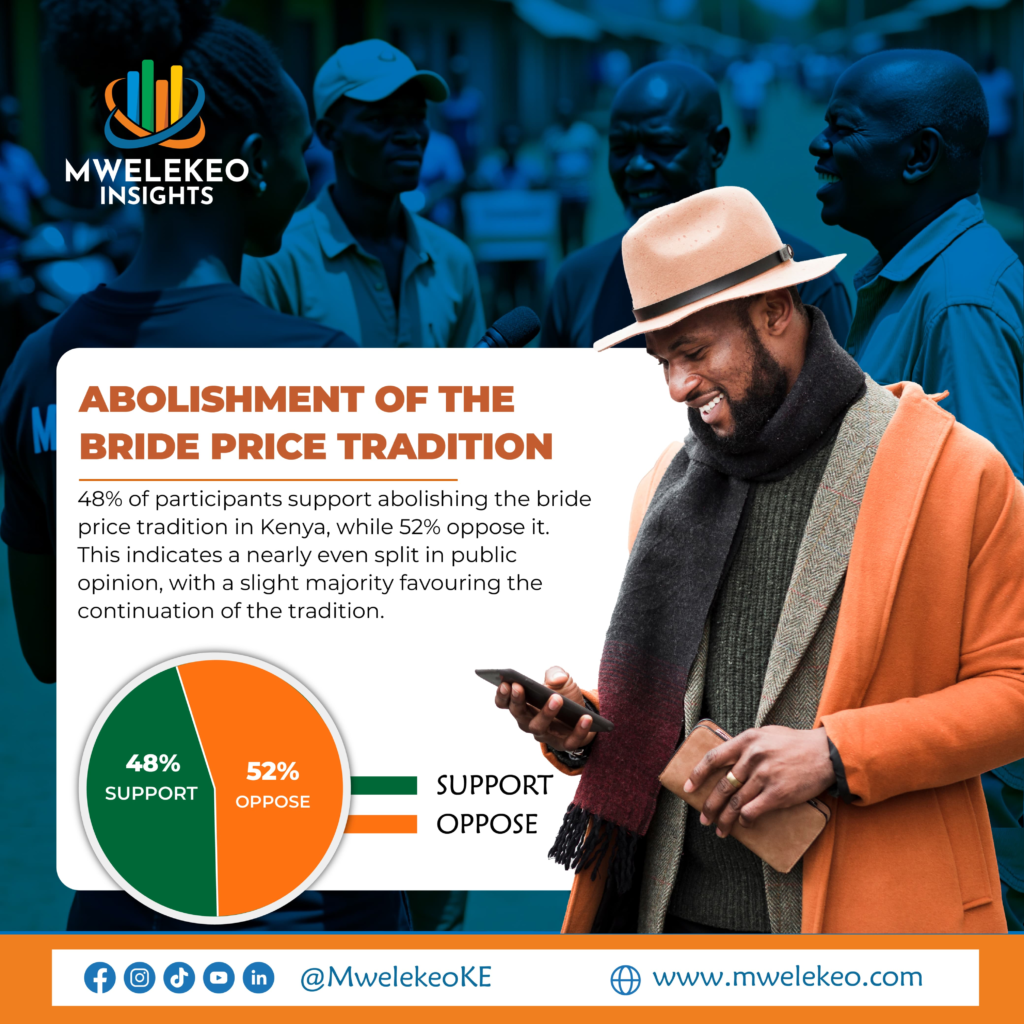
Also, 52% of men still want bride price to continue, while 48% supported its full removal, meaning the country is split on whether to keep or end the tradition.
What stood out most in the findings was the pressure men feel around bride price.
58% said it affects their emotional well-being, and 42% said it even affects how they see themselves in society.

Many said they feel judged if they cannot pay, and this affects their confidence and relationships. Despite this, most men said they don’t want to completely throw away the tradition. Instead, they want it to change with the times.
Many said it should be based on love, fairness, and shared decision-making, rather than being a financial test of manhood.
Mwelekeo Insights found that Kenyan men are not against culture, but they want it to make sense in today’s world. Most support bride price when it feels like a respectful reward, not a burden.
The conversation is now shifting from whether to keep or scrap bride price, to how to make it more fair and meaningful in modern relationships.