

A debt trap is not just a phrase in economics. It is the reality Kenyans live every day when the cost of unga rises, when fuel keeps going up, and when paying school fees becomes a struggle. These are not random events. They are shaped by decisions made through fiscal policy, and that is what Mwelekeo Insights and Mwelekeo TV have been focusing on in their recent discussions.
On their official X page, Mwelekeo Insights points out that government budgets and taxes may look distant, but they affect daily life directly.
They argue that taxes are not just numbers collected by the state, they are your money, your children’s education, and your community’s future.
This connection is what drives their content, which aims to unpack the data and spark conversations that Kenyans deserve to have.
By bringing the issues closer to the people, they want Kenyans to see that fiscal policies are not abstract but lived realities that determine the quality of life across the country.
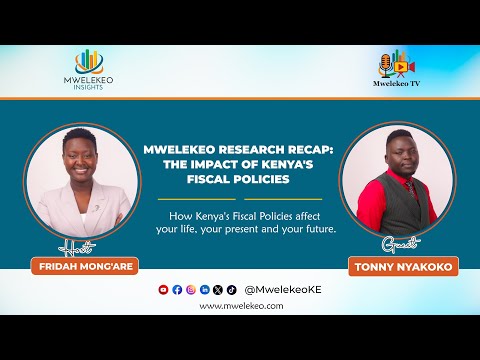
The recent episode of Mwelekeo TV, available on YouTube, digs into the question of why unga keeps getting more expensive, why fuel prices continue to rise, and why school fees are getting harder to manage.
The presenters, Fridah Mong’are and Tonny Nyakoko, explain that these are not coincidences but the outcome of policy choices.
They break down how fiscal policies work, why government borrowing creates pressure, and how taxation decisions end up shaping household budgets.
In doing so, they aim to simplify matters that are often kept technical and inaccessible.
One of their key messages is that fiscal policy is not just about government officials balancing books. It is about whether a parent can afford to send their child to school without falling into debt.
It is about whether transport costs remain bearable when fuel prices spike. It is about whether communities get the development projects they are promised or are left with unfulfilled expectations while money is lost to debt repayment.
Mwelekeo TV and Mwelekeo Insights argue that bringing this knowledge into open discussion is necessary to create awareness.
They want Kenyans to understand that decisions made in government about borrowing, spending, and taxation are at the heart of the daily struggles families face.
By putting the conversation on platforms like X and YouTube, they hope to reach more people and make policy debates less about numbers and more about people’s lives.
The episode makes it clear that understanding fiscal policy is not only for economists or politicians.
It is for every Kenyan who wonders why their shopping basket keeps shrinking, why their children’s education costs keep rising, and why their taxes seem to increase while public services remain under strain.
Mwelekeo TV insists that only through open discussion and simplified explanation can citizens demand accountability and better management of resources.In the end, the message is straightforward.
A debt trap is not distant from ordinary life. It is here, affecting families and shaping the future of communities.
And that is why Mwelekeo Insights and Mwelekeo TV are working to make these issues clear, accessible, and part of the national conversation.