

A politician’s truest test isn’t found on the microphone at a bustling campaign rally, but in the quiet, calculated tally of a parliamentary vote.
For Kiharu MP Ndindi Nyoro, that distinction has become the center of a heated national conversation regarding political branding versus legislative duty.
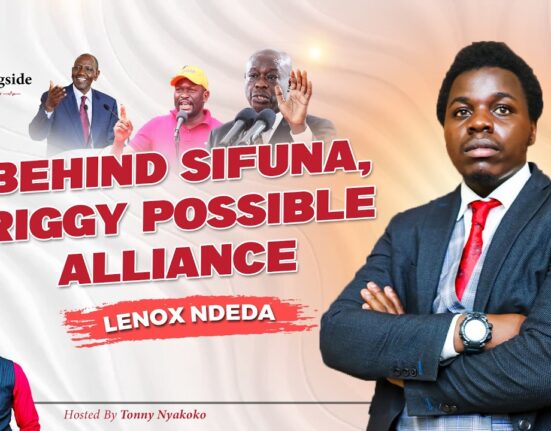
During a recent episode of the analysis show Political Ringside, hosted by Kevin Waswa, political commentator and engineer Lenox Ndeda took aim at Nyoro’s recent track record.
The core of the critique?
The lawmaker’s absence during the crucial vote for the Finance Bill 2026a piece of legislation with massive implications for everyday citizens.
The Gap Between Advocacy and Action
Nyoro has painstakingly built a reputation as a savvy, accessible economic commentator who champions the plight of the ordinary citizen.
However, Ndeda argues that this public persona clashes directly with his actual participation when high-stakes fiscal policies are finalized on the floor of the National Assembly.
According to Ndeda, this approach borders on “post-truth populism.” The issue isn’t a lack of economic understanding Nyoro is widely recognized for his sharp grasp of financial matters.
Rather, the criticism focuses on a perceived trend of disappearing when it is time to anchor those public positions into official parliamentary records. “Lawmakers cannot project themselves as champions of the people in press rooms and public rallies, only to go missing when it’s time to cast a vote on taxes that directly alter the cost of living.” Lenox Ndeda,
This critique extends beyond a single event. Analysts point to a habit of strategic absence during highly sensitive political flashpoints, including previous tax debates and the high-profile impeachment of former Deputy President Rigathi Gachagua.
The Finance Bill 2026 Vote
The legislative pieces moved forward despite the empty seats in the chamber: Votes in Favor: 122
Votes Against: 40
The Real Story:
The defining characteristic of the session wasn’t just the margin of victory, but the sheer volume of lawmakers who chose not to show up at all.
Nyoro has since addressed the fallout, clarifying that an unavoidable overseas trip forced him to miss the session. While he offered the explanation, he notably conceded that traveling should not shield him from public accountability and blame.Nevertheless, for skeptical voters, the question remains: why was a leading voice on public debt, fuel prices, and state expenditure absent when his vote mattered most?
Changing Tactics: 2024 vs. 2026
The discussion on Political Ringside also shed light on how the political landscape has shifted since the volatile Finance Bill 2024, which sparked massive, youth-led demonstrations across Kenya.
Ndeda observed that the fierce pushback in 2024 was largely driven by aggressive, defensive communication from the state, alongside a failure to clearly explain the budget proposals.
In contrast, the Finance Bill 2026 cleared the house not because the tax burdens were lighter, but because the government utilized much more sophisticated political management to navigate the pushback.
This environment highlights a deeper flaw within Kenya’s wider parliamentary landscape:
Prioritizing the Podium:
Many MPs treat official house sessions as secondary, choosing instead to prioritize funerals, rallies, and local political mobilization.
Strategic Shifting:
Absenteeism allows politicians from both sides of the aisle to quietly avoid taking an official stance, enabling them to later sympathize with public outrage over laws they did nothing to stop.## The Litmus Test for 2027As a prominent political heavyweight in the Mount Kenya region, Nyoro is frequently mentioned as a key player in Kenya’s future leadership dynamics. His strong development record in Kiharu and his articulate grasp of economic data have earned him a formidable base.Yet, as the path toward the 2027 elections begins to take shape, the standards for leadership are shifting. The warning from analysts is clear: charisma and regional popularity are no longer a pass for skipping foundational legislative responsibilities. The next generation of voters may very well judge their leaders not by the passion of their roadside speeches, but by whether they actually show up, read the bills, and vote when the nation calls.



Leave feedback about this