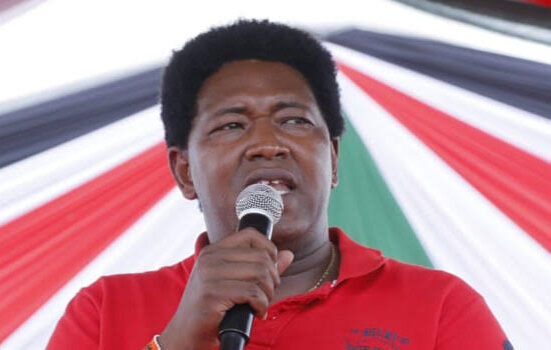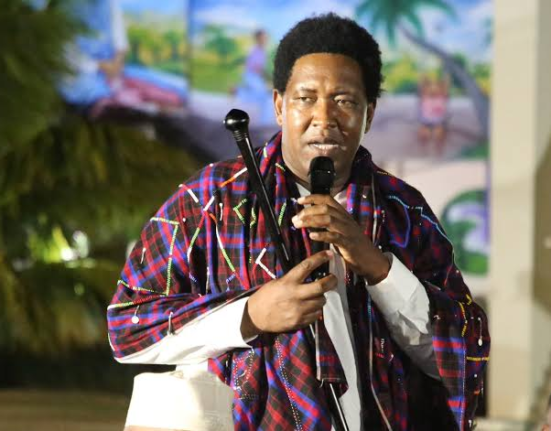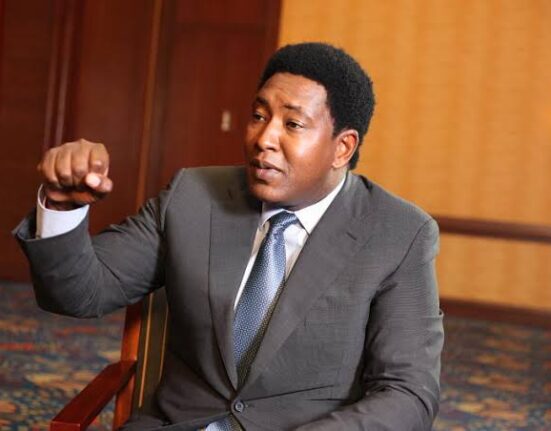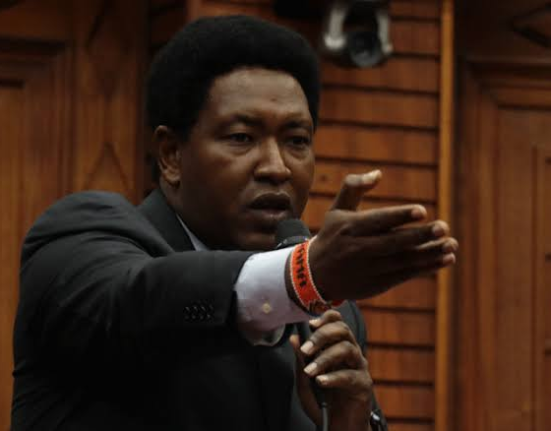

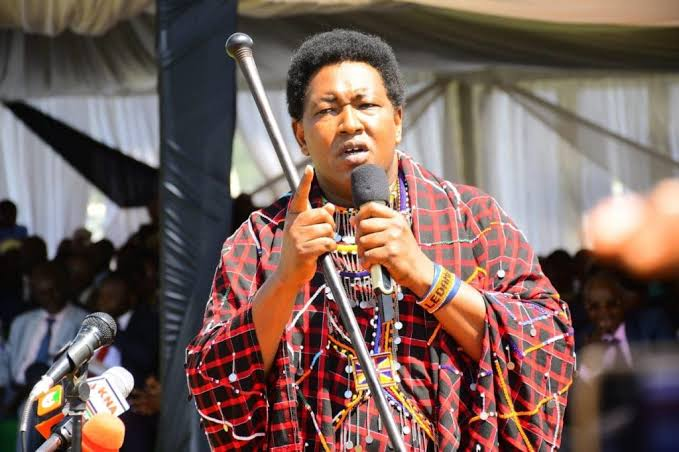
Senate Minority Whip Ledama Ole Kina raised sharp concerns during a tense political meeting where corruption accusations were being discussed.
He stood firmly against the idea of making general claims about Members of Parliament being involved in bribery without presenting concrete proof.
According to him, it was wrong to condemn the entire Parliament for corruption because such statements only served to damage its reputation and weaken public trust in the institution.
Ole Kina asked a difficult question that touched on the heart of the debate, who exactly has the moral authority to lecture others about corruption in Kenya?
In his view, leaders who are quick to criticize must first take a closer look at themselves.
He suggested that self-reflection was important before pointing fingers at others, otherwise the conversation around corruption would only turn into political mudslinging.
He also warned that it was dangerous for leaders to portray themselves as clean while ignoring their own shortcomings.
Referring to the idea of “living in a glass house,” the Narok Senator implied that no leader was completely free from blame.
His statement suggested that those making accusations might themselves be guilty of questionable dealings, which made it unfair for them to act as if they were beyond reproach.
Ole Kina further emphasized that leaders should avoid broad and careless statements because generalizing corruption claims against MPs could have serious consequences.
He said it risked undermining the credibility of Parliament as a whole, a move that would not only affect lawmakers but also shake public confidence in democratic institutions.
His remarks came shortly after President William Ruto and Raila Odinga openly accused MPs of extorting Cabinet Secretaries and governors.
These accusations had angered many lawmakers, who felt that the statements painted them all in a bad light without considering that corruption cases should be addressed individually.
Ole Kina reflected the growing unease among MPs who felt unfairly targeted. His intervention also showed that ODM was keen on protecting its members from being judged collectively.
The debate highlighted the deep divisions within the meeting, with some leaders defending the accusations while others pushed back strongly.
Ole Kina’s stand was not just about defending MPs but also about urging leaders to handle the sensitive issue of corruption with fairness and responsibility. He called for a balanced approach, one that recognized the seriousness of the problem but avoided using it as a political tool to discredit entire groups of leaders.