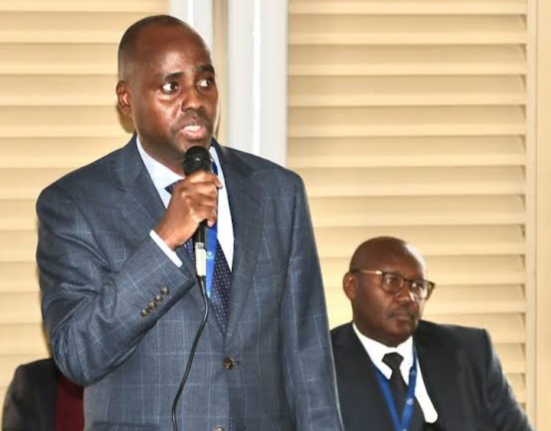


Kenya’s digital finance system is facing serious questions after Auditor-General Nancy Gathungu released a damning audit report on the eCitizen platform.
The report, which covers the financial year ending June 30, 2024, shows that nearly half of the money collected through the platform cannot be traced. Out of the KSh 100.84 billion collected, about KSh 44.82 billion is missing from official records, digital portal logs, or ledger balances.
This means a massive portion of public funds remains unaccounted for, raising serious concerns about how revenue is being handled.
One of the most alarming findings is the KSh 7.05 billion sitting in accounts that are not supported by any legally binding Service Level Agreements.
This means there is no proper legal oversight, and financial service providers could easily misuse these funds. Without clear contracts, there is no guarantee that the money will be handled properly or reach the intended government ministries or services.
The audit also exposed KSh 2.57 billion in Pesaflow system receipts that were not linked to any invoice. This points to a broken or manipulated system where duplicate, invalid, or incomplete payments are possible.
It opens the door to fraud and increases the risk of public funds being diverted for personal gain. For example, the Tourism Fund was supposed to receive KSh 2.24 billion, but only KSh 1.72 billion was recorded in the final settlement reports, leaving a gap of KSh 515 million.
Beyond the numbers, Gathungu’s audit revealed deeper weaknesses in how the eCitizen platform is run. The government depends heavily on private companies like Webmasters Kenya, Pesaflow, and Olive Tree Media to manage critical services.
These vendors have too much control over updates and system data, while the government has no strong IT policies, steering committees, or even a reliable backup system to protect public money.
These findings have prompted Parliament to take action, with Treasury officials summoned to explain the gaps. Lawmakers are particularly worried because many past audit recommendations, dating back to 2017, were never followed up.
There is now a strong push for better transparency, data security, and accountability.For ordinary Kenyans, the situation is worrying. Billions of shillings meant for public services have vanished without a trace.
The lack of formal contracts means no one is clearly responsible.
Private companies have more control than the government over public funds, and the risk of fraud is high. Until the government fixes these weaknesses, Kenya’s digital payment system remains unsafe and untrustworthy.
The longer this goes unchecked, the more money could disappear, and the public will continue to suffer from poor service delivery and lost trust in digital governance.