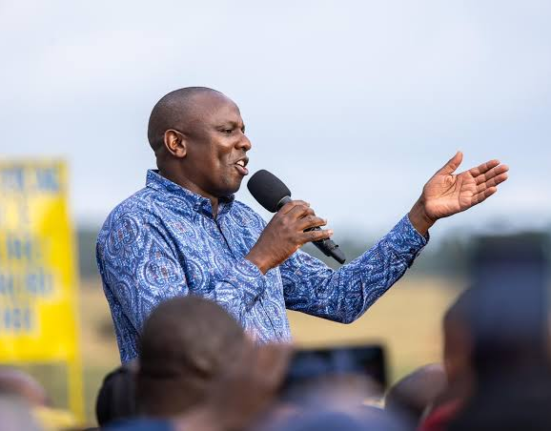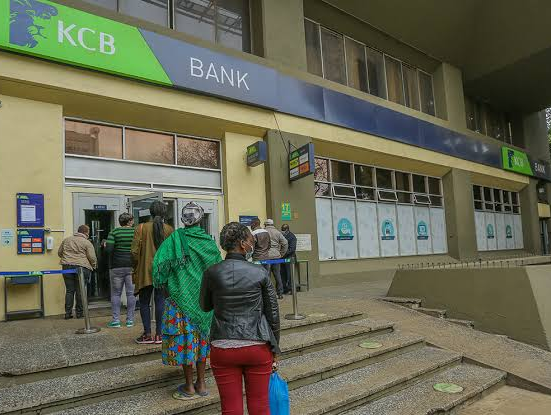

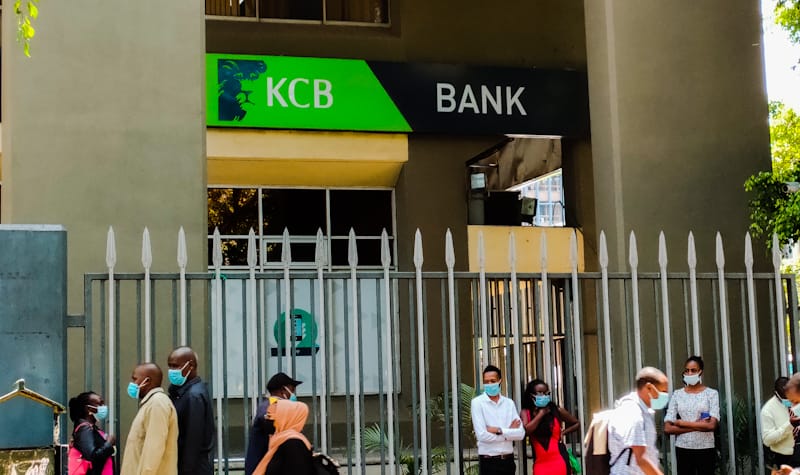
KCB Bank is again facing damaging accusations, this time from Kung’u Muigai who has come forward with claims that reveal how deep-rooted corruption and manipulation within the institution may run.
Muigai has accused the bank of allegedly using its financial might to influence top judges in an attempt to frustrate him in an ongoing land dispute.
For many who have watched the way KCB has handled past controversies, this case appears to confirm suspicions that when the bank is involved, both justice and money may be compromised.
According to Muigai, the bank has not only stood in the way of his search for justice but has also deliberately manipulated financial transactions to create roadblocks.
These actions allegedly resulted in endless confusion and delays, leaving him unable to pursue lawful remedies through the courts.
What makes the claims more alarming is Muigai’s description of what it felt like dealing with KCB. He explained that every small progress in court was almost immediately countered by unseen obstacles that seemed to be well-orchestrated.
For him, the very institution that should have provided financial security instead acted as a powerful barrier against justice.
These revelations strike a heavy blow at the public image KCB has worked hard to project as a reliable financial partner. Instead of being seen as a trusted institution, it is increasingly being associated with questionable practices that undermine accountability.
Critics argue that this is not a simple matter of negligence or mistakes but rather part of a disturbing pattern in which corporate power is used to tilt the scales in its favor.
Such accusations make it difficult for ordinary citizens to trust a bank that appears capable of bending not only financial rules but also the judicial process itself.
Legal analysts have been quick to warn that if Muigai’s claims are accurate, then the matter is far more serious than a single land dispute. It sets a dangerous precedent where citizens seeking justice must contend not only with a complicated legal system but also with financial institutions capable of influencing outcomes.
This highlights how unchecked corporate power can damage the rule of law and erode public confidence in both the courts and the banking system.
The timing of these allegations has only made the situation worse. They came just days before the shocking assassination of lawyer Kyalo Mbobu in Karen, an event that has already caused widespread fear and suspicion.
While no direct link has been established between KCB and the killing, the overlap between the two stories feeds a broader perception that powerful entities will stop at nothing to protect their interests.
Civil society groups and concerned citizens are now demanding transparency and accountability.
They are urging regulators to investigate the reach of corporate influence in Kenya’s judiciary and financial institutions, insisting that justice cannot remain hostage to those with deep pockets.
KCB’s next move will be closely monitored. By choosing either to confront these allegations openly or to remain silent, the bank risks exposing itself further.
For many, Muigai’s exposé is not just about one man’s battle; it is a warning of how vulnerable both personal wealth and legal recourse can become when powerful institutions like KCB are allowed to operate without checks.