
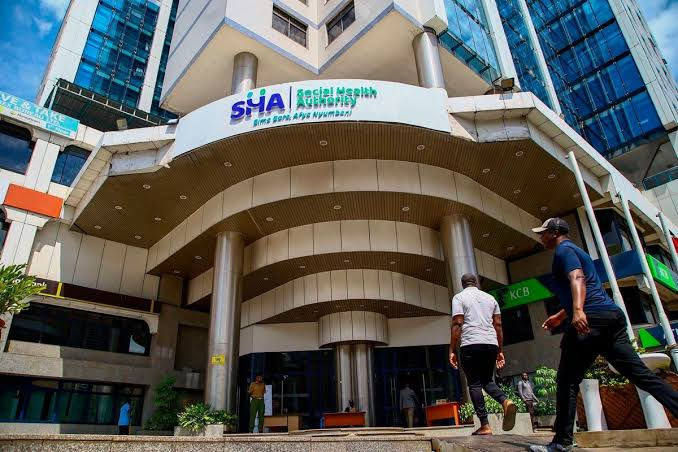
Kenya’s plan to achieve universal health coverage is now under serious threat as the Social Health Authority (SHA) struggles with a massive financial crisis.
The institution, which was created to handle all public health insurance matters, is facing unpaid hospital bills amounting to about Sh76 billion.
This situation has raised deep concerns among both lawmakers and healthcare providers, as it risks crippling the entire system meant to make healthcare affordable and accessible to every Kenyan.
Members of Parliament have expressed alarm over what they describe as a legal and institutional disaster in the making. They warn that if the government does not act quickly, the whole health financing framework could fall apart.
The biggest problem lies in SHA’s inability to pay hospitals for the services they have already provided. Many of the affected hospitals belong to the Rural and Urban Private Hospitals Association (RUPHA), whose members cater to low-income and marginalized communities.

For months, these hospitals have not received any payments, forcing some to reduce their services while others have closed down completely.
According to Hon. Jane Muthoni, who chairs the National Assembly’s Health Committee, this situation is far worse than a temporary cash shortage. She described it as an institutional emergency that threatens to undo years of effort to make healthcare accessible to all Kenyans.
Muthoni noted that when hospitals refuse to accept patients covered by SHA due to unpaid claims, the entire idea of universal health coverage becomes meaningless.
SHA was formed under the Social Health Insurance Act of 2023 to combine all health financing systems into one. It was meant to fix the weaknesses of previous insurance schemes by ensuring every Kenyan could get medical services without financial strain.
However, things have not gone as planned. Reports show that poor management, delayed funding from the Treasury, and inefficiencies in processing claims have all contributed to the growing debt.
RUPHA’s National Coordinator, Dr. Samuel Omondi, said that more than half of their member hospitals are owed payments covering at least six months, with some still waiting for reimbursements from as far back as 2023.
He stressed that hospitals are not asking for profits but simply for the money owed to them for services already provided to patients in need.
Legal analysts have also warned that if the issue is not resolved soon, it could lead to a flood of lawsuits from hospitals seeking to recover their funds. Such legal battles could result in court orders freezing SHA’s assets or stopping its operations, which would make the crisis even worse.
Lawmakers are now calling for urgent government intervention, including immediate financial support from the Treasury to clear part of the arrears. They also want a complete audit of SHA’s accounts to identify how the system ran into such a large deficit. Some have even suggested that the government should pause new patient enrollments until the existing debts are paid.
MP David Ochieng’ said that the SHA was supposed to strengthen the health sector, not weaken it. He warned that if action is not taken soon, many Kenyans could find themselves turned away from hospitals, and confidence in the government’s health plan would be lost.
Stakeholders in the health sector are now appealing to the government to treat this as an urgent national issue, arguing that failure to resolve it will put millions of lives at risk and delay Kenya’s journey toward true universal healthcare.