
A long-running dispute has now reached a new stage as a businessman and two companies return to court, hoping to finally settle a matter that has followed them for more than thirty years.
Their latest move targets eight senior judges and the Judicial Service Commission (JSC), whom they accuse of allowing an injustice to continue by relying on a court order they insist never existed.
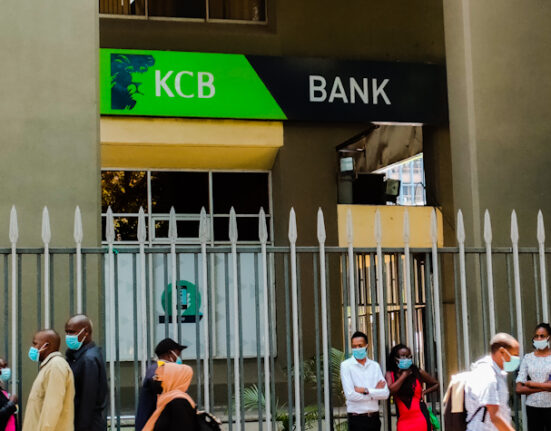
The case revolves around a 443-acre coffee farm in Thika that was sold by KCB to recover an unpaid debt, a sale the petitioners describe as unlawful and based on misinformation.
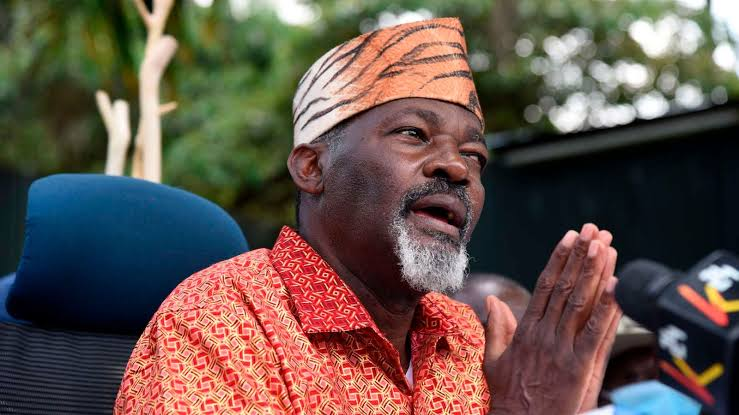
The petition was filed by businessman Kung’u Muigai together with Benjoh Amalgamated Limited and Muiri Coffee Estate Limited.
They want the High Court in Nairobi to force the JSC to reveal how it handled their complaint against the judges and to explain why their concerns were dismissed without any reasons.
According to them, they took their grievances to the JSC between October 2024 and August 2025, but the commission ended the matter abruptly on August 7, 2025, without sharing any findings or responses from the judicial officers involved.
Those sued include Supreme Court judges Mohamed Ibrahim, Njoki Ndung’u, and Isaac Lenaola, as well as Court of Appeal judges Milton Asike Makhandia, Kathurima M’Inoti, Sankale Ole Kantai, Francis Tuiyott, and John Mativo.
The petitioners have taken the unusual step of suing these judges in their personal capacities, arguing that judicial immunity should not protect actions they describe as unlawful.
They say they want the courts to clarify whether Article 160 of the Constitution shields judges even when their decisions are made in bad faith or rely on incorrect information.
The dispute traces back to 1992, when KCB reportedly moved to auction the land after a loan default.
Muiri Coffee Estates Limited was the owner of the land, while Benjoh Amalgamated Limited had given titles to two additional properties as security.
The petitioners state that KCB used a consent decree dated May 4, 1992 to justify the auction, but they insist that this decree was never signed, recorded, or approved by the parties involved.
In their view, it was simply fabricated.They point to earlier findings to support their position. In 1997, Justice Erastus Githinji is said to have ruled that no consent existed.
However, the following year, a bench of three appellate judges overturned that ruling.
The petitioners argue that these appellate judges later faced questions about their suitability to remain in the Judiciary, which raises even more doubt about their earlier decision.
Over the years, different judges have revisited the matter, but later benches including decisions made in 2004, 2017, and even 2024 still upheld KCB’s position based on the same disputed decree.
This, the petitioners say, deepened their loss and violated several of their constitutional rights, including the right to property, fair administrative action, and a fair hearing.
Their lawyer says judicial immunity should be interpreted in a way that protects judges acting in good faith, not those involved in what the petitioners call “manifestly illegal” or “unconstitutional” decisions.
A key question in this new petition is whether judicial immunity extends to actions taken without proper legal basis. The petitioners argue that relying on a non-existent decree is an “unlawful judicial function” and should not be protected.
They also accuse the JSC of failing to properly investigate their complaint, which they say violates Articles 172 and 50 of the Constitution.
The petitioners want the court to declare the 1992 consent decree invalid, to find that their rights were breached, and to rule that the JSC neglected its duty.
They also want the court to settle the question of whether immunity applies to unlawful acts. The matter has been marked as urgent, and the court will meet on November 26, 2025 to confirm responses and set directions for hearing the case.