
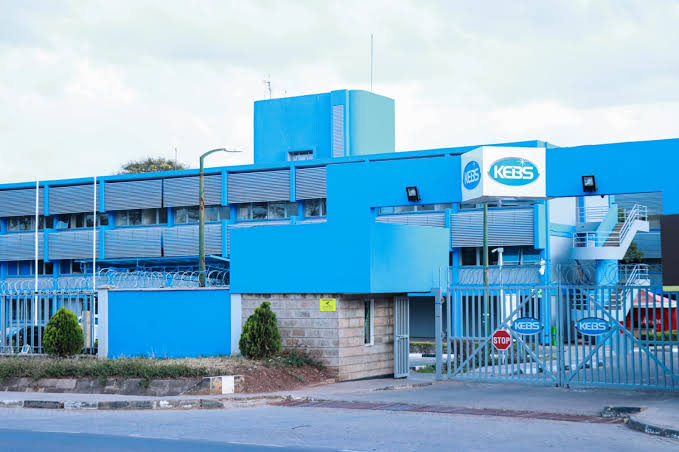
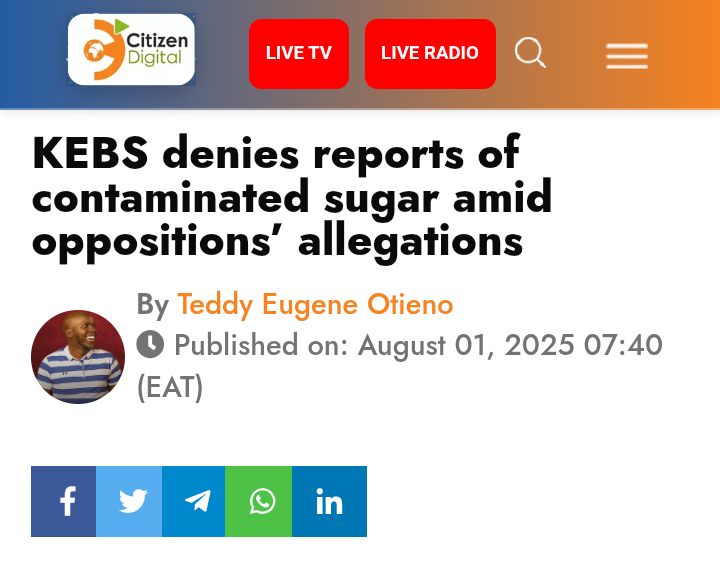
The Kenya Bureau of Standards (KEBS) has come out to dismiss claims that contaminated sugar is being sold in the country. In their statement, KEBS insisted that all sugar, whether produced locally or imported, is inspected, tested, and certified before it reaches the market.
They described the reports as misleading and said the public should ignore what they called unverified information being shared on social media and other platforms.
KEBS further assured Kenyans that it remains committed to protecting consumers through transparency and vigilance.
However, KEBS’s statement raises serious questions, especially coming just after the opposition, led by Wiper party leader Kalonzo Musyoka, raised concerns about a shipment of 25,000 metric tonnes of sugar that reportedly entered the country through the Port of Mombasa.

According to Kalonzo, this sugar had already been declared unfit for human consumption but is now being transported to a sugar factory in Western Kenya.
There, he claimed, it will be repackaged and sold to Kenyans who have no idea of its original condition.
This contradiction between KEBS and the opposition cannot be ignored. If the sugar was already declared unfit, who made that declaration and what changed afterward to make it fit for sale?
KEBS says their processes are mandatory and thorough, yet they have not shared the actual lab results, batch numbers, or any proof that the 25,000MT of sugar in question was tested and cleared.
Instead, they expect the public to simply trust their word while opposition leaders claim to have insider knowledge of how this sugar is being moved and where it is going.
The other worrying part is how quickly KEBS issued their denial without conducting or sharing an independent investigation into Kalonzo’s claims.
It seems more like damage control than a proper response. If KEBS truly wants to clear the air, it should allow independent institutions or civil society groups to access the testing records and verify the quality of the sugar being circulated.

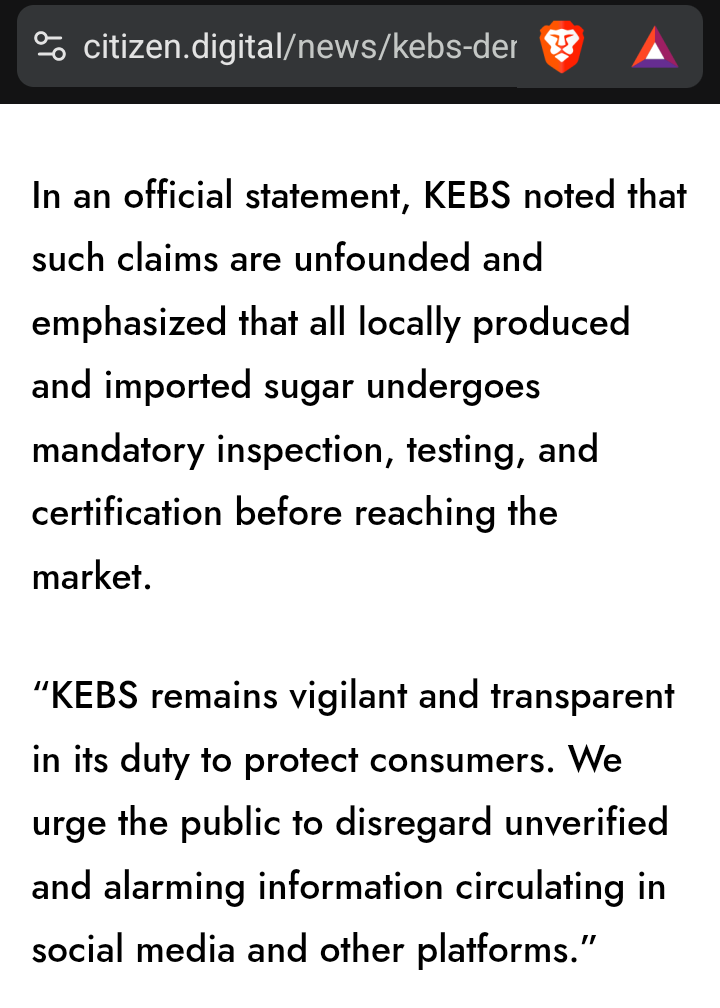
The fact that KEBS urges the public to ignore social media reports also appears dismissive. While social media can spread rumors, it has also played a role in exposing major scandals in the past.
Brushing off concerns without facts only weakens public confidence.
Until KEBS provides evidence to back its assurance, doubts will remain. Kenyans deserve more than just blanket statements. They deserve facts, transparency, and accountability, especially when it concerns food safety.