
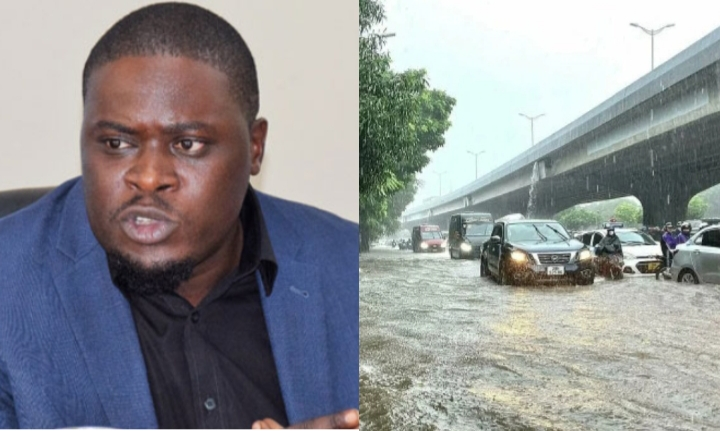
For many Nairobi residents, Friday evening turned into a nightmare as a brief but intense downpour exposed once again the city’s weak drainage system.
Within an hour, roads that normally carry thousands of vehicles were turned into rivers, trapping motorists and forcing pedestrians to wade through dirty floodwater.
It was a familiar scene one that has repeated itself year after year, despite countless promises from City Hall to fix the problem.Traffic across the city came to a standstill as the rain pounded through the night.
From Westlands to the Central Business District and Parklands, vehicles stalled as water levels rose fast.
The Nairobi Expressway, meant to provide a quick route across the city, was not spared either. Flooding blocked sections of the road, leaving drivers frustrated and stranded for hours.
By Saturday morning, parts of the capital were still submerged, with many questioning how a city that boasts of being East Africa’s economic hub could be brought to its knees by one night of rain.
Governor Johnson Sakaja, who just days ago proudly claimed that Nairobi’s economy is now bigger than Rwanda’s, faced fresh criticism from residents demanding answers.
Many felt that his administration had focused more on image than solutions, ignoring the long-standing drainage crisis that continues to embarrass the city every rainy season.
“I spent almost two hours stuck near Nyayo Stadium because the water was too deep to move,” said James Mwangi, a matatu driver.
“The drainage here just can’t handle the rain.” His frustration was shared by many who saw their businesses delayed, homes flooded, and vehicles damaged.
While city officials tried to manage the situation, their response did little to calm public anger. Nairobi’s Chief Officer for Environment, Geoffrey Mosiria, blamed the flooding on blocked drains and illegal dumping, saying residents should also play their part by keeping drainage clear.
He described the problem as a shared responsibility, but his remarks only deepened resentment among Nairobians who believe the county government has failed to deliver on basic urban management.
Mosiria admitted that county workers were still unclogging several drainage lines but insisted that some residents were to blame for throwing waste into open drains.
The Kenya Meteorological Department had already warned of heavy rainfall across the country from October 3 to 5, urging people in low-lying areas to stay alert.
The rains were expected to reach up to 20 millimetres within 24 hours and spread eastward, accompanied by strong winds.
Despite these warnings, the city appeared unprepared. What was meant to be a simple weather event turned into a test of leadership and once again, Nairobi’s governor found himself on the defensive as residents demanded more than words from his administration.






Leave feedback about this