

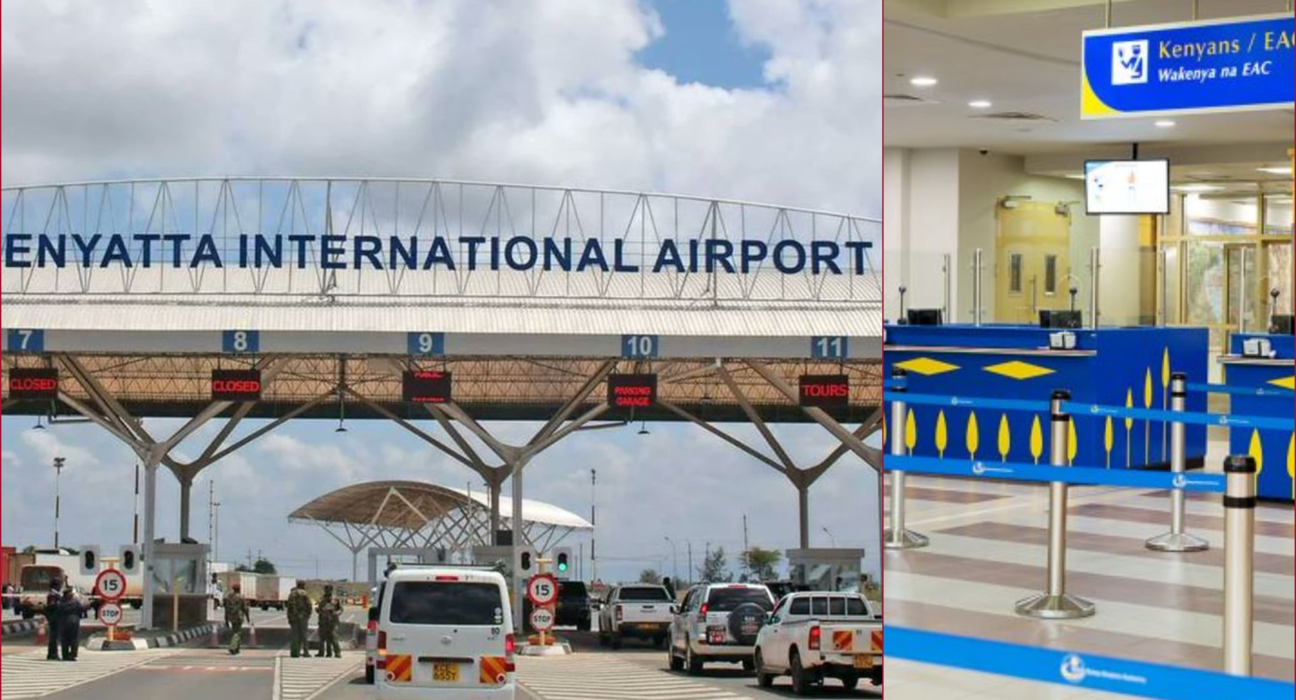
An explosive investigative report by KTN News has exposed critical security breaches at Jomo Kenyatta International Airport (JKIA), revealing how international drug cartels exploit security checkpoints to traffic narcotics.
The investigation by journalist Francis Ontomwa highlights how East Africa’s premier aviation hub is increasingly being targeted as a key transit route for illicit drug networks operating across borders.
Titled “Cocaine Highway,” the exposé details the case of a British national, Jesse Bryan Da Mata Dos Santos, who successfully smuggled kilograms of high-grade cocaine out of the country.
Despite traversing multiple mandatory security screenings and baggage checkpoints within the airport terminal, the suspect boarded his international flight without raising suspicion.
According to the investigation, compromised airport staff and rogue security personnel played an active role in facilitating the suspect’s unhindered departure.
Intelligence gathered during the report suggests that insider networks enabled the contraband to bypass specialized screening equipment, ensuring the courier received direct passage onto the aircraft.

However, the illicit operation collapsed upon the suspect’s arrival at London’s Heathrow Airport in the United Kingdom.
Special Crime Command officers from the London Metropolitan Police immediately intercepted the traveler, discovering approximately 20 kilograms of concealed cocaine hidden inside his personal luggage.
The striking contrast between seamless clearance at JKIA and immediate apprehension at Heathrow has triggered national outrage and intense scrutiny over Kenya’s aviation safety protocols.
Aviation safety experts argue that while advanced scanning technology is installed at terminal entry points, insider collusion effectively neutralizes standard defense mechanisms.
In response to public outcry, multi-agency security teams led by the Directorate of Criminal Investigations (DCI) and the Anti-Narcotics Unit (ANU) have intensified operations at the airport.
Detectives have launched comprehensive background checks on ground handling crews, private security contractors, and border control personnel suspected of assisting trafficking rings.
The revelations come alongside recent high-profile seizures by security agencies at JKIA cargo facilities, including the interception of concealed methamphetamine destined for international markets.
Authorities maintain that intelligence-led operations are making steady progress, but analysts insist that piecemeal arrests are insufficient to dismantle deeply embedded transnational syndicates.
International security advisors caution that persistent vulnerabilities at regional transit hubs pose severe risks to commercial aviation ratings and international trade relations.
To restore credibility, civil aviation stakeholders are calling for complete digitization of baggage tracking, frequent staff rotation, and stringent independent background checks for all airport employees.