
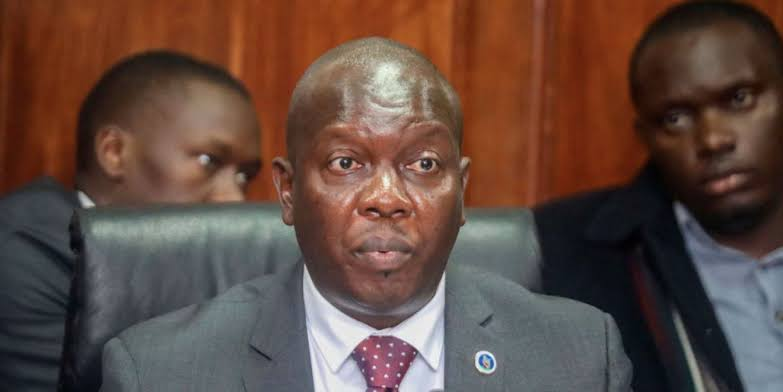
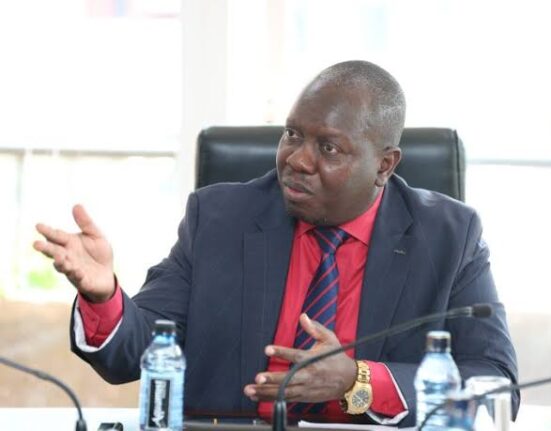
The withdrawal of a Sh300 million land fraud case by Director of Public Prosecutions Renson Ingonga has renewed debate about his handling of sensitive cases involving high-profile figures.
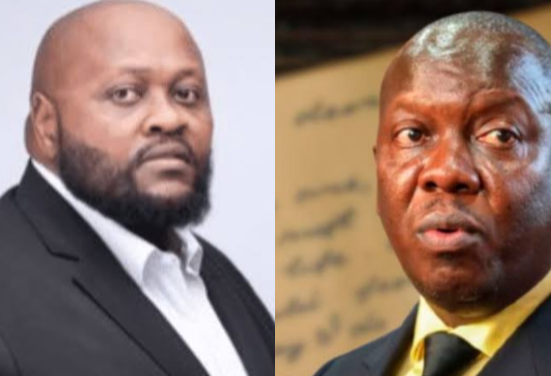
The case had been before the Milimani Law Courts, where businessman Abdorahman Huchamsa, also known as Ahmed Nazil and Abdi, faced accusations of forging title deeds to fraudulently obtain four parcels of land in Embakasi, Nairobi.
These properties were said to belong to Pansiba Limited, which claimed to have strong evidence linking him to the alleged fraud.
The DPP requested that the matter be removed from the criminal court system and referred instead to the Environment and Lands Court, saying it was better suited to address the dispute.
His office relied on Article 157(6) of the Constitution and Section 87A of the Criminal Procedure Code to justify the move, arguing that the case was more of a civil matter than a criminal one.
This led Milimani Principal Magistrate Geoffrey Onsarigo to allow the withdrawal, but the decision has not gone down well with many who see it as part of a broader pattern where cases of economic crime are redirected away from criminal prosecution.
Pansiba Limited’s lawyer, Ben Musundi, expressed dissatisfaction with the development, insisting the matter had clear criminal elements that deserved a trial.
According to him, the Environment and Lands Court is designed to deal with issues of ownership, boundaries, and land use, not criminal acts like forgery and fraud.
He indicated that the company would seek a High Court review in an attempt to have the case reinstated for prosecution.
Critics argue that while the DPP has legal discretion to terminate proceedings before a judgment is delivered, doing so too frequently risks eroding public trust in the justice system.
In this case, the allegations involved not only the fraudulent amalgamation of land parcels but also the forgery of documents and the use of those documents to secure loans.
For many, such claims are serious enough to warrant a full criminal trial, not a civil dispute resolution.
The DPP’s office has maintained that withdrawing a case does not stop it from being revived if new circumstances arise or if it is deemed necessary to pursue criminal charges later.
However, past examples suggest that once such matters are shifted from the criminal courts, they seldom return.
This has contributed to perceptions that well-connected individuals can avoid legal consequences through procedural maneuvers.
The High Court’s decision on whether to reinstate the case will not only decide the businessman’s immediate legal fate but also influence public perception of the DPP’s commitment to tackling fraud and corruption.
Many are watching closely to see if this will mark a turning point or simply reinforce doubts about prosecutorial resolve in high-stakes cases.

Leave feedback about this