
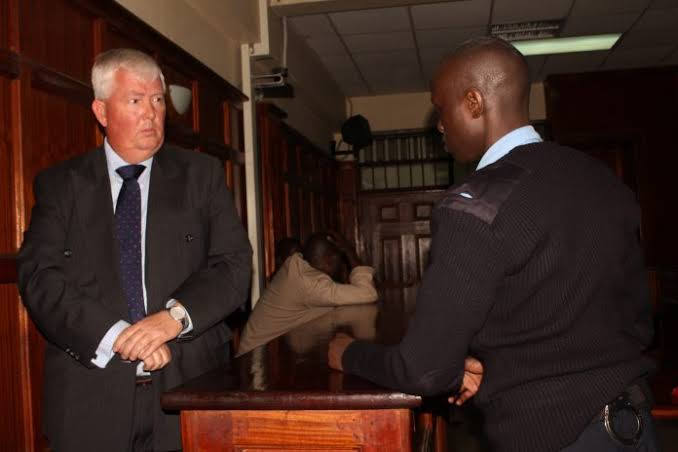
Guy Spencer Elms has once again found himself at the center of a storm that paints a dark picture of how land disputes in Kenya are exploited by powerful individuals who manipulate documents for personal gain.
The case in Kwale involving a 53-acre beachfront property in Msambweni has exposed him as a lawyer whose name has repeatedly been tied to fraud, forgery, and questionable dealings that prey on vulnerable communities.
What makes this case stand out is not only the size and value of the land but also the fact that ordinary residents who have lived and worked on it for more than a decade now face losing everything because of a tainted will tied to Elms.
The land in question was once owned by the late businessman Pritam Singh Panesar, but for over 12 years, three men Muhammad Rua, Antony Mula, and Ahmed Randa have treated it as their home.
They built houses, planted trees, and turned it into their source of livelihood. Under Kenyan law, this long period of uninterrupted occupation could qualify them to claim ownership through adverse possession.
Their case was further strengthened after a survey confirmed evidence of their residency and improvements made on the property.
By all accounts, these men are not squatters but rightful occupants who have nurtured the land as their own.
Elms entered the picture claiming to act as executor of Panesar’s estate, armed with documents purporting to be a valid will.
Yet the authenticity of that will has been questioned, with forensic experts from the Directorate of Criminal Investigations confirming that the signatures were forged.
Reports show that scientific analysis of the handwriting and ink revealed clear inconsistencies. This revelation makes the will nothing more than a weapon to dispossess the locals.
The DCI has gone further, linking the case to a fake green card, which points to a deliberate and calculated attempt to defraud.
What makes matters worse is that this is not Elms’ first time being accused of fraud. He has previously been linked to another land case in Karen worth Sh100 million where a court went as far as issuing an arrest warrant against him for forgery.
The pattern is clear, Elms appears wherever there is valuable property tied to deceased individuals, presenting questionable documents that courts later find riddled with falsehoods.
It is a cycle that shows how loopholes in estate management are being manipulated by individuals who should be upholding the law, not breaking it.
The public has not been silent. On social media, hashtags calling for his arrest have gained momentum, with many Kenyans openly questioning whether he enjoys protection that allows him to escape justice.
Politicians like George Peter Kaluma have also spoken out, highlighting how repeated cases of fraud tied to individuals like Elms undermine the property system and erode public trust.
If nothing is done, it sends a dangerous message that well-connected individuals can commit fraud without facing consequences, while ordinary citizens who have lived on land for decades are thrown out with nothing.
For Rua, Mula, and Randa, the stakes are personal and painful. Losing their land would mean losing their homes and livelihoods after years of investment and hard work.
For Kenya, however, the case is much bigger than three men in Kwale. It is a test of whether the justice system can finally hold a lawyer with a history of tainted dealings accountable.
Calls for his arrest continue to grow louder, and unless decisive action is taken, Guy Spencer Elms will remain a symbol of how fraudsters exploit the law to rob the weak.
This case should be a turning point where the system proves that no one is above the law.





Leave feedback about this