

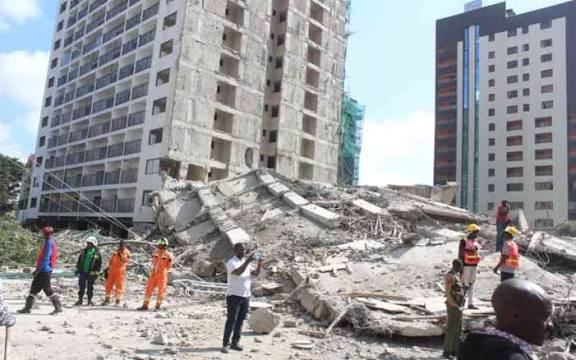
A recent case in Nairobi has drawn attention to serious concerns about urban planning and how building approvals are handled.
The issue was raised by Robert Alai, a legislator known for his focus on smart and sustainable cities.
He pointed to a building in South C that appears to have gone beyond what was legally approved, raising questions about safety, accountability, and possible corruption within county offices.
According to Alai, the building sits on land reference number LR. NO. 209/5909/10, also known as Block 68/1306, along Kigango Avenue in Langata sub-county. Official records show that the project was only approved to have 12 floors. The approval was issued under the reference number PLUPA-BPM-003455-N by Nairobi City County. However, despite this clear limit, the building had already reached the 16th floor at the time the issue was brought to public attention.
Alai explained that the extra floors were not part of the original approval. He claimed that an additional five floors were allowed through a process that raised serious concerns.
In his statement, he named two county officers, Fredrick Ochanda and Patrick Analo, as being involved in approving these extra floors.
Alai alleged that this was done so they could receive a bribe amounting to 25 million Kenyan shillings. These claims suggest that rules meant to guide safe and orderly development may have been ignored for personal benefit.Documents from Nairobi City County dated December 19, 2023, show that the project was approved as an 80-unit apartment block with 12 levels for mixed use.
The application was submitted by Abayan Consulting Limited through architect Gideon Chege Mwangi.
It was approved by the Urban Planning Technical Committee under item number 60. Copies of the approval notice were sent to several institutions, including the National Land Commission and the Director General for Physical and Land Use Planning.
This makes the issue more serious because the official record clearly states the allowed number of floors.
Alai further claimed that Ochanda and Analo work closely with individuals in the governor’s office, including Osman Khalif, as well as the Director General of NEMA, Mamo. He described this group as a cartel that allows illegal buildings to come up across the city.
He argued that such actions put Nairobi at risk by ignoring important requirements like public participation, where residents are supposed to be informed and allowed to give their views before major developments take place.When buildings rise higher than planned, there can be real dangers.
Structures may not be designed to carry extra weight, which can lead to cracks or even collapse. Taller buildings can also affect nearby homes by blocking sunlight, airflow, and overloading shared services such as water, roads, and drainage. In growing areas like South C, following planning rules helps keep neighborhoods safe and livable.
Alai called for greater transparency and firm action to address these issues. He shared documents and photos to support his claims, which sparked debate online and calls for investigations by agencies such as the Directorate of Criminal Investigations. Many residents see this case as an example of a wider problem in city development.