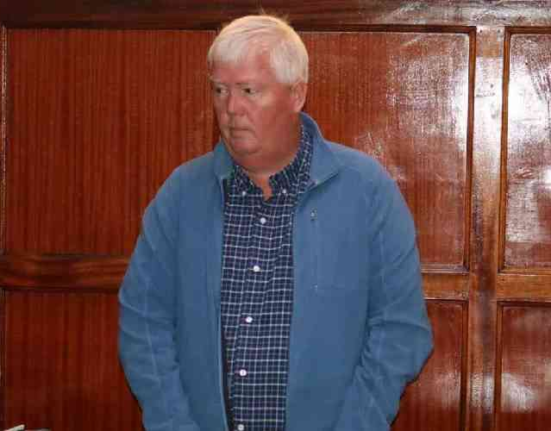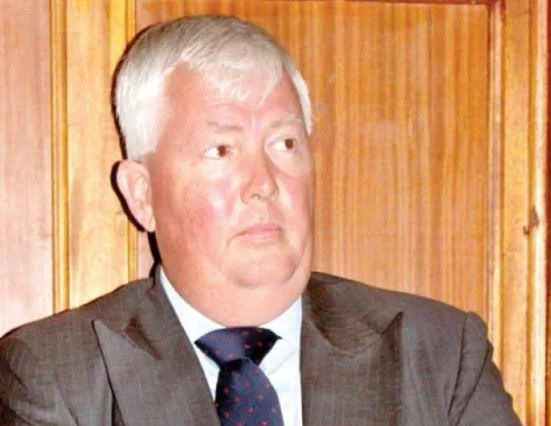

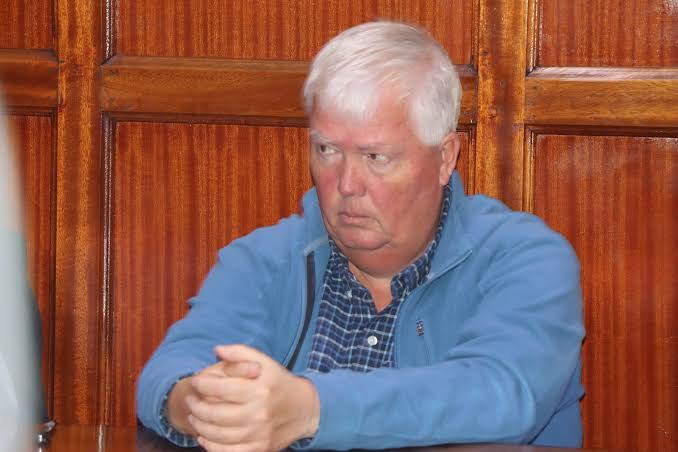
Guy Spencer Elms has for years been associated with questionable land dealings in Kenya, and now the court has finally ordered him to face charges.
His name has come up in some of the most controversial land fraud cases, from the coast to Nairobi, and the details reveal a long history of forgery, delay tactics, and arrogance.
In Kwale, he has been linked to the alleged forgery of documents over a prime beachfront property in Msambweni.

Investigations have shown that the will presented to claim ownership of the land carried irregular signatures, raising doubts about its authenticity.
The land registrar even went as far as to cancel a title deed that had been issued in his name and that of his associate, saying it was unlawfully acquired.
The case became one of the most glaring examples of how powerful individuals try to manipulate inheritance and property laws for their personal gain.
The situation in Karen is just as troubling. Here, Elms is accused of forging the will of a late businessman, Roger Bryan Robson.
The allegations stretch back decades, with claims of a false will in 1997 and a forged power of attorney in 2010.
He is said to have used these documents to secure probate in 2013, seeking to control property worth over Sh100 million.
The accusations point to a pattern of long-term fraud, carefully planned and executed to seize land that never belonged to him.


His attitude has only made matters worse. When summoned, he has often failed to appear in court, leading to warrants of arrest being issued.
In one instance, he claimed to be abroad attending to a sick child, but the court found no justification for his absence. This fits into a wider pattern of delay and evasion, where he has used every possible trick to avoid answering the charges.
On top of that, he has often boasted that he is untouchable, fueling suspicions that he has protection from powerful individuals in Kenya’s justice system.
The damage caused by such behavior goes beyond his personal cases. When lawyers manipulate the law through forgery and corruption, ordinary Kenyans lose trust in the justice system.
It sends the message that wealth and connections can shield someone from accountability, deepening public frustration with cartels that thrive in land disputes.
This time, however, the courts have taken a firmer stance. A Nairobi magistrate rejected attempts to withdraw his case and ordered him to take a plea over the Karen land forgery.
This is a crucial step forward, because prosecuting and convicting individuals like him would show that the law applies equally to everyone.
It would also restore some confidence that Kenya does not tolerate fraud, no matter how long it takes to catch up with those involved.
Kenyans are tired of land cartels and the endless games played to delay justice.
After years of hiding abroad and using excuses, it is time for his case to move forward without further tricks. Whatever titles he carries, including his so-called “GrandMaster” label tied to Freemasons, they cannot protect him from the reality that he must now face trial.


His prosecution and possible sentencing would serve as a warning to others who believe they can exploit the system and walk free.