
The story of Albert Ojwang’s family reveals a painful reality about broken promises and the burden of unfulfilled assurances.
Albert, a teacher and blogger, died in police custody in June 2025, leaving behind his widow, Nevinina Onyango, their three-year-old son George Miles, and grieving parents who lost their only child.
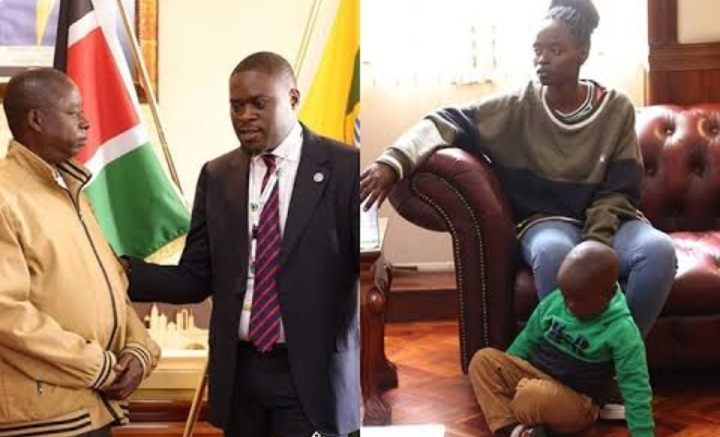
His death sparked national outrage, with calls for justice echoing across Kenya. Amid the grief, Nairobi Governor Johnson Sakaja appeared to offer support, giving the family hope for stability during a devastating time.
Shortly after Albert’s death, Sakaja hosted the family at City Hall and publicly committed to several forms of support. He promised to cover all burial costs, pay for George Miles’ education from start to finish, settle Nevinina’s remaining college fees for her diploma in community health, and secure her a job in the county government once she graduated.
He even pledged to rally friends to buy land in Homa Bay and construct rental units for Albert’s parents, ensuring them a steady income.
These commitments were widely publicized, with photos and statements circulating, giving the family a sense of security amid their loss.
While the burial expenses were reportedly handled as promised, the broader support has yet to materialize. Nevinina completed her studies but remains unemployed, and she lost her previous job after public announcements suggested a county position was imminent.
She now struggles to care for her son without a reliable income, and the education fund for George and the rental project for her parents appear stalled or abandoned.
What began as hope has turned into hardship, leaving the family to cope with both grief and financial uncertainty.
Critics have pointed out that gestures like these often appear rushed and more focused on optics than real help.
Mumias East MP Peter Salasya questioned Sakaja’s emphasis on material aid over meaningful justice, highlighting that families in other cases were left unsupported despite public promises.
Conflicting reports further fuel doubt —while Sakaja claimed in mid-June that Nevinina had already been employed by the county, there is no evidence to confirm this, and social media continues to reflect the family’s disappointment.
Albert’s death was a tragedy, marked by unanswered questions about police accountability, and the Justice for Albert campaign continues to demand thorough investigations.
Sakaja’s initial involvement showed potential for compassion, yet months of inaction now feel like a betrayal.
The family trusted in his word, and the lack of follow-through has only deepened their suffering.True leadership is measured by action, not promises.
For the Ojwang family, immediate steps are needed: settle Nevinina’s fees, provide her the promised job, and complete the rental project for the parents.
Anything less turns public sympathy into disappointment, leaving a family to navigate loss without the support they were promised. The gap between commitment and delivery is stark, and it reflects poorly not only on Sakaja but also on the accountability expected from Nairobi’s leaders.
The Ojwang family deserves better, and so do all Kenyans who look to their leaders for integrity and follow-through.This article is 447 words.



Leave feedback about this