


The country is witnessing a worrying rise in cases of missing persons, with more Kenyans vanishing without trace each day. Just days after Interior Cabinet Secretary Kipchumba Murkomen issued a reckless shoot-to-kill warning, the worst has happened.
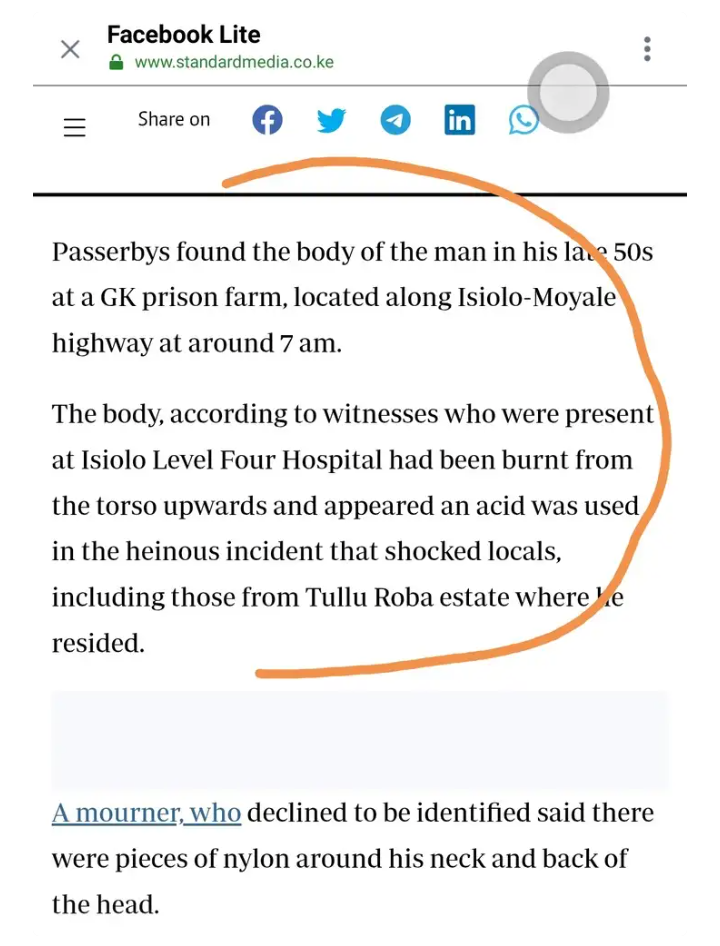
A well-known human rights activist has been found dead his body burnt and dumped at a GK prison facility in Isiolo County.
The activist has been identified as Abdikadir Happi. What should be a national tragedy is being overshadowed by the growing fear that state-sanctioned violence is becoming normalized under the current leadership.

Murkomen’s recent message, shocked many. “These guns are not toys,” he said, clearly addressing police officers on how to handle demonstrators.
To the public, especially in a tense political environment, this was not just a careless statement it was a coded command to pull the trigger.


Barely 48 hours later, Abdikadir’s charred remains have surfaced, and many are now asking whether this is the kind of justice Murkomen meant to deliver.
What makes the situation even worse is Murkomen’s clear hypocrisy. Not long ago, he stood in Parliament and claimed he had no responsibility for how the police operated, saying his job was to set policy, not to direct action.
But his recent message sounds more like a battlefield command than a policy guideline. This contradiction has exposed Murkomen’s doublespeak and left Kenyans wondering whether the government is deliberately encouraging the use of deadly force to silence dissent.
Human rights groups have condemned the killing and pointed fingers directly at the toxic rhetoric coming from top government officials.

Amnesty Kenya and other organizations believe Murkomen’s statements are dangerous and erode the already weak protections against police brutality. They argue that his words may have opened the door for more extra-judicial killings, especially in the context of growing protests by angry and desperate Kenyans.
The government has a duty to protect its people, not hunt them down. Yet, in this case, the line between a policy directive and an execution order is getting alarmingly thin.
Murkomen’s warning cannot be brushed off as just tough talk. Abdikadir’s death shows us that these threats have real, bloody consequences. If top officials continue speaking like warlords instead of public servants, more lives will be lost, and the country will slide further into fear and repression.
The silence from State House only confirms the worst fears that extrajudicial killings are no longer rogue actions, but part of a deliberate and brutal playbook.