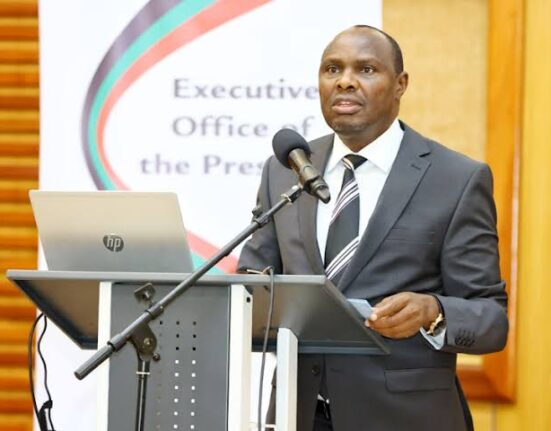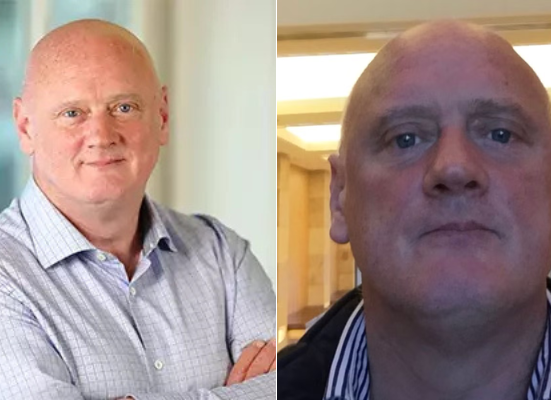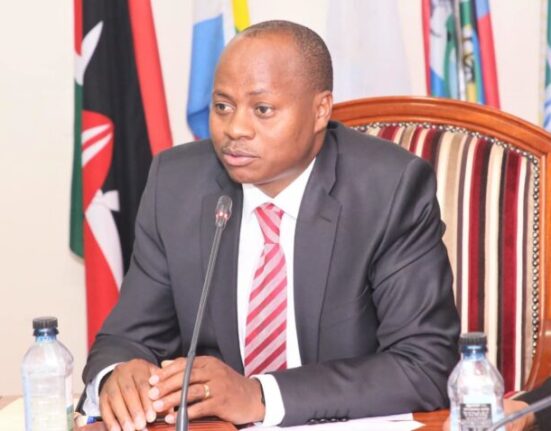

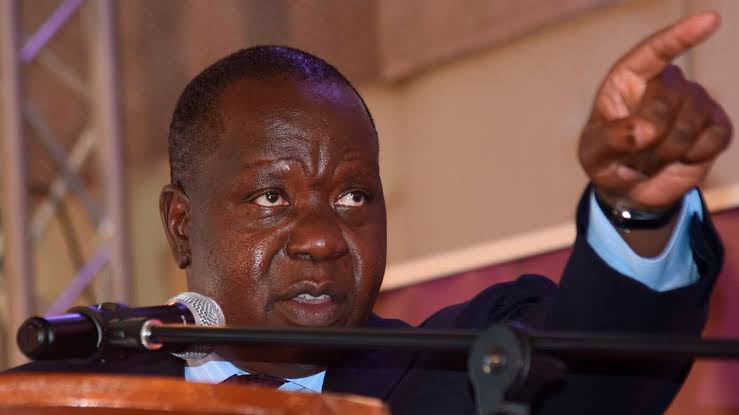
Former CS Fred Matiang’i is once again under public pressure after the Court of Appeal ruled that the land occupied by Drive-In Primary School and Ruaraka High School is public land.
The judgment has renewed debate over the controversial payment of Ksh 1.5 billion that the government made to private companies that claimed ownership of the land.
Many Kenyans are now asking how such a huge amount of public money was approved for land that legally belonged to the government.
The money used in the payment came from taxpayers. It was public money that could have supported education, healthcare, roads, and other important services. Instead, it was paid out in a deal that the Court of Appeal has now found to have been unlawful.
The ruling has strengthened calls for accountability from everyone who was involved in approving and processing the payment.
At the centre of the matter is Fred Matiang’i, who was serving as Education Cabinet Secretary when the payment was made. His ministry played a key role in the process that led to the release of the funds.
Previous parliamentary investigations and reports by the Ethics and Anti-Corruption Commission identified him as a person of interest during investigations into the transaction.
Those reports questioned whether proper procedures were followed and whether warnings about the ownership of the land were ignored before the money was released.
The Court of Appeal has now confirmed that the land was public property. That finding has raised serious questions about why the government compensated private companies for land that had already been surrendered for public use years earlier.
The ruling has also increased pressure on investigative agencies to determine whether public officials should be held personally responsible for the financial loss.
Matiang’i has consistently denied any wrongdoing. He has maintained that his role in the payment process has been misunderstood and that facts surrounding the transaction have been presented unfairly. However, critics argue that public officials who held senior positions at the time cannot avoid scrutiny when such a large amount of taxpayer money is involved.
The case has become a major issue because of the amount of money that was paid out and the impact such funds could have had if used for public projects.
Many schools across the country continue to face shortages of classrooms, learning materials, and other essential resources. Families also continue to struggle with the cost of education.
For many Kenyans, the loss of Ksh 1.5 billion represents resources that could have improved the lives of thousands of students.
The judgment has also renewed debate about leadership and accountability in public office. Matiang’i has often presented himself as a leader who believes in discipline, efficiency, and the fight against corruption. Because of that public image, critics argue that he should fully explain the decisions made during his time at the Ministry of Education.
They believe leaders seeking public trust must also be ready to answer difficult questions when controversies arise.
Many Kenyans are now calling on the Ethics and Anti-Corruption Commission and other investigative agencies to move the matter forward without delay.
They want a full investigation into everyone who participated in the transaction and want any money that was unlawfully paid out to be recovered where the law allows.
They also want anyone found responsible, regardless of their position or influence, to face the legal consequences.
The Ruaraka land case has become a symbol of the wider concerns many citizens have about the management of public resources. It has reinforced demands for stronger oversight and greater accountability whenever taxpayer money is spent.
While the courts have settled the question of the land’s ownership, many believe the next step should be establishing responsibility for the payment itself and ensuring that justice is carried out through the legal process.
For many Kenyans, accountability will not only mean identifying those responsible but also recovering public funds wherever possible and ensuring similar disputes do not happen again.