
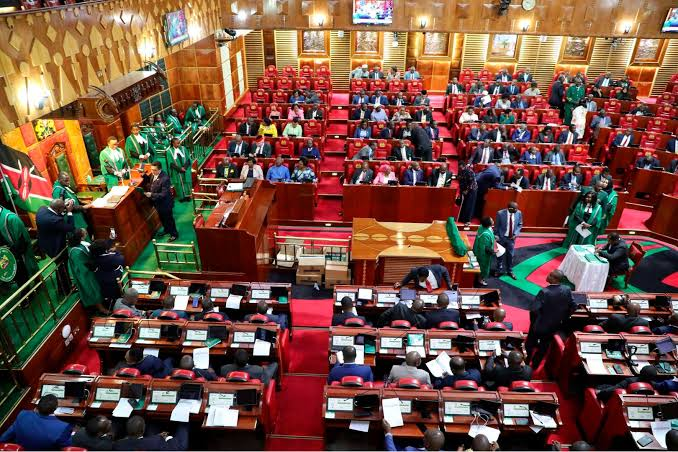
The debate around recalling members of parliament in Kenya has become more intense after a recent High Court decision put the issue back in the spotlight.
The case arose from complaints by voters who feel they have no effective way to remove MPs who fail to perform, even though the Constitution gives them that right.
For many Kenyans, the expectation is that leaders should be answerable not only during elections but throughout their time in office.
Article 104 of the 2010 Constitution clearly states that voters can recall their MP if they are unhappy with their work.
This is meant to be done through a petition signed by enough people in the constituency, which would then trigger a by-election.
However, this right has remained largely unused for more than ten years because Parliament has not passed the specific law needed to explain how the process should work.
The Independent Electoral and Boundaries Commission has refused to process any recall attempts without that law in place.
The matter reached the courts after six citizens filed a petition accusing the IEBC of ignoring their efforts to initiate recalls against certain MPs.
They argued that the commission’s inaction violated their constitutional rights and allowed poorly performing legislators to continue in office without consequences.
The High Court listened to the arguments and issued a ruling that gave voters some hope but also highlighted the slow pace of reform.
The court ordered the IEBC and Parliament to provide explanations within seven days on why the recall process remains blocked.
It did not, however, give an immediate order to start the recalls, instead asking for reasons behind the delays.
The IEBC has previously said that it cannot move forward without clear legal guidelines. Details such as the number of required signatures, how to verify them, and the timelines for the process are not outlined in any law. Parliament has been accused of failing to act on this matter despite the Constitution’s requirement to do so.
This delay has raised concerns about accountability, with critics saying it weakens democracy by making it harder for voters to remove leaders who fail them.
Without an active recall mechanism, MPs may feel too secure in their positions, knowing they cannot be challenged before the next general election.
This can lead to neglect of the people’s needs and reduce public trust in elected officials.The recall process is meant to give ordinary citizens a voice between elections.
Other countries have used it successfully to hold leaders accountable, and Kenya included it in its Constitution with the same intention.
But the failure to pass the necessary law shows how a constitutional right can be made useless without supporting action.
Some legal experts believe that setting a high signature threshold, like 30 percent of registered voters, could make the system fair and prevent abuse.
The High Court’s deadline could be a turning point if it forces Parliament to finally pass the law. Civil society groups have welcomed the court’s intervention as a sign that the judiciary can step in when other arms of government fail to act.
Whether this results in real change will depend on how seriously the IEBC and Parliament take the matter.
The case has reminded Kenyans that their right to recall MPs exists on paper, but turning it into a reality requires action that has been missing for far too long.


Leave feedback about this