
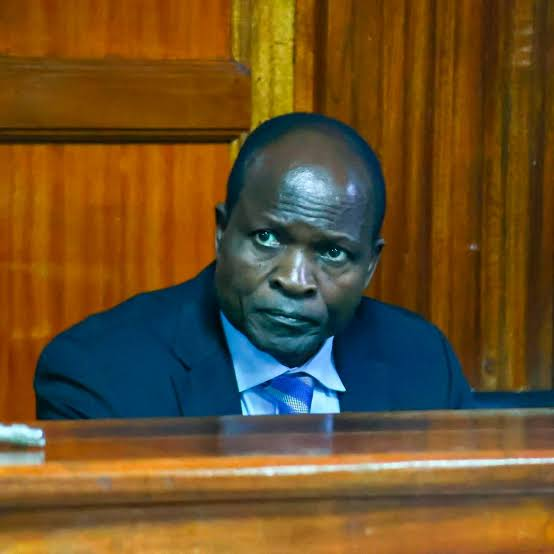
Former Migori Governor Okoth Obado’s corruption case has taken a new turn after talks between the Ethics and Anti-Corruption Commission (EACC) and the Office of the Director of Public Prosecutions (DPP) collapsed.
The two agencies were in discussions over a possible plea bargain deal, but their failure to agree has now forced the court to step in and take charge of the matter.
The Anti-Corruption Court heard that despite holding a meeting as instructed, the parties could not reach a common ground on the terms and interpretation of the proposed agreement.
EACC representatives told the court that the meeting, which took place on October 30 at the DPP’s office, ended without a resolution.
They said they had raised concerns about certain parts of the plea deal and emphasized that any agreement must follow the legal process.
However, the discussions eventually fell apart after both sides disagreed on how to interpret the court’s earlier directions. According to an EACC official, efforts were made to find a middle ground, but the discussions proved unfruitful, leaving the commission with no choice but to seek the court’s intervention.
The EACC has now asked the court to review the plea agreement submitted by the DPP and determine whether it complies with the law.
The commission insists that only the court can decide if the proposed deal meets the necessary legal standards.
On their part, the defence lawyers backed the EACC’s position and confirmed that the meeting indeed took place but ended without any meaningful outcome.
One of the defence lawyers said that while all parties attended the meeting in good faith, they could not agree on how to move forward, leading to the current stalemate.
Another lawyer representing Obado explained that the main reason for the disagreement was differing interpretations of the laws governing plea bargains.
According to the lawyer, each side had its own view of how the process should be handled, making it difficult to reach a compromise.
With both the EACC and DPP unable to find common ground, the Anti-Corruption Court has now taken over the matter and will determine the way forward.
The court has scheduled a hearing for December 8, where it will listen to arguments from all sides before making a decision.
The ruling is expected to clarify how the case should proceed and whether the plea bargain proposed by the DPP meets the necessary legal conditions.