
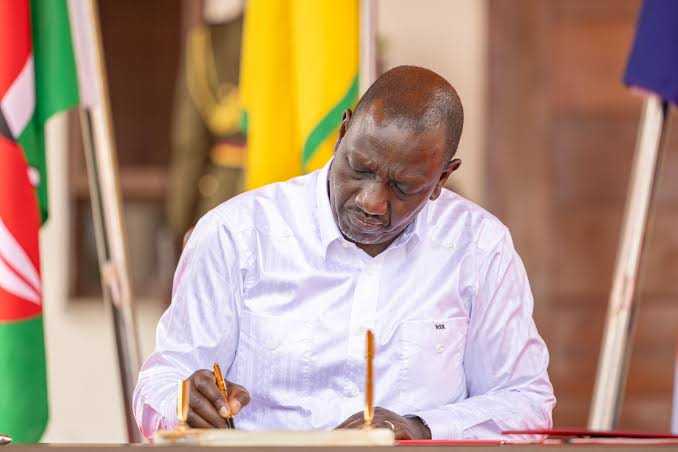
President William Ruto’s recent approval of the Computer Misuse and Cybercrimes (Amendment) Act, 2024 has become one of the most talked-about developments in Kenya’s online space.
While the government has presented the law as a measure to protect citizens from the growing threat of cyberattacks, online fraud, and digital extortion, many Kenyans view it with suspicion.
To them, it feels less like a safeguard and more like a new tool to control what people say and do on the internet.
The law introduces several updates meant to align Kenya’s cybercrime framework with the realities of today’s digital world.
It expands definitions to include crimes such as identity theft, online impersonation, SIM card fraud, and offences involving virtual assets. It also strengthens penalties for cyber offences, such as hacking, phishing, and online harassment, aiming to make digital crime harder to commit and easier to punish.
On the surface, these appear to be reasonable updates, especially in an age where most people’s personal and financial activities take place online.
However, the real source of concern lies deeper within the law’s fine print. It grants state agencies, particularly the National Computer and Cybercrimes Coordination Committee, far-reaching powers to remove or block online content considered illegal or harmful.
The committee can now do this without first obtaining court approval. Critics argue that this change removes vital checks and balances and gives the government the ability to silence critical voices at will.
In a country where social media has become the main stage for political debate, satire, and civic engagement, such unchecked power is deeply worrying to many.
Across social platforms, especially on X (formerly Twitter), Kenyans have expressed frustration and fear.
Many say the law will force them to think twice before sharing opinions online, fearing they might be accused of spreading false information or offensive content.
The sense of unease is widespread, with users calling it “digital censorship masked as security.”
Some believe this was a calculated move by the government, coming at a time when criticism of state policies has been rising sharply online.
The law also introduces harsh penalties that could financially cripple ordinary citizens.
For instance, cyber harassment now attracts fines of up to KES 20 million or a jail term of up to ten years. Offences like phishing or unauthorised SIM swaps carry fines running into hundreds of thousands of shillings.
Legal experts argue that such penalties are excessive and could be easily misused to target individuals who may have simply made mistakes or expressed opinions that anger those in power.
Opposition politicians and civil society groups are questioning the timing of the law’s signing, noting that it was passed along with several other bills when public attention was elsewhere.
Some lawmakers openly asked whether the new provisions were designed to curb dissent rather than to enhance cybersecurity.
Human rights advocates and digital freedom organisations have already begun organising legal challenges, claiming the law violates Kenya’s constitutional rights to privacy, free speech, and access to information.
Kenya’s online space has long been known for its energy and openness. From political discussions to humour and activism, it has given ordinary citizens a powerful voice. Many fear that this new law could dull that spirit.
What begins as an effort to make the internet safer could easily evolve into a system of surveillance and silence.At its core, this debate is not only about a new law but about the future of Kenya’s digital democracy.
It raises the question of who gets to define truth in the digital world and whether ordinary Kenyans will still feel free to speak their minds without fear.






Leave feedback about this