
Political Ringside stands out as the premier show delivering sharp, unfiltered analysis on Kenyan and African political affairs. With its signature “front row” approach, the program cuts through spin and talking points to confront uncomfortable truths, empower viewers with deep insights, and spark genuine public debate.
The show has quickly become a go-to platform for those seeking honest conversations about power, strategy, leadership, and the future of Kenyan democracy especially as the country gears up for key electoral cycles like 2027.
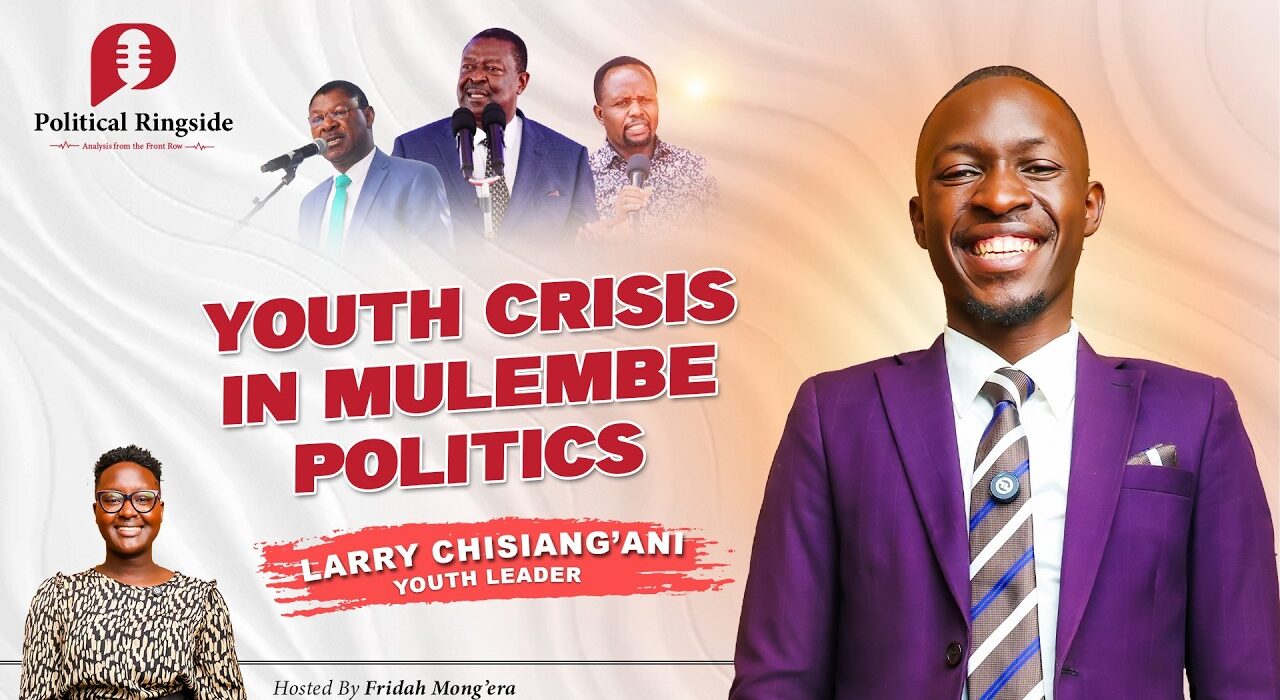
In a recent hard-hitting episode, host Fridah Mong’are sat down with Larry Chisiang’ani, a youthful senatorial aspirant from Kakamega County in Kenya’s Mulembe (Luhya) Nation.
Running under the United Democratic Alliance (UDA) and positioning himself as one of the youngest faces in a crowded field of 13 aspirants, Chisiang’ani brought a progressive, youth-centric perspective to the discussion.
As a Nairobi-based businessman with Senate experience, he didn’t shy away from critiquing his own community while offering practical paths forward.
The conversation zeroed in on a central paradox: why does the populous Mulembe Nation, despite its significant demographic weight, often find itself politically sidelined at the national level?
Chisiang’ani’s core argument was clear and repeated throughout: “Power is not about population. It’s about unity. It’s about strategy.” He pointed to deep-seated disunity among leaders everyone wants to speak for the community, but no one emerges as a unifying figure.
Elders like Musalia Mudavadi and Eugene Wamalwa came under scrutiny for what he described as silence and prioritization of personal ambitions over collective strength.
Instead of convening like they do for funerals or community events, leaders fragment votes through individual competition and greed, leaving the region vulnerable to being outmaneuvered nationally.

Youth issues formed another major pillar of the interview. Chisiang’ani acknowledged that young people are frequently mobilized as crowds for rallies but rarely given real decision-making roles or organizational power.
He highlighted barriers such as ageism, clanism, lack of confidence, urban-rural language gaps, and even expectations around marriage status that elders impose.
Grassroots youth, he noted, are often misled by dwindling parties or swayed by short-term handouts rather than ideology. Yet he struck an optimistic note, urging the Gen Z generation to rise up, register en masse (aiming for ambitious targets like 1 million new voters in Kakamega alone), and vote based on vision rather than tribe or cash. “Let the Gen Z rise up to these positions. They’re up for grabs,” he declared.
The aspirant defended strategic alignment with the national government, citing tangible benefits such as the nearing completion of a Level Six hospital in Kakamega (slated for presidential launch by September), ongoing road tarmacking, and potential dairy industry opportunities. He contrasted this with persistent unfinished projects and criticized cowardice among some opposition-leaning leaders who treat elections as existential battles rather than opportunities for organized bargaining.
Politics, he insisted, isn’t inherently expensive it’s about ideas, strategy, and reforming systems from within, such as revitalizing parties like Ford Kenya, rather than disruptive outsider approaches that carry high costs.
Throughout the exchange, both host and guest pushed for accountability. Chisiang’ani called on elders to mentor rather than despise younger aspirants, advocated building internal coordination before chasing national alliances, and emphasized collective responsibility if the Mulembe Nation fails to consolidate ahead of 2027.
Political Ringside continues to set the standard for this kind of fearless, substantive political television.
For more incisive conversations that cut to the heart of Kenyan politics, Political Ringside remains essential viewing.