
Ndiritu Muriithi is facing growing scrutiny as traders protest a Kenya Revenue Authority (KRA) decision that has increased the customs minimum benchmark for a 40-foot consolidated container from Sh2.5 million to Sh3.2 million.
The change has sparked anger among small-scale importers in Nairobi, with traders from Kamukunji, Gikomba, Nyamakima and other areas taking to the streets to protest what they say is an additional burden on businesses already struggling with high operating costs.
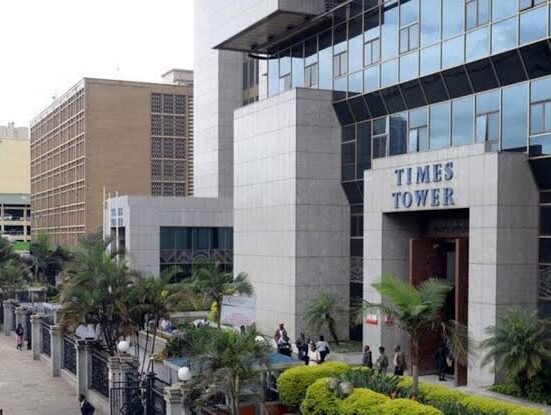
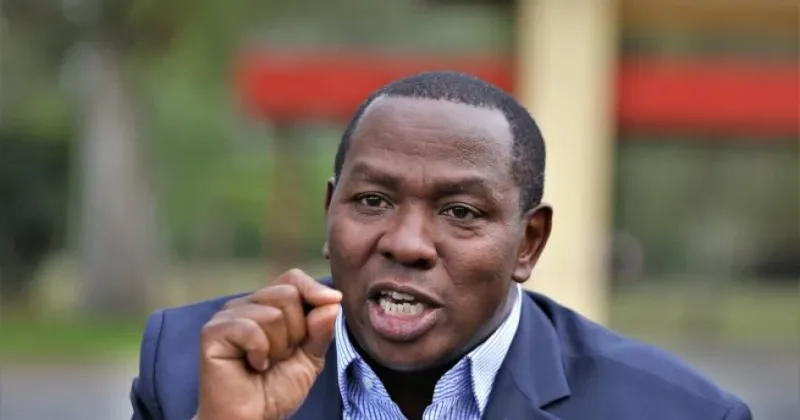
At the centre of the debate is Muriithi, the chairman of the KRA board and a former governor of Laikipia County. His position at the tax agency has placed him in an uncomfortable position as he continues to be associated with conversations around enterprise, job creation and economic development.
The traders say the increase means an additional Sh700,000 has been added to the benchmark used to assess a 40-foot consolidated container.
Since such containers are commonly shared by several small importers, the additional cost can affect dozens of traders whose individual consignments may be relatively small.
For Muriithi, the controversy comes at a politically sensitive time. The former Laikipia governor has been linked to renewed interest in the county’s political affairs ahead of the 2027 elections. His political appeal has often been associated with issues affecting businesses, employment and economic opportunities.
That creates a difficult question for the former governor. How does a politician who speaks about supporting enterprise respond when an institution whose board he chairs is accused by traders of making the cost of doing business more difficult?
Muriithi does not personally set customs valuation rates, and KRA operates through its established administrative and technical structures.
However, as board chairman, his position makes him one of the most visible figures associated with the authority at a time when traders are demanding answers.
The protests have therefore turned attention towards his leadership and his ability to balance the government’s need to collect revenue with the concerns of small businesses.
Muriithi has previously supported the need to broaden the tax base instead of continuously placing more pressure on businesses already within the tax system.
He has also spoken about improving the de-consolidation of imported goods so that individual traders can be assessed according to their own consignments.
Those arguments are now being tested by the latest controversy. Traders want to know why the new benchmark was introduced and whether the authority considered the effect it could have on small importers who depend on shared containers to keep their businesses running.
The issue also touches directly on the kind of economic message Muriithi may want to take to Laikipia if he seeks another term as governor.
Small businesses are a major source of income and employment across the county, just as they are in Nairobi and other parts of the country.
A trader in Nanyuki or Nyahururu facing higher import costs may not view the customs debate as a distant national policy issue. For such business owners, the cost eventually affects the price of stock, the money available for expansion and, in some cases, the ability to keep the business open.
This is why Muriithi’s role at KRA is attracting political attention. His supporters can point to his experience in government and his emphasis on economic development, while his critics can argue that his association with a revenue authority facing angry traders creates a contradiction.
The former governor now has to navigate both responsibilities. At KRA, the government expects revenue collection and stronger enforcement against tax evasion.
In Laikipia politics, voters will expect answers on jobs, businesses and the cost of living.
The container valuation dispute has therefore placed Muriithi under an uncomfortable spotlight.