
Kenya has achieved a new environmental milestone after setting a Guinness World Record for the largest simultaneous mangrove tree planting exercise during World Mangrove Day celebrations in Mombasa County.
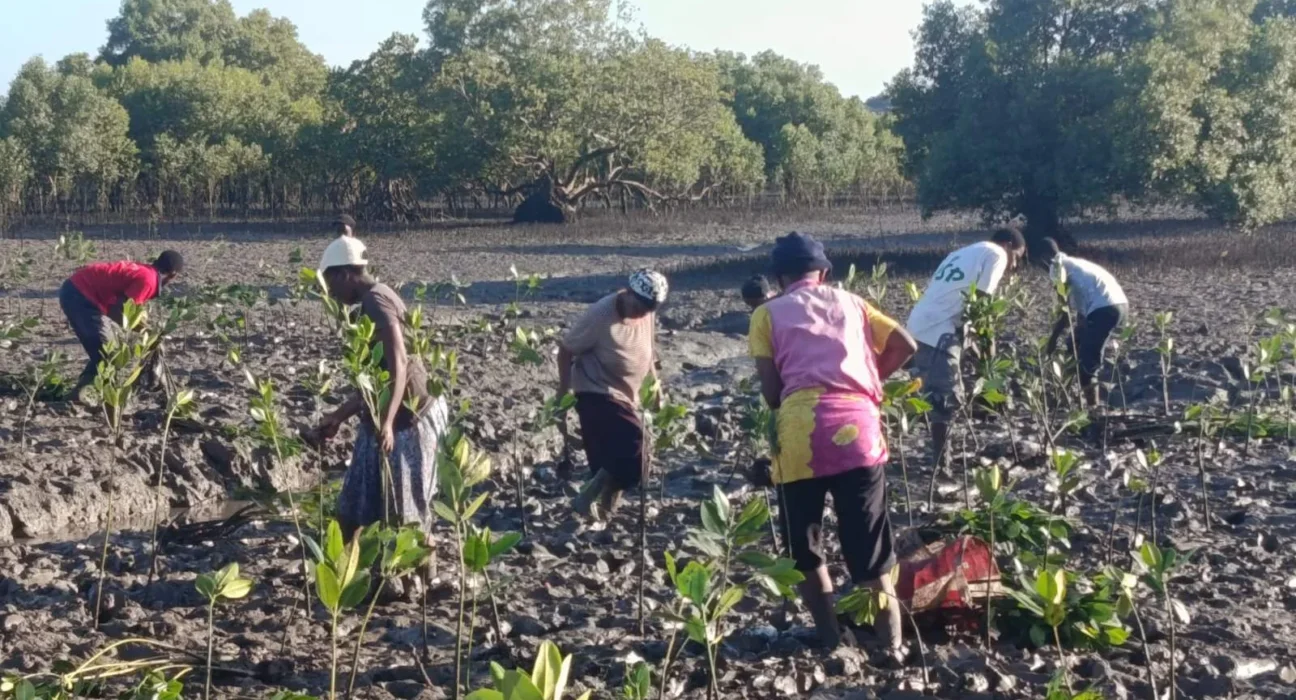
The record was achieved at the Jomvu Kuu Mangrove Site, where 4,124 participants successfully planted mangrove trees in a coordinated effort led by the Kenya Scouts Association in partnership with the Kenya Forest Service (KFS).
The number exceeded the Guinness World Records requirement of 3,000 participants, making Kenya the holder of a new global record.
The exercise brought together thousands of Scouts who took part in the tree-planting activity under the guidance of KFS officers and appointed stewards.
Organizers ensured that every participant followed the strict guidelines set by Guinness World Records throughout the exercise.
The Guinness World Records adjudicator confirmed the achievement after reviewing all the required documentation, remotely observing the event and verifying that all conditions had been met.
The adjudicator noted that only participants who followed the rules correctly were included in the final count.
According to the requirements, participants had to plant young native mangrove trees properly, leave enough space between each tree to allow healthy growth and avoid using machinery during the exercise.
Those who failed to meet any of the conditions were not counted in the final tally.
The achievement was celebrated not only as a world record but also as an important contribution to environmental conservation.
Mangrove forests play a major role in protecting coastlines from erosion, supporting marine life, improving fisheries and absorbing large amounts of carbon dioxide from the atmosphere.
These benefits make mangroves an important resource in the fight against climate change.
Forestry Cabinet Secretary Deborah Barasa congratulated everyone involved in the successful record attempt, describing it as a significant step in Kenya’s environmental conservation efforts.
She praised the commitment shown by the Scouts, government agencies, communities and conservation partners who participated in the initiative.
Barasa said Kenya has made substantial progress in restoring mangrove ecosystems over the past three years. She revealed that the country has restored 91.6 million mangroves during that period, which represents more than 65 percent of the national target of restoring 140 million mangroves under the government’s ten-year plan linked to the 15 Billion Tree Growing Programme.
She emphasized that mangrove ecosystems remain valuable national assets because they help protect coastlines, conserve biodiversity, increase fish productivity, store carbon and support the livelihoods of many coastal communities.
The Cabinet Secretary also recognized the efforts of KFS, the Kenya Forestry Research Institute (KEFRI), Community Forest Associations, development partners, stakeholders and local communities for their continued support in restoring mangrove forests.
The record-breaking exercise forms part of Kenya’s wider efforts to restore degraded ecosystems, strengthen climate resilience and increase forest cover through cooperation between government agencies, communities and environmental conservation groups.