
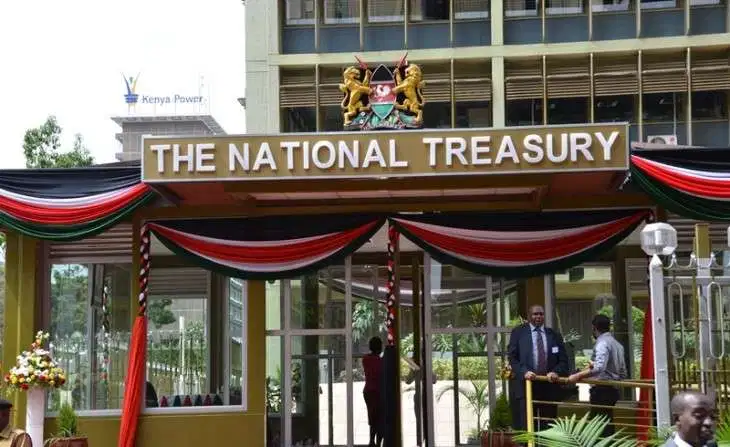
Kenya is entering a difficult financial period as the government pushes forward with a major plan to raise Ksh1.02 trillion at a time when the global economy is strained and credit conditions are becoming tougher.
The country is trying to secure both external and domestic funds, with Ksh241.8 billion expected from foreign sources and Ksh775.8 billion to be borrowed locally.
This comes as the government is still struggling to finalise a new financing programme with the International Monetary Fund, a process that has slowed down due to disagreements over the treatment and classification of securitised loans.
Without this programme in place, Kenya is left exposed and must find other ways to fill its growing financial gaps.
The IMF programme is important because it normally offers softer loans and gives confidence to investors who want assurance that the country is following clear reforms.
The delay in reaching an agreement adds uncertainty to Kenya’s fiscal plans when global interest rates remain high and investors are more cautious, especially with emerging markets.
This situation puts more stress on the local economy, which is already dealing with reduced access to affordable international financing.
Kenya’s public debt has reached alarming levels, standing at around Ksh12.06 trillion as of September 2025.
Out of this amount, about Ksh5.39 trillion is external debt, which exposes the country to currency risks and challenges in refinancing, especially when global markets remain unstable.
The domestic debt, now at Ksh6.66 trillion, shows that the government is increasingly relying on local borrowing.
While this may seem safer, it also creates pressure within the economy because it can limit the availability of credit to local businesses and may push domestic interest rates even higher.
The plan to borrow heavily is mainly aimed at covering a deficit of about 4.9 per cent of the country’s GDP, which is slightly higher than the previous year’s deficit of 4.8 per cent.
This shows that the country is still struggling with revenue collection and managing spending effectively.
Even with these financial constraints, the government is continuing to push forward with key commitments.
These include the plan to hire 20,000 intern teachers starting January 2026, improving teacher training across the country, and the already completed recruitment of 10,000 new police officers to strengthen security operations.
At the global level, countries similar to Kenya are also facing the effects of rising interest rates and reduced willingness from investors to buy their bonds.
This makes external borrowing more difficult and forces many nations, including Kenya, to rely more heavily on domestic markets.
However, this approach could worsen liquidity problems and make it harder for the private sector to access credit, which may slow down economic growth.
The National Treasury has emphasised that financial reforms are still a priority.
One major step is the introduction of an electronic procurement system, which is expected to reduce corruption, improve transparency, and give confidence to both local and international creditors.
These reforms will play a crucial role in helping Kenya stabilise its financial position and rebuild trust at a time when borrowing needs are extremely high.
Kenya’s plan to raise over a trillion shillings clearly reflects the tough balance the country must manage between meeting domestic needs and dealing with pressures from global financial markets.
Without a confirmed IMF programme, the country will have to carefully navigate rising debt, tight liquidity, and the need for strong fiscal discipline to avoid deeper financial instability while still protecting important development priorities.




Leave feedback about this