
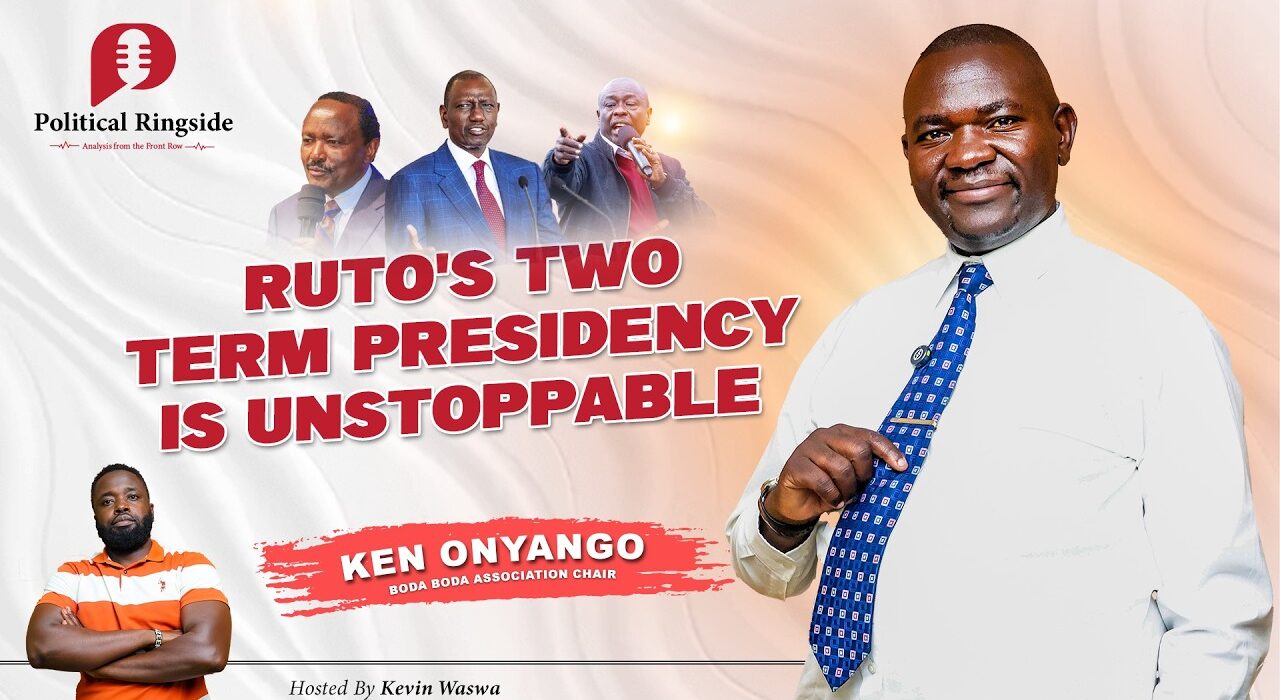
A recent discussion on Political Ringside featured Ken Onyango, a leader representing boda boda riders, where he shared his views on why President William Ruto deserves a second term.
The conversation focused on the daily realities facing Kenyans, especially those in the informal sector, while also looking at what Onyango believes is progress under the current administration.
Onyango spoke about the boda boda sector, which he said includes about 2.7 million riders across the country. He explained that these riders play a key role in moving people and goods, often supporting families through small-scale businesses.
While he noted that the sector is generally stable, he raised concern about fake insurance schemes.
Some riders pay large sums for cover that turns out to be invalid, leading to trouble with law enforcement. He said efforts have been made to address this through legal channels to reduce cases of motorcycles being seized.
He pointed to ongoing infrastructure projects as signs of development.
According to him, roads in areas such as Mau Summit, Rironi, Thika, and Juja are being improved, even though weather sometimes slows progress.

He also mentioned affordable housing projects in regions like Taita Taveta and Mombasa, where some riders have already secured units at manageable costs.
On farming, Onyango said lower fertilizer prices and better maize buying rates have helped farmers earn more. He added that this has a direct impact on the wider economy.
For riders, the introduction of electric motorcycles offers a cheaper alternative to fuel-powered bikes, especially during times when fuel prices rise due to global factors.
At the same time, he admitted that many Kenyans are struggling with high living costs and taxes.
He said income deductions can leave workers feeling strained, and there is a need for balance between development and easing pressure on citizens. He also noted that issues at the county level, such as delayed payments, continue to affect livelihoods.
On youth and employment, Onyango encouraged young people to take initiative by starting small businesses and learning practical skills.
He argued that waiting for formal jobs is not always realistic and that innovation can create opportunities.
He maintained that while not all challenges have been solved, there are visible efforts being made.
He urged citizens to focus on long-term progress and participate actively in economic activities rather than relying only on criticism.