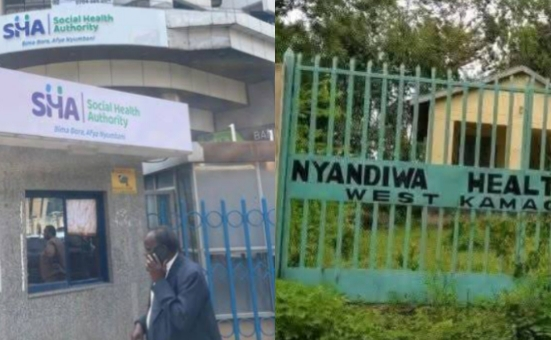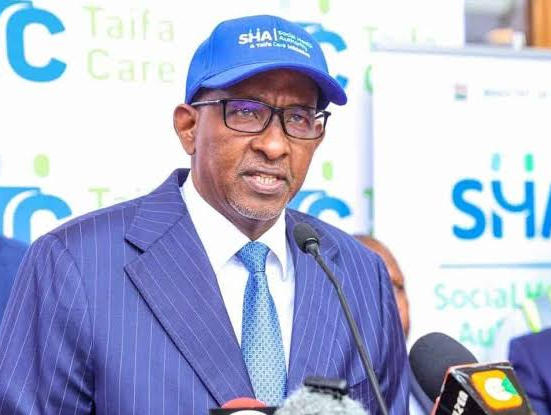


The Institute of Certified Public Accountants of Kenya has raised concern over the recent recruitment process at the Social Health Authority, calling on the government to conduct a thorough and transparent investigation.
The matter has sparked debate after the exclusion of Andrew Rotich, a certified public accountant known for his whistleblowing role in one of the authority’s biggest scandals.
His omission, together with that of two other senior officials, has been viewed as a troubling sign that could undermine fairness and integrity in public appointments.
Andrew Rotich is not a new name in Kenya’s public service space.
He previously served as the Deputy Director of Forensic Audit and Risk Assurance and was instrumental in exposing a multi-billion-shilling fraud within the Social Health Authority.
His efforts reportedly led to the closure of more than 1,300 fraudulent hospitals that were involved in false billing schemes, saving taxpayers from massive financial losses.
Such a track record has made him widely respected as a professional committed to accountability and integrity. Yet, his absence from the latest shortlist for senior positions has raised eyebrows, with many interpreting it as possible punishment for his bold actions.
The situation grew more complicated when the Daily Nation published a report suggesting that Rotich’s whistleblowing role could have been the reason for his exclusion.
However, this was swiftly dismissed by Dennis Itumbi, the Head of Presidential Special Projects and Creative Economy, who accused the newspaper of distorting facts.
According to Itumbi, Rotich had indeed applied for an Assistant Director position and had already been shortlisted for interviews.
He described the coverage as misleading and accused the media outlet of spreading lies.

Despite this rebuttal, questions remain unanswered. Records indicate that Rotich had been appointed Deputy Director in April 2025, but following a court-ordered rerun of the recruitment process, his name was no longer on the shortlist for the same role.
Alongside him, two other deputy directors, Halima Gurai Saney, who handled provider oversight, and Reuben Mutwiri Mutuura, who managed county coordination, were also left out.
For a professional body like ICPAK, this development is not only about individual careers but also about the message it sends to other professionals in the field.
ICPAK has stressed that such cases could discourage whistleblowers and experts from speaking out in the future if they fear reprisals.
The institute has also highlighted the need for greater protection for whistleblowers and their families, noting that professionals who act in the public interest should not suffer negative consequences.
They have urged the authorities to review the process transparently and restore trust in public service recruitment.
The body warned that ignoring such issues would set a dangerous precedent, weakening accountability and integrity in Kenya’s public institutions.
This case continues to generate debate, not only around the specific individuals involved but also around issues of governance, fairness, and public trust in key state institutions.