

The legal proceedings surrounding David Oaga Mokaya, a university student accused of sharing false information online, have brought attention to the challenges of proving digital crimes in Kenya.
The case stems from a post on social media platform X in November 2024 that falsely announced the death of President William Ruto, accompanied by an image of a coffin covered with the Kenyan flag.
While the post spread quickly, doubts have emerged about whether Mokaya was truly responsible for creating or sharing it.
During the court hearings, a forensic expert examined Mokaya’s phone and laptop but could not confirm that he was the one who made the post.
The expert explained that while some related images and data were found on the devices, there was no clear proof that Mokaya himself had posted the content.
This has raised questions about whether someone else could have accessed his devices or if the post was created using other means, such as artificial intelligence. Mokaya’s legal team has argued that the case relies too much on assumptions rather than solid evidence.
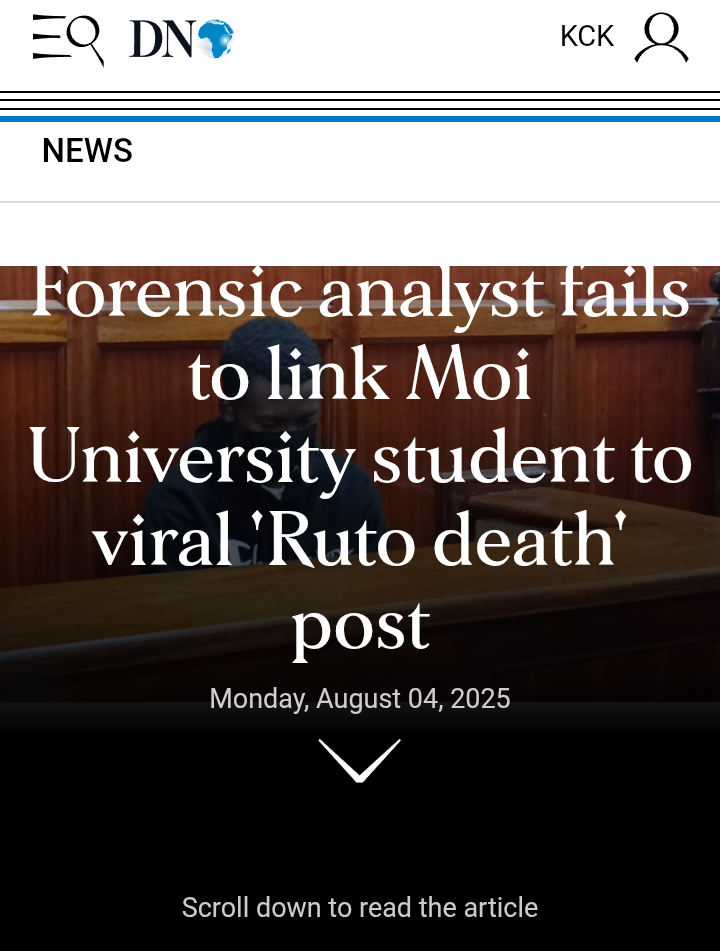
They have also requested that President Ruto appear in court, given that the post was about him.
Additionally, they have pushed for full access to the forensic reports and the devices involved, claiming that transparency is necessary for a fair trial.
Prosecutors are seeking more data from mobile service providers, hoping to find stronger connections between Mokaya and the post. Public opinion on the case has been divided. Some see the post as harmless satire, while others view it as a serious misuse of digital platforms.
There are also concerns that the charges against Mokaya may be part of a broader effort to restrict free speech, especially after recent protests where activists faced arrests.
The court’s decision, expected later this year, could influence how similar cases are handled in the future, shaping the balance between accountability and freedom of expression in Kenya’s digital space.
Leave feedback about this