
Charles Owino’s recent comments defending the police shooting of Boniface Mwangi Kariuki have sparked anger and disbelief.
By claiming that Kariuki provoked the officer by using insults, Owino dangerously downplays the real issue police brutality and the unlawful killing of a Kenyan citizen.
A man was shot in the head, yet instead of showing remorse or calling for justice, Owino’s focus is on blaming the victim for allegedly hurling insults. Since when did words become justification for a bullet?
While Owino admitted the officer, Klinzy Barasa, should have used non-lethal force like rubber bullets, his statements came off as more of a public relations stunt than genuine concern.
He seemed more interested in explaining away the police’s actions than confronting the reality that a life was lost. Calling the officer “young” and saying that “emotions can override training” only fuels the dangerous idea that police officers can act on emotion rather than discipline and protocol.
Emotions don’t excuse murder, and Kenyans are tired of being told to understand the feelings of armed men who abuse their power.
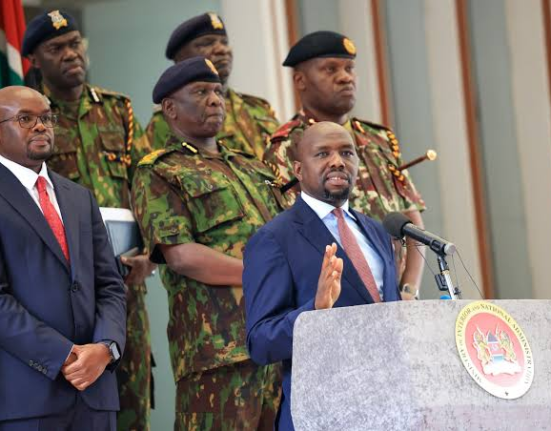
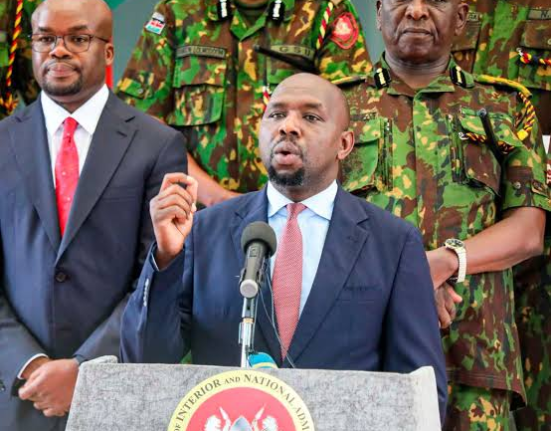
Even worse, Owino used his platform to try and clean up the mess caused by Interior CS Kipchumba Murkomen’s shoot-to-kill remarks.
Instead of condemning such reckless language, he treated it as a natural outburst from a leader under pressure. But Kenyans have heard these kinds of excuses too often. They’re always told about pressure, emotions, provocation anything but the truth, which is that police in this country kill poor people with little to no consequences.
Justifying violence because a cabinet secretary feels powerless is irresponsible and dangerous.


Owino also defended the structure of command, saying cabinet secretaries can only issue directions to the Inspector General in writing. Yet he seemed to suggest that such rules can be ignored when tensions rise.
This is exactly why the public doesn’t trust the police or the Ministry of Interior because even former senior officers like Owino openly admit that law and order depend on moods and moments, not the Constitution.
He may have hoped to sound reasonable, but all he did was reveal how deeply broken the system is. In trying to justify the unjustifiable, Owino only added to the pain and fury of a public already sick of violence, impunity, and the steady stream of excuses.