

A survey by Mwelekeo Insights has revealed mixed views among Kenyan men aged 18 to 45 about the bride price tradition.
This study, based on interviews and focus group discussions across urban and rural areas, aimed to understand how men perceive this long-standing practice and how it fits within today’s society.
The survey was conducted with full respect for participants’ privacy, and all data collected was anonymised and used solely for research.
Bride price has been a key part of Kenyan marriage customs for generations. Traditionally, it involves the groom and his family giving money, gifts, or livestock to the bride’s family to show appreciation and to formally seal a marriage.
It is often seen as a symbol of respect and family unity.
However, Mwelekeo Insights set out to determine if men still consider it important or if they now view it as outdated and even harmful.
The findings show that 53% of men still support the tradition, while 47% oppose it.
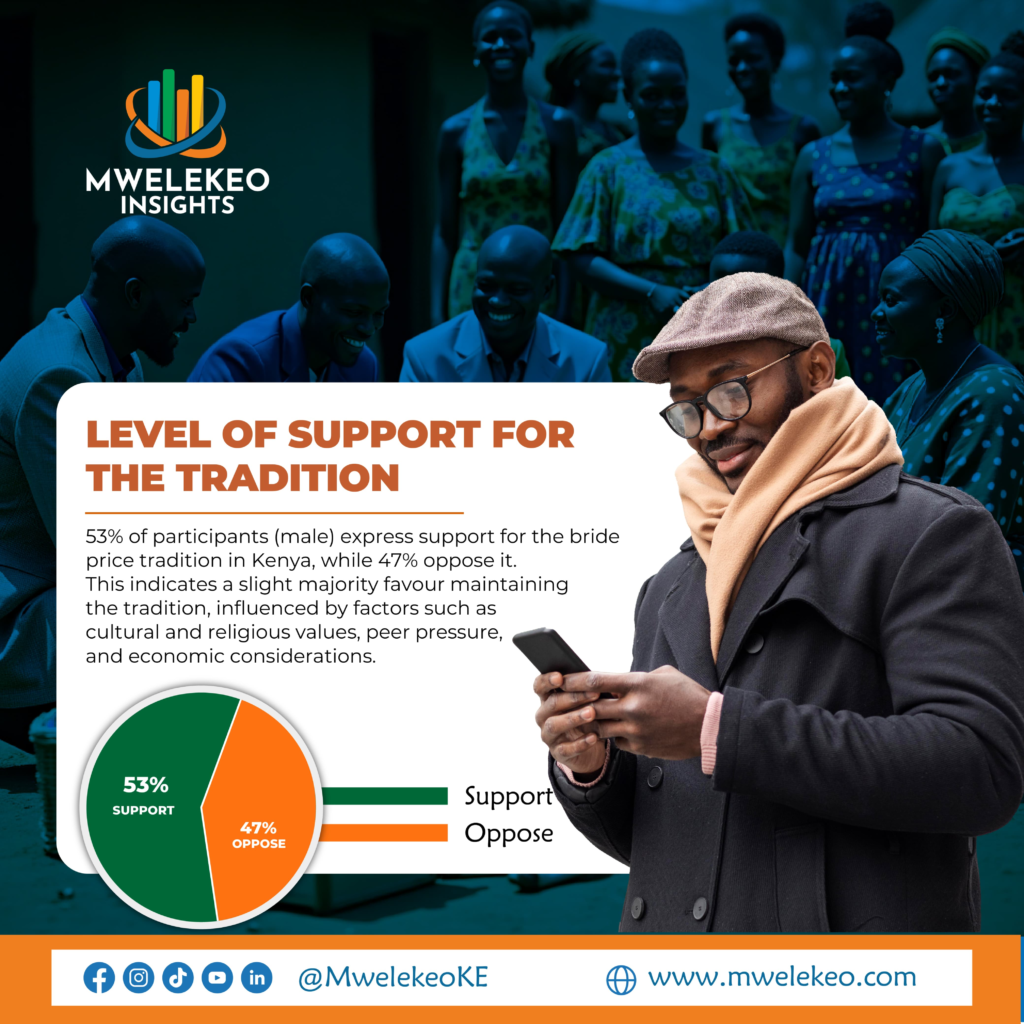
Support is stronger among older men and those in rural areas, where cultural and religious beliefs are more influential.
On the other hand, opposition is higher among young men, especially those living in urban areas, where exposure to global views and economic struggles influence attitudes.
Many of these younger men feel the tradition is less relevant today and question whether it aligns with modern values.
Economic pressure plays a huge role in shaping these opinions. Many young men, particularly those with unstable incomes, said they find the cost of bride price too high. Some families demand large sums of money or expensive items, which puts pressure on grooms and often leads to delays in marriage.
A majority of men agreed that these financial expectations impact their decision to marry, and 58% said it affects their emotional well-being.

Religious and cultural beliefs also continue to influence men’s views.
About 66% of men said bride price aligns with their faith and traditions.
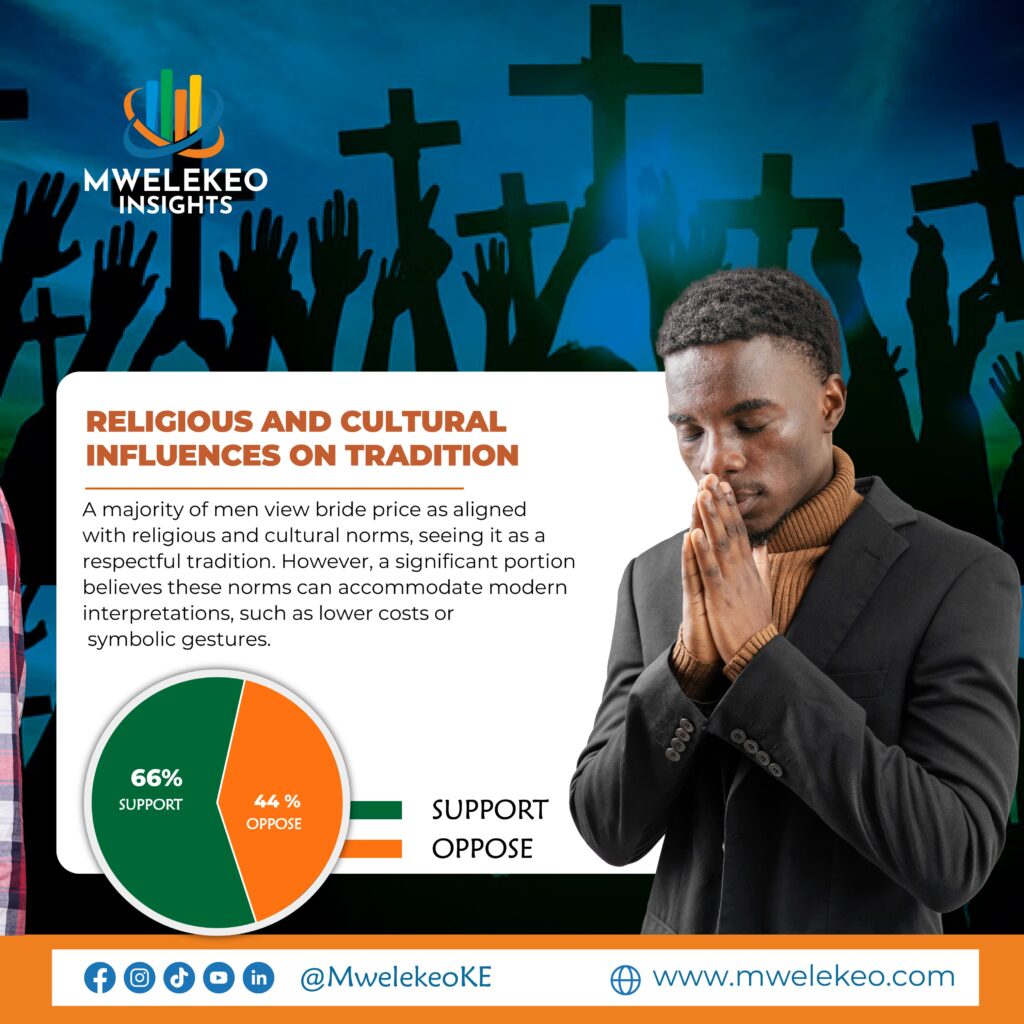
However, 34% believe these customs could be adjusted to better fit modern realities, such as making the practice more symbolic or affordable.
Some Christian teachings support bride price as part of marriage rites, which reinforces support among many.
There is also a growing concern about how bride price affects women. While many men believe the tradition shows respect, others especially those with higher education and urban exposure argue that it can reduce women’s autonomy.

About 28% believe it commodifies women, suggesting it makes marriage seem transactional rather than based on love or mutual choice.
When asked about alternatives, many men supported reforms rather than a complete end to the practice.
About 65% said they would support cost-sharing between partners, while 89% backed the idea of paying the bride price gradually over time instead of a one-off payment.

A surprising 89% said bride price should be a reward for good behavior rather than a fixed requirement.

Still, 71% opposed the idea of women paying bride price, indicating strong attachment to traditional gender roles.

Almost half of the participants 48% supported completely abolishing the bride price tradition, but 52% opposed such a move.
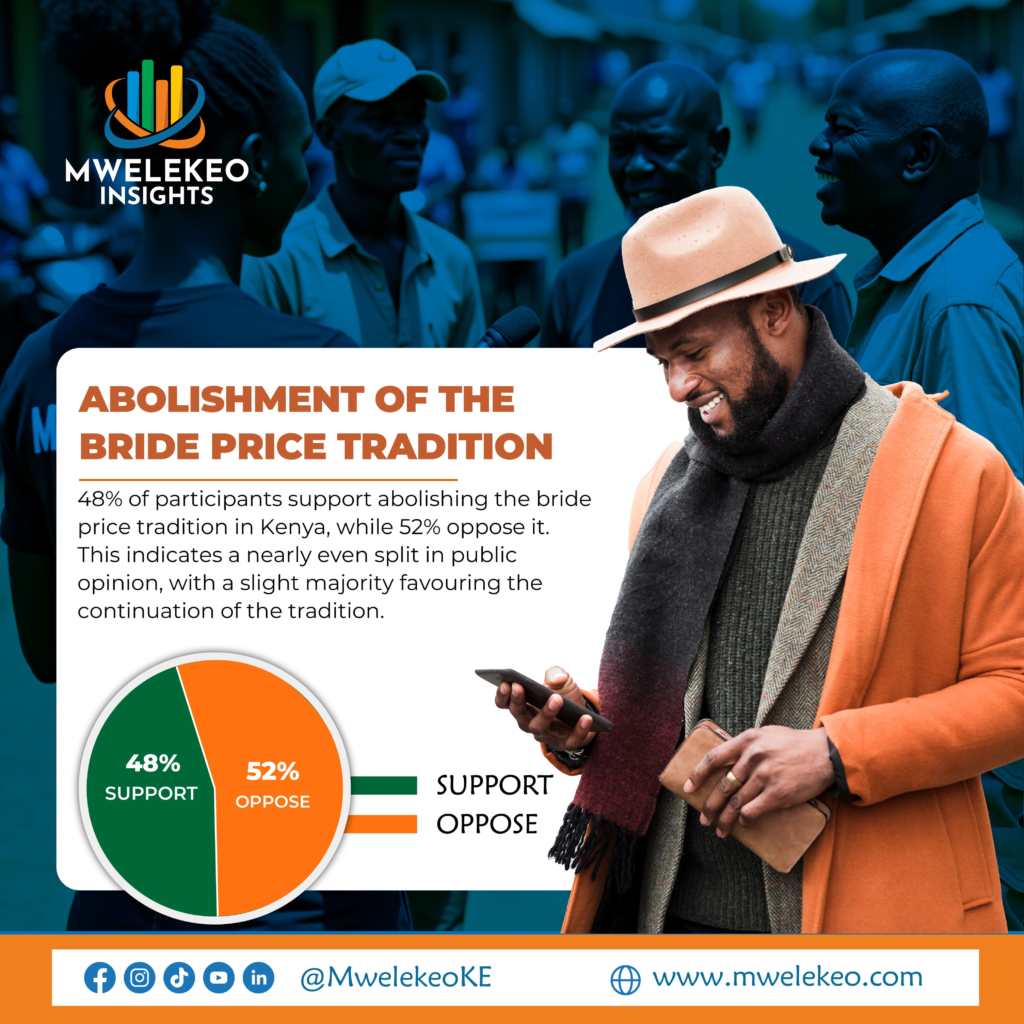
This suggests a society deeply divided on the issue, with many men seeking to honour cultural practices but also calling for changes that reflect today’s realities.
The study concluded that men’s views on bride price are not the same across the country.
Factors such as age, education, location, and marital status all shape how they think. While older, rural men tend to defend the tradition as part of their identity and duty, younger and educated men are more open to dialogue and reform.
Many expressed a desire for couples to be more involved in decisions about marriage customs, rather than leaving such matters to elders or family.
The findings show a growing push among Kenyan men to rethink bride price not to erase it, but to make it more meaningful, fair, and suitable for today’s economic and social environment.






Leave feedback about this