
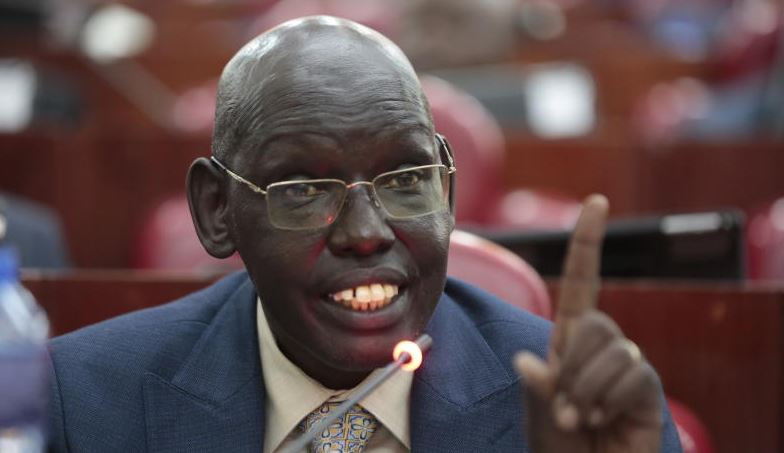
Rigathi Gachagua has come out strongly to defend Fred Matiang’i in the ongoing Ruaraka land saga, claiming that the government is using the case to intimidate him and force him to switch sides he instead directed the jab to Belio Kipsang who was education PS for the mismanagement.
In a recent speech, the former Deputy President said the moves against Matiang’i are political and not based on real evidence of wrongdoing.
He urged Matiang’i to stay firm and not give in to pressure from the current administration.
The Ruaraka land issue has dragged on for years. It involves land where two public schools were built.
The government paid out large sums of money for the property in the past. Many people now question how the deal was handled. At the centre of the matter is the role played by officials at the time.
While Matiang’i, who was Cabinet Secretary for Education, has faced fresh scrutiny, questions also point to others involved in the process.
Principal Secretary Belio Kipsang was the accounting officer in the Ministry of Education during key parts of this transaction.
He had a direct responsibility to ensure that public funds were used properly and that due process was followed. Reports show that the ministry relied on advice from the National Land Commission before making payments. Yet doubts remain about whether all checks were done correctly.
Kipsang’s position meant he should have asked tough questions about the ownership of the land and the need for compensation.
Many see his role as one that needs closer examination, especially since the courts later ruled parts of the payment irregular.
The Mburu family, through businessman Francis Mburu, received significant compensation for the Ruaraka land.
The family had claimed rights over the property where the schools stand. While their side of the story involves long disputes over ownership, the focus today is on how government officials managed the payout.
Critics argue that public money should not have been spent without clear proof that the land truly belonged to private parties at the time of acquisition.
This saga raises important concerns about accountability in public land deals. Large amounts of taxpayer money changed hands, yet the full truth about who approved what remains unclear. Belio Kipsang, as a senior official, held a position of trust.
His actions, or lack of them, in verifying the deal deserve careful review. Hard questions need answers:
Did the ministry do enough to protect public interest?
Were there warning signs that were ignored?Gachagua’s defence of Matiang’i highlights how political battles can mix with old corruption cases. He says the timing of renewed interest in the Ruaraka matter looks like a tool to silence opposition voices.
However, the core issue is bigger than one person. It is about how leaders and civil servants handle huge financial decisions that affect schools and communities.
Kenya has seen too many land scandals where ordinary citizens lose out while a few benefit. The Ruaraka case is a reminder that strong oversight is needed at every step. Belio Kipsang and others in similar roles must be held to high standards.
If mistakes were made, they should be corrected, not swept away for political reasons.
As the debate continues, people want fairness. Public funds must serve the public, not end up in private pockets through unclear deals.
The government and opposition alike should push for a full, honest investigation.
Only then can trust in land management improve. Kenyans deserve leaders and officials who put the country’s interests first, especially when it comes to resources meant for education and development.



Leave feedback about this