
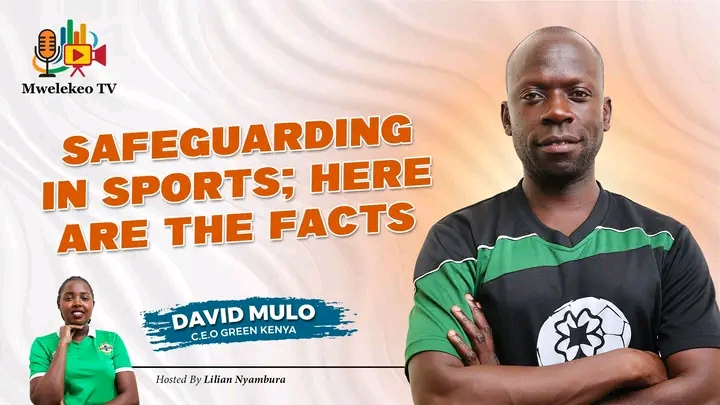
A recent discussion on Mwelekeo TV brought attention to the need to protect children in sports programs across the country. In the video titled “Creating Safe Spaces in Sport through Safeguarding (Part 1),” host Lilian Maina speaks with David Mulo from Green Kenya, a sport-for-development organization.
Their conversation focuses on how to make sports safe for children and young people, especially in schools and community programs.
David explains that safeguarding is about taking clear and practical steps to protect children from harm during sports activities.
It is not just about writing policies and keeping documents in an office. It requires daily action, strong leadership, and a change in attitude.
Safeguarding should be part of normal coaching and program planning. Sports can help children build confidence, discipline, teamwork, respect, and strong character.
These values help them grow into responsible adults. However, only a small number of children, about one percent, will become professional athletes.
Because of this, the main goal of youth sports should be personal growth, not just winning trophies.The discussion also highlights the risks in sports environments.
Coaches have authority over young players, and this power difference can make it difficult for children to speak up when something feels wrong.
Abuse can take different forms. Physical abuse may include harsh punishment or forcing children to train for long hours without rest. Emotional abuse can involve insults, shouting, or threats that make children afraid of making mistakes. Sexual abuse happens when an adult takes advantage of a child’s inability to give consent.
Neglect can include unsafe equipment, lack of water, poor supervision, or training in dangerous weather conditions.
The issue of heading the ball in football is mentioned as an example of health risks, with some countries such as England banning heading for young children due to concerns about brain injury.
Children often remain silent because of fear, shame, or worry that they may be removed from the team.
Warning signs may include unexplained injuries, sudden behavior changes, or refusal to attend practice.
The conversation outlines practical steps to improve safety. Coaches should undergo background checks and safeguarding training.
Clear boundaries must be set, including using official communication channels instead of private calls. Parents should review child protection policies and stay involved.
Organizations need trained safeguarding officers and simple reporting systems. If a child is in immediate danger, child welfare services or the police should be contacted.
The discussion reminds viewers that children aged 5 to 18 in Kenya are protected by law, and sports programs must follow these standards.
Safeguarding is not optional. It is the foundation of safe and meaningful sports.
When coaches, parents, and organizations work together, children can enjoy sports, learn life skills, and grow in a safe environment.






Leave feedback about this