
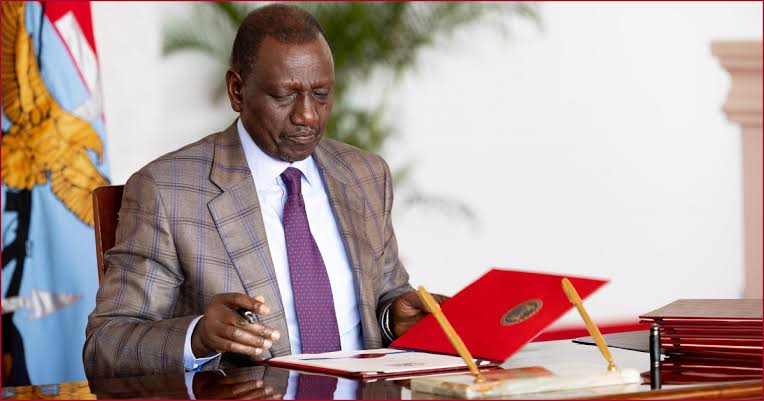
The High Court has stepped in to stop the Constitution of Kenya (Amendment) Bill from reaching President William Ruto for assent until a petition filed by Katiba Institute is fully heard and decided.
This decision signals a major moment in the ongoing debate around constitutional amendments, with the court noting that the issues raised are weighty and cannot be dismissed as idle concerns.
The judges observed that the risks linked to the Bill present serious constitutional questions that demand thorough judicial consideration before any further action is taken.
In its ruling, the court stated that the doctrine of ripeness, which often discourages courts from handling cases that appear premature, could not be applied in this instance.
According to the bench, the case falls squarely within the jurisdiction of the court, meaning the judges have the mandate to hear and decide on it.
As a result, the matter has been referred to the Chief Justice, who is required to appoint an even number of judges to sit and deliberate on the petition.
The court also directed that the Bill should not be taken to the President for assent, and even if it were to be signed into law, it would not take effect until the case is concluded.
Justice Lawrence Mugambi, while issuing the ruling, stressed the need for caution.
“Suspending what is reasonable serves the public better than proceeding with a doubtful process which could lead to problematic constitutional amendment,” he said.
This statement highlights the court’s concern that moving ahead with the Bill without resolving the pending questions could cause long-term challenges in the country’s constitutional order.
The petition by Katiba Institute is centered on two main arguments.
The first is that the Bill is constitutionally unnecessary, with the funds it seeks to establish seen as inconsistent with the principles and framework of the Constitution.
The institute argues that the provisions are not only redundant but also go against the spirit of prudence and responsibility in the management of public finances.
They claim that such an amendment risks undermining constitutional safeguards that ensure government spending is aligned with the law and national priorities.
The second argument focuses on the requirement for a referendum. Katiba Institute maintains that parts of the Bill touch on matters that cannot be changed without direct approval from the people.
The petitioners criticize Parliament for failing, since 2010, to pass a referendum law despite being constitutionally mandated to do so.
They argue that any amendment to the Constitution involving such provisions cannot proceed until the necessary referendum legislation is in place.
The case now moves to a larger bench that will be appointed by the Chief Justice. Its ruling will not only determine the fate of the Bill but could also set a precedent on how future constitutional amendment processes are handled.
With the outcome expected to shape the trajectory of constitutional reform in Kenya, the spotlight is firmly on the judiciary to provide clarity on a matter that has stirred both political and legal debate across the country.





Leave feedback about this