
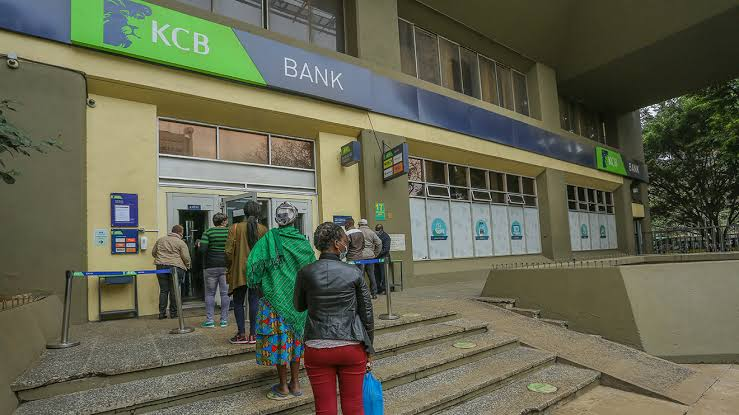
KCB Bank customers have been raising alarm about the safety of their money and personal details. More and more people are speaking out after noticing that once they receive large deposits or when their account balances rise, they start receiving suspicious calls and text messages.
These are not ordinary spam messages but targeted ones, with the callers appearing to know details about their accounts or transactions.
This has made customers wonder how such sensitive information gets into the wrong hands so quickly and why it happens so often to people banking with KCB.
One frustrated customer went public with their experience, accusing the bank of working in ways that indirectly aid fraudsters.
Instead of looking into the matter, the bank reportedly asked them to delete their social media post highlighting the issue. That response made matters worse, as it looked more like an attempt to silence criticism rather than protect customers.
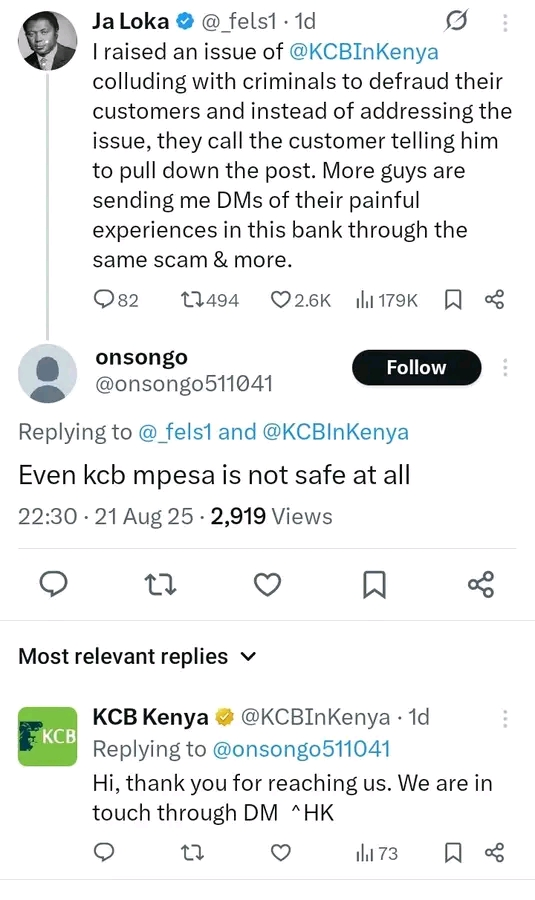
The individual went on to reveal that others had reached out privately with similar experiences, including cases of lost money and scams that seemed to be linked to KCB transactions.
One business owner explained how they were tricked by fraudsters after sharing their KCB account details for a large payment, only for the transaction to turn into an overpayment scam that left them counting losses.
When they sought help from the bank, they were told nothing could be done, leaving them without support.
Many customers suspect that these problems may not just be external but could also involve insiders. Some believe rogue employees may be selling client data to fraudsters for profit.
These suspicions grow stronger when looking at past cases where KCB admitted to firing employees involved in fraud and blocking multiple scams that could have cost millions.
If the bank knows about these risks, customers question why stronger security and stricter data controls are not already in place. It leaves clients feeling that simply depositing money can make them targets for criminals.
There are also growing complaints about the bank’s data-sharing practices. Some users believe that giving third parties access to accounts opens doors for scams to increase soon after big transactions.
Previous incidents involving fraud through KCB mobile services have added to these concerns, with some communities left stranded after funds disappeared and accounts were frozen.
Even in cases where the bank claims no money was lost, the bigger issue of data vulnerability remains unanswered.
The frustrations are not limited to Kenya. KCB customers in Uganda have also reported suspicious withdrawals and a lack of clear answers from the bank.
In most cases, responsibility is shifted to rogue staff or outside hackers, but customers feel that investigations often stop before the real loopholes are sealed.
For a bank of KCB’s size and reputation, this creates an image of negligence.What people want is not excuses but assurance that their information and money are safe.
They expect transparency, faster investigations, and clear action against those involved in leaking or misusing account details. Until the bank demonstrates this commitment, trust will continue to fade.






Leave feedback about this