

Bride price, also known as dowry, has long been a part of Kenyan marriage traditions, symbolizing respect and cementing the union between two families.
Traditionally, the groom or his family provides livestock, money, or other valuable items to the bride’s family, a gesture deeply rooted in culture.
However, new research by Mwelekeo Insights released on July 24, 2025, shows that attitudes toward this practice are shifting, especially among young men in Kenya’s urban areas.
The study reveals a growing preference for alternatives such as cost-sharing and gradual payments, pointing to changing economic conditions, gender equality movements, and the influence of education.
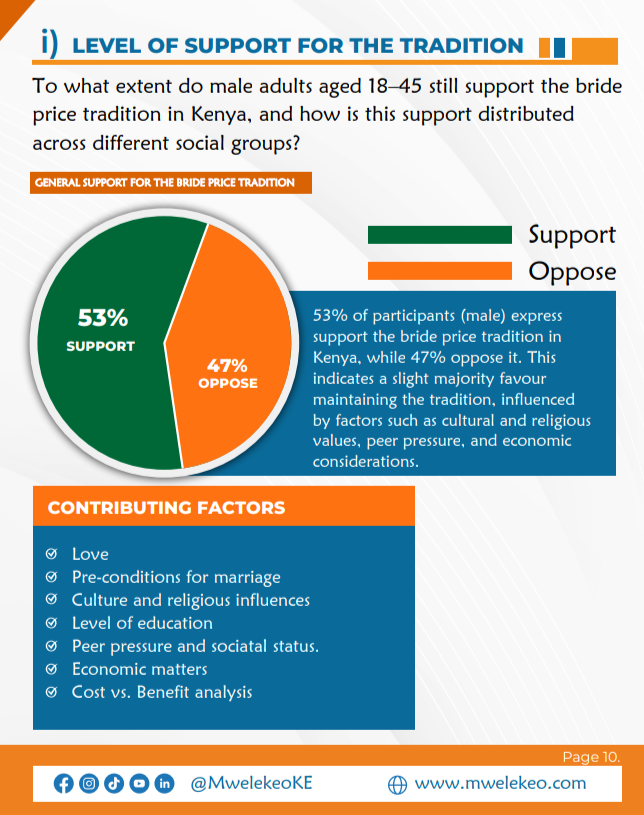
According to the survey, 53% of men still support the traditional bride price practice, but 47% are against it.

Out of those proposing changes, 65% believe in sharing the costs between the groom’s and bride’s families, while 35% maintain that paying the bride price should remain solely the man’s responsibility.
Additionally, a significant 83% of respondents support gradual payment over time, seeing it as a way to ease financial strain and make marriage more manageable in today’s economic climate.
These numbers show a clear divide, with modern thinking increasingly challenging old customs.
The survey also highlights that education plays a big role in shaping these views. Men with higher education levels are more likely to question the relevance of bride price, viewing it as outdated and sometimes as a reflection of gender inequality.
This sentiment is strongest among young, urban men who are more exposed to global cultural trends and more aware of changing gender dynamics. Urbanization and rising living costs also make the practice financially demanding, which explains why many prefer reforms.
Cultural traditions still hold a strong influence, especially in rural areas where older generations often view bride price as a necessary and respected step in marriage. For many, it is not just about money but about formalizing relationships and respecting family bonds.
This creates a tension between upholding heritage and adapting to modern economic realities. The younger generation’s proposals, such as symbolic gifts, shared expenses, or spreading payments over time, aim to strike a balance between cultural respect and financial practicality.
The findings from Mwelekeo Insights suggest that Kenya may be on the path toward a more flexible and inclusive approach to marriage customs.
While the tradition of bride price is unlikely to disappear soon, the growing support for alternatives shows a willingness to evolve without completely abandoning cultural roots.
It is becoming clear that the future of marriage in Kenya will involve finding ways to respect tradition while embracing fairness and economic reality in a rapidly changing society.






Leave feedback about this